

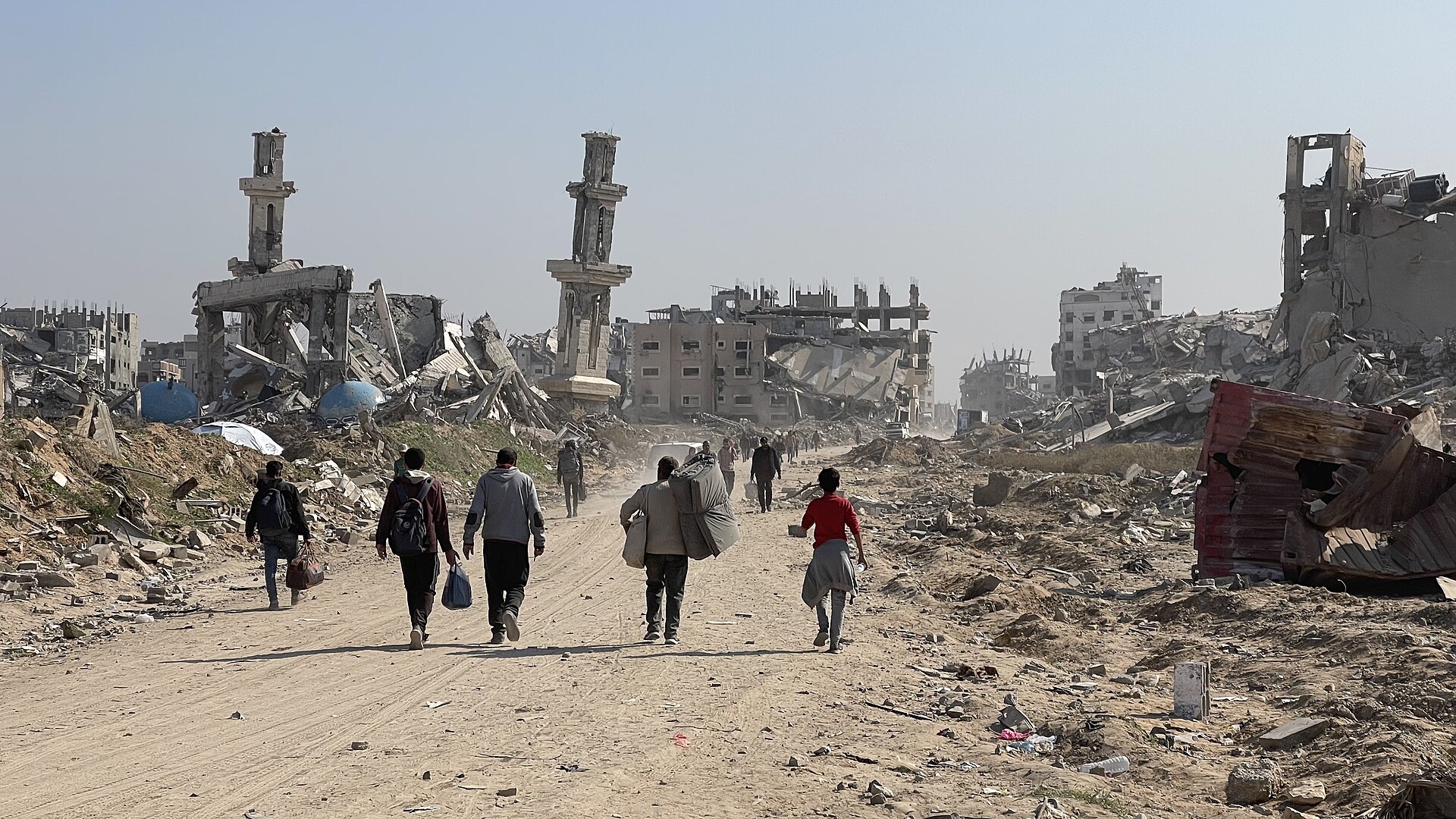
The UN World Food Programme (WFP) said Oct. 19 that it is cutting food assistance in Gaza by about one-third, reducing the number of people it reaches each month from 1.6 million to 1.1 million because it no longer has enough funding.
The cut affects roughly half a million people, and the agency said it urgently needs US$450 million to keep critical operations running in Gaza and the West Bank from October 2026 to March 2027, as winter approaches.
In its statement, the WFP said families will now receive one food parcel instead of two, plus a smaller bag of wheat flour. Daily hot meals will fall from 250,000 to 150,000, and in hard-to-reach areas, including near the “yellow line” of Israeli military control, meals will be served every other day. Cash assistance has been reduced for 75,000 families.
The agency said it received less than half the funding for its Palestine operation in 2026 compared with previous years. It said it has reached about 1.6 million people a month since the October 2025 ceasefire, and that up to 90 per cent of Gaza families have received its food assistance over the past three years.
Carl Skau, the WFP’s acting head, said the reductions are not the result of falling need or blocked access. “This is only because we have less funding,” Skau said, according to The National. That report put the funding need at US$400 million over six months, a different figure from the US$450 million in the WFP’s own statement and in Al Jazeera’s coverage.
Food security has improved only modestly. The WFP said about 1.4 million people, or 67 per cent of Gaza’s population, are in the third phase (crisis) or worse on the Integrated Food Security Phase Classification scale, down from 1.6 million, or 77 per cent, at the end of 2025. About 200,000 people are in the fourth phase (emergency). The agency described the gains as “modest and fragile” and said the latest analysis warns that aid reductions could sharply increase needs. More than 80 per cent of people are unemployed, it said, and only one in five children has a sufficiently diverse diet.
Some programs are being kept for now: bakeries covering about one-third of Gaza’s bread needs, nutrition support for 300,000 women and children, and healthy school snacks for 200,000 children. The WFP had already halved its West Bank assistance in September, from 400,000 people to 200,000.
Gaza residents quoted by The National described what the cuts mean. Ahmed Al Haj, 53, who lives in a tent in Al Mawasi in southern Gaza, said he has received WFP cash for nearly two years. “I hope the assistance continues because if it stops, my family and I will have nothing left to depend on,” he said. The report also quoted an unnamed WFP employee in Gaza who said aid trucks, which once exceeded 25 a day on border-crossing days, have not topped eight to 10 a day on the best days for about six weeks.
The WFP statement does not say which donors have reduced their contributions, and none of the reports reviewed carried a response from Israel or from donor governments.
Canada has been a significant donor to Palestinian aid, and no Canadian government response to the WFP appeal had been found at the time of publication. On June 12, Foreign Affairs Minister Anita Anand announced $100 million in new funding for emergency medical assistance, food and nutrition, water, shelter and other needs, to be delivered through the UN, the Red Cross and Red Crescent and non-governmental partners. The release did not name the WFP. Canada’s total contributions to Palestine now exceed $500 million, according to that release.
Prime Minister Mark Carney pledged another $100 million in aid for Palestinians at the UN General Assembly in September, the same week a federal document showed Ottawa has no plan to seek compensation for damaged Canadian-backed aid projects in the West Bank. Ottawa has also said it will ban trade in Israeli settlement goods.
The WFP has not said whether further cuts are planned if the US$450-million gap is not filled. Its previous cut, to the West Bank in September, came with a warning that new reductions in Gaza could follow.
If you find reporting like this useful, consider supporting Canada News Media, an independent Canadian newsroom with no corporate parent.
Sources: World Food Programme statement, Oct. 19, 2026; Al Jazeera, Oct. 19, 2026; The National, Oct. 20, 2026; Global Affairs Canada, June 12, 2026. Via Al Jazeera and The National.
Follow Canada News Media
Get the day's top Canadian stories and our two daily 60-second news videos wherever you scroll.
X Threads Facebook Instagram LinkedIn TikTok YouTube Pinterest Reddit Substack Flipboard Newsletter RSS