

Protein Industries Canada said it is investing up to $2.2 million in two artificial intelligence projects aimed at Canadian farms, one that forecasts disease risk in pulse crops and one that uses drones to measure grain sitting in storage, according to a release issued Sept. 2, 2026.
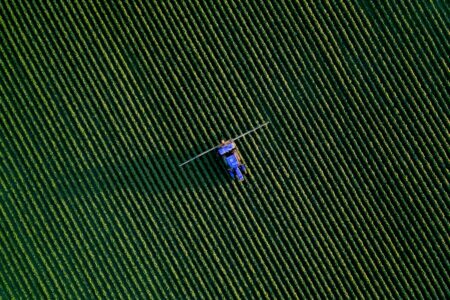
The two projects carry a combined value of $4.9 million, meaning the industry partners are contributing more than half the money. The first, budgeted at $2.6 million with $1.1 million from Protein Industries Canada, is led by TerraVision360, the new public-facing brand of Toronto-based Ukko Agro, working with Metos Canada and Rocky Mountain Equipment. The partners will combine crop and disease records with localized weather data to forecast ascochyta blight risk at both the regional and the individual-field level, so growers can judge when to scout and when to spray.
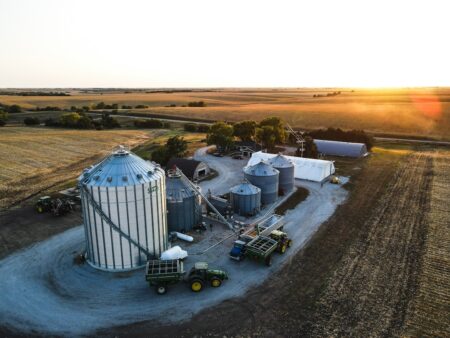
The second project pairs SuperGeoAi Technology with Southview Farms to build an AI-enabled drone carrying LiDAR, a laser scanning method that produces three-dimensional measurements, to gauge grain volumes inside bins and silos. Protein Industries Canada said the system is meant to cut the number of times farm workers must climb into bins to inspect them, and to produce auditable documentation of how much grain is actually in storage.
The announcement did not address why spray timing has become a harder call than it was a decade ago. Saskatchewan Pulse Growers reports that Group 11 insensitive ascochyta strains are now widespread across the province, and has documented insensitive populations of ascochyta in chickpeas, anthracnose in lentils and mycosphaerella in peas. Where those strains are established, a fungicide pass can fail outright, which raises the cost of guessing wrong. Provincial guidance holds that fungicides registered for ascochyta are most effective when applied at early flowering, a window measured in days rather than weeks.
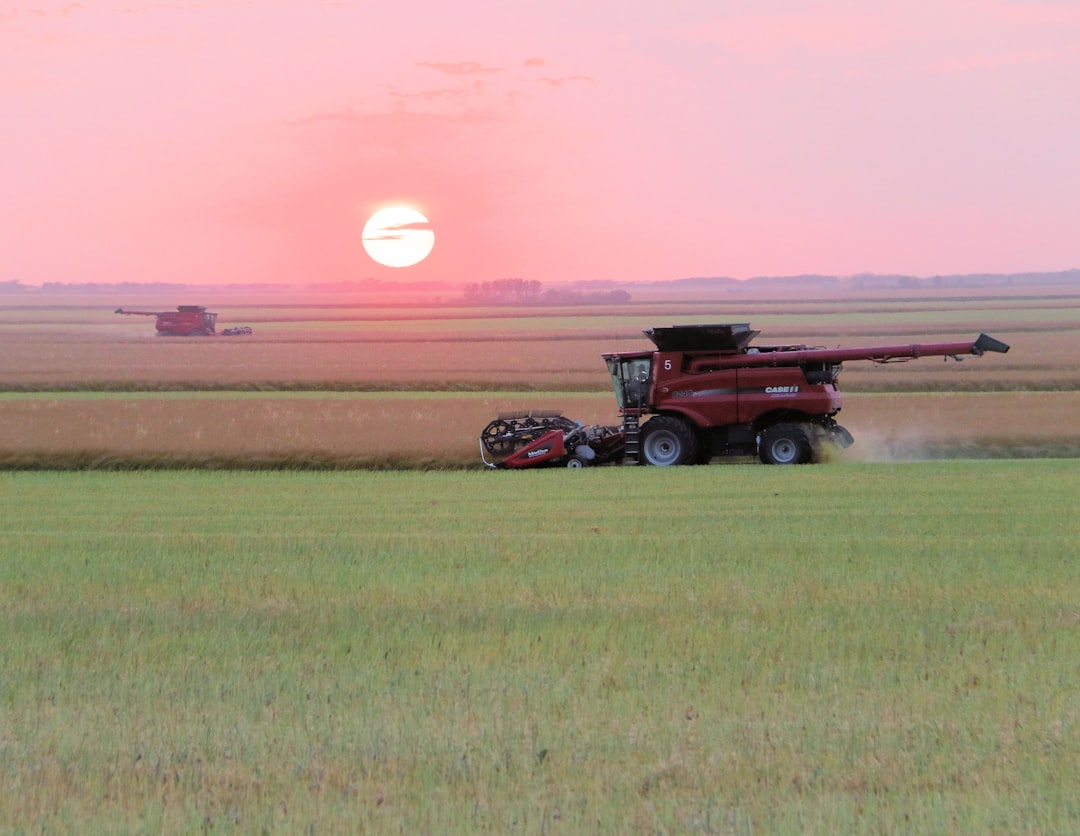
The acreage behind that decision is substantial. Canada is the world’s largest exporter of peas, lentils, chickpeas, dry beans and faba beans, shipping roughly 5.1 million tonnes valued at about $3.4 billion in 2024, according to industry figures, and the sector supports more than 26,000 jobs. Saskatchewan alone accounts for roughly 90 per cent of Canadian lentil exports and about 80 per cent of pea exports. Published crop production figures put 2025 lentil output at a record 3.4 million tonnes, up 38.3 per cent year over year, with dry peas at 3.9 million tonnes, up 32.1 per cent. Roughly 8.3 million acres of pulses are grown across the country each year.
The investment is the second AI-in-agriculture commitment announced in Canada in as many months. In July, Agriculture and Agri-Food Canada announced up to $1.65 million for Toronto-based A.U.G. Signals Ltd. to lead a three-year project integrating satellite, drone and field data into tools for crop emergence, biomass, drought and yield forecasting.
Neither announcement sets a target for how many growers would have to adopt the resulting tools for the spending to pay off, and the accuracy of any disease forecast depends on the density of the weather and field data feeding it, which tends to be thinnest in the remote areas where scouting is already hardest. Protein Industries Canada is one of Canada’s federally funded Global Innovation Clusters, so the public share of the money is ultimately federal. Whether these tools change behaviour will be measurable only in the fungicide passes Prairie growers skip, or make, in the seasons ahead.