


Protein Industries Canada announced $2.2 million for two artificial intelligence projects aimed at Canadian farms on Sept. 2, money that lands in the one sector Statistics Canada identifies as least likely in the country to use AI at all.
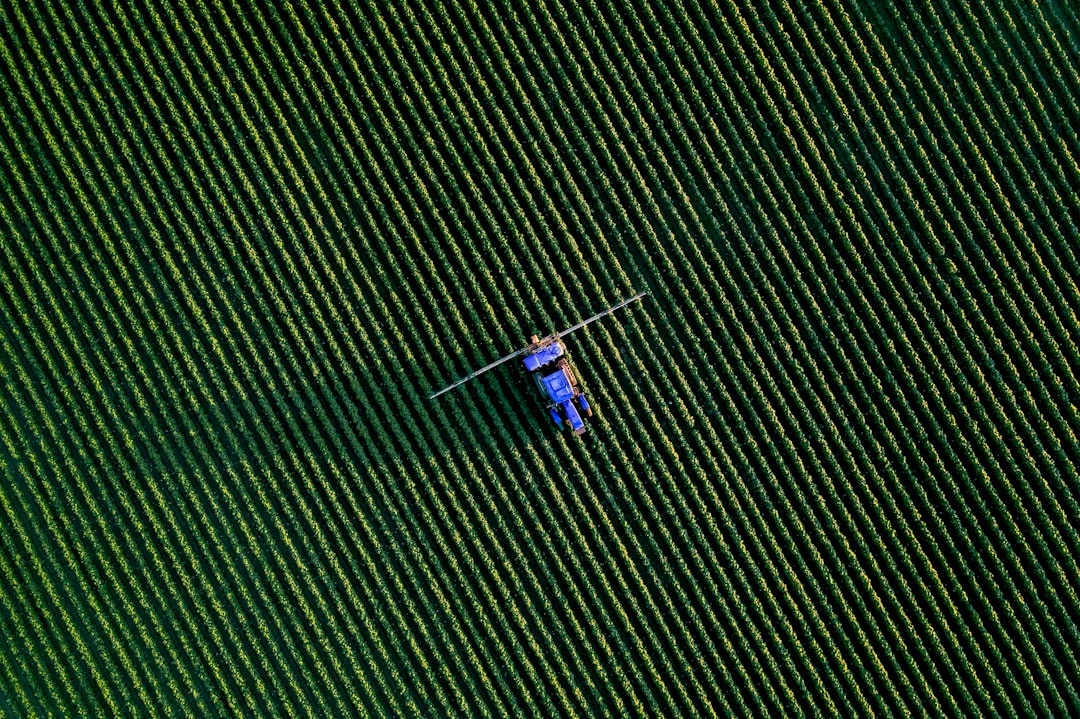
The Regina-based organization, one of Canada’s five Global Innovation Clusters, said the two projects represent a total investment of $4.9 million once industry partners are counted. The first is led by TerraVision360, the new public-facing brand of Ukko Agro, with Metos Canada and Rocky Mountain Equipment. It will combine crop and disease data with localized weather to forecast the risk of Ascochyta blight at both regional and individual-field levels, helping pulse growers decide when to scout and when to spray. BetaKit reported the cluster’s share of that project is $1.1 million of a $2.6-million total. The second pairs Super GeoAI Technology Inc. with Southview Farms to build an AI-enabled drone and LiDAR system that measures grain volumes in on-farm bins, cutting the need for growers to climb them.
“Canadian farmers are increasingly adopting cutting-edge technologies to strengthen productivity, sustainability and global competitiveness,” Industry Minister Melanie Joly said in the announcement.
Statistics Canada’s own numbers complicate that framing. In its analysis of the second-quarter 2026 Canadian Survey on Business Conditions, released June 11, the agency reported that 19.2 per cent of Canadian businesses used AI to produce goods or deliver services over the preceding 12 months, triple the 6.1 per cent recorded in the second quarter of 2024. AI use was least prevalent in agriculture, forestry, fishing and hunting, at 4.5 per cent. The rural and urban split runs the same way: 9.9 per cent of rural businesses reported using AI, against 21.0 per cent of urban ones.
What may matter more than the dollar figure is how the blight tool is being sold. “Every fungicide pass a grower doesn’t need to make is money back in their pocket,” TerraVision360 chief executive Avi Bhargava said in the release. That is a pitch framed as subtraction rather than addition, which is close to the only pitch that reaches a sector sitting at 4.5 per cent.
The agronomy behind it is unforgiving. The Government of Saskatchewan’s chickpea guidance describes Ascochyta blight as a foliar disease that can completely destroy a chickpea crop, and says early and regular scouting is essential because an application at the seedling stage is the most effective, regardless of product. Agriculture and Agri-Food Canada researchers in Saskatoon have identified 15 races of the pathogen in Western Canada.
There is a second reason timing matters that the announcement did not raise. Saskatchewan has been finding Ascochyta rabiei isolates resistant to strobilurin fungicides since samples collected in 2003, with more identified from southern Saskatchewan in 2006. The province now advises growers to apply no more than two strobilurin products per year to the same field and not to use one as the last application of the season. The number of effective passes a grower has is therefore already capped by chemistry, not only by budget. A forecasting tool that gets the timing right is a resistance-management tool as much as a cost-saving one.
The sums remain modest. Protein Industries Canada’s AI stream is funded through the Pan-Canadian Artificial Intelligence Strategy, and $2.2 million is roughly a tenth of one per cent of the more than $2.3 billion Ottawa committed under the AI for All strategy announced in June.
Whether Canadian agriculture moves off 4.5 per cent will not be settled by whether these tools work in a trial. It will be settled by whether a grower with patchy rural connectivity in July trusts a forecast enough to leave the sprayer parked. Statistics Canada’s new TechStat measurement program, which begins publishing business statistics in 2027, is where that answer will eventually show up.
Sources: Protein Industries Canada news release, Sept. 2, 2026; Statistics Canada, “Analysis on artificial intelligence use by businesses in Canada, second quarter of 2026,” June 11, 2026; Government of Saskatchewan chickpea crop protection guidance; BetaKit.
Follow Canada News Media
Get the day's top Canadian stories and our two daily 60-second news videos wherever you scroll.
X Threads Facebook Instagram LinkedIn TikTok YouTube Pinterest Reddit Substack Flipboard Newsletter RSS