


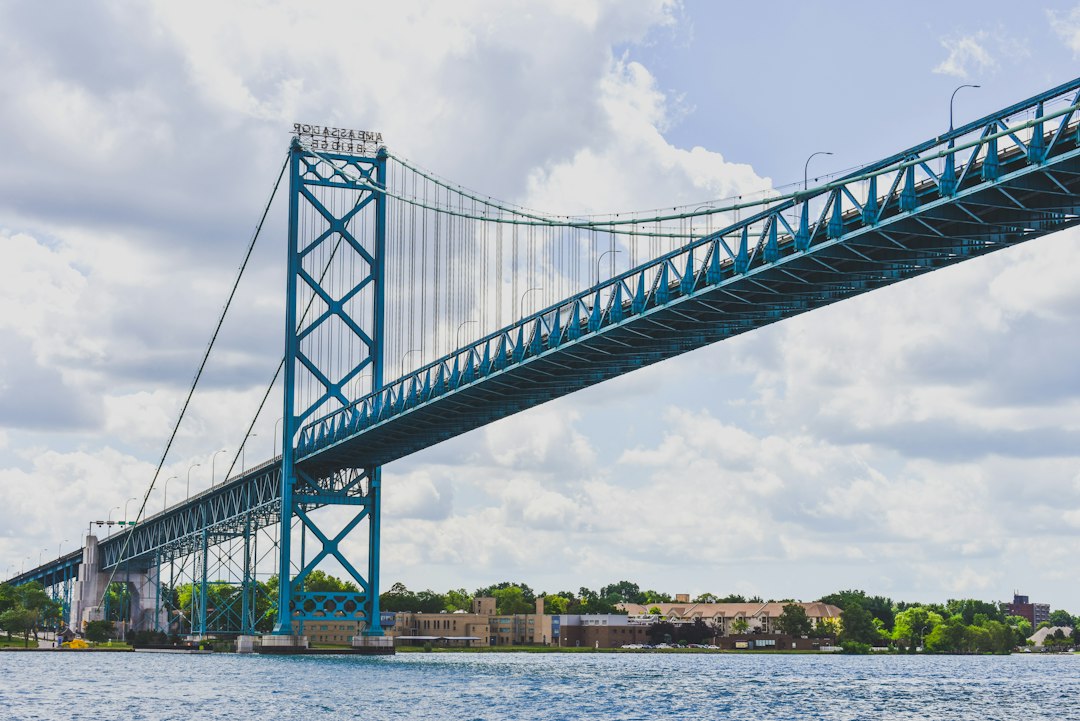
Ottawa has confirmed that the Trump administration’s request to delay the opening of the Gordie Howe International Bridge was rooted in a dispute over toll revenue and the crossing’s governance structure, not any flaw in the $6.4-billion span itself, according to federal documents made public this week.
The disclosure, first reported by CBC News on Sept. 25, came in response to written questions from Windsor West MP Harb Gill, who has spent months pressing the government for a full accounting of the bridge’s cost overruns and the reasons behind its repeated delays. Federal officials had previously described the U.S. request, made on or about June 10, as involving “technical aspects.” Gill said that characterization was misleading. “Obviously, it was nothing technical,” he said. “It was the governance and financial framework.”
The bridge, connecting Windsor and Detroit, was originally due to open in November 2024. That deadline slipped to September 2025, then to the spring of 2026, before the crossing finally opened to traffic on July 27 following Trump’s push to delay it further, according to earlier reporting from CBC and Radio-Canada. The dispute was ultimately resolved through a revised toll-revenue agreement that splits net profits 50-50 between Canada and the U.S. for the next 15 years.
That arrangement matters more than the wire coverage of Gill’s complaint lets on. Under the 2012 Canada-Michigan Crossing Agreement, Canada agreed to finance the entire project, including the cost of building the Michigan side, because the state could not get its legislature to approve funding. Canada’s contribution was to be repaid entirely through tolls collected on the Canadian side, with no tolls charged on the U.S. side. In other words, Canadian taxpayers carried all of the financial risk on a bridge billed as binational infrastructure, a point that has drawn far less attention than the political theatre around Trump’s threats to keep it closed.
The price tag has also grown considerably. Federal figures show the project’s cost climbing from $5.7 billion in 2018 to $6.4 billion by 2024, a jump of about $700 million that officials attribute largely to pandemic-era construction delays. The Windsor-Detroit Bridge Authority declined Gill’s request for a detailed, line-by-line breakdown of the change orders behind that increase, telling him compiling the information “would require a manual collection of information that is not possible in the time allotted.”
Multiple federal bodies, including Infrastructure Canada, the Privy Council Office, the Prime Minister’s Office and Global Affairs Canada, were briefed on the U.S. delay request on the day it arrived, the documents show, underscoring how seriously Ottawa treated what was, on paper, a dispute over a border crossing’s opening date.
The episode fits a pattern this year of the Trump administration using leverage over cross-border infrastructure and trade to extract concessions from Canada, at a time when Canada-U.S. relations remain strained over tariffs more broadly. For Windsor-Essex, where the bridge is expected to carry a significant share of Canada-U.S. commercial truck traffic, the stakes go beyond politics. The corridor is central to the regional economy, and any further uncertainty over financing terms or governance could affect how the crossing is priced and managed for years to come.
Gill said he intends to keep pressing for the outstanding financial details, arguing that continued vagueness only fuels public suspicion. “The truth is going to come out eventually,” he said, “and the more you beat around the bush, the more suspicious people get.”
Ottawa has not said whether it will release the full change-order data Gill requested, or explain further how the revised toll-sharing arrangement with Washington was reached.
Via CBC News. Read the original report.
Follow Canada News Media
Get the day's top Canadian stories and our two daily 60-second news videos wherever you scroll.
X Threads Facebook Instagram LinkedIn TikTok YouTube Pinterest Reddit Substack Flipboard Newsletter RSS