


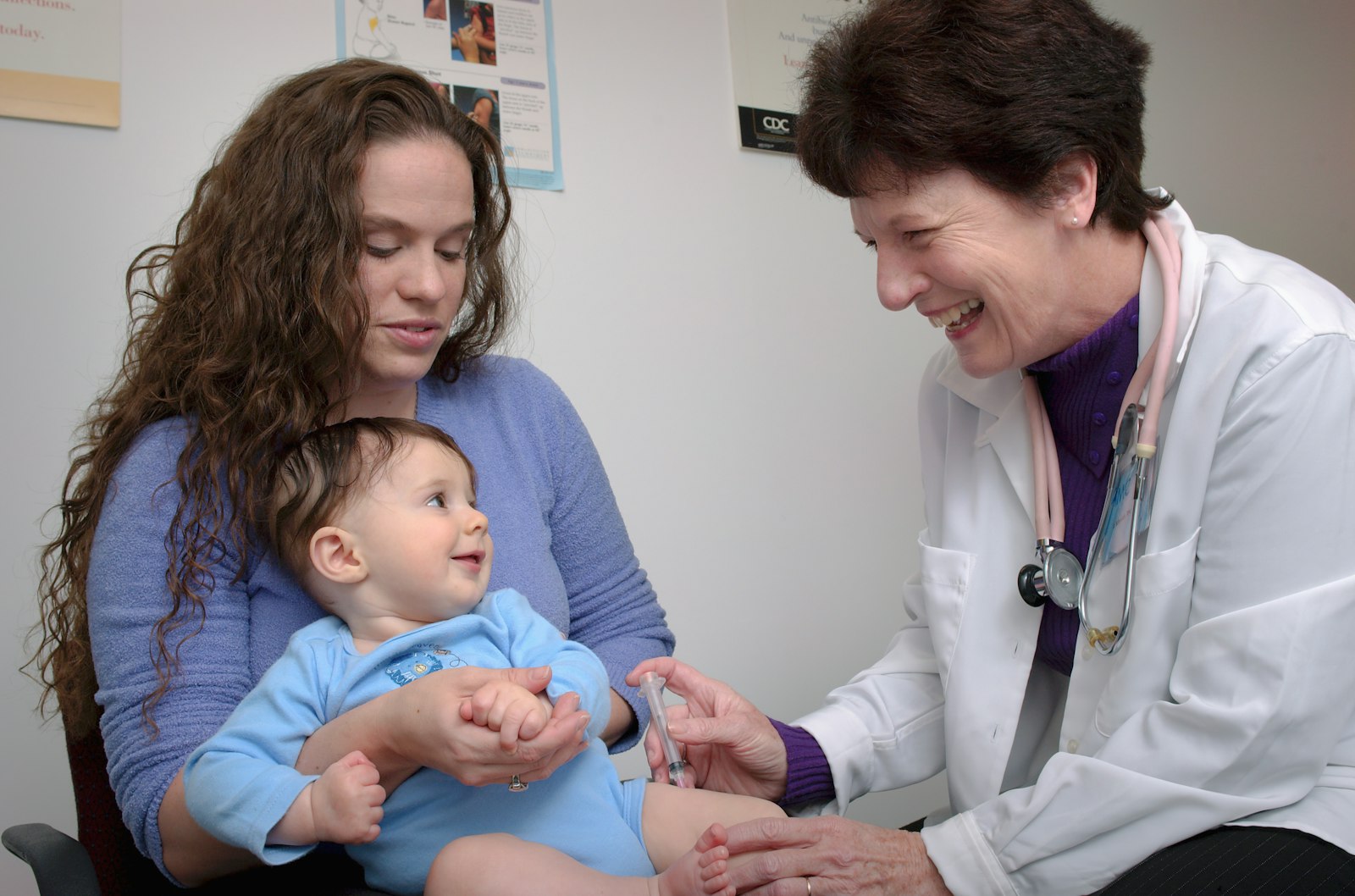
Every province and territory in Canada lists the rotavirus vaccine in its routine infant schedule, according to the Public Health Agency of Canada, but the number of doses differs depending on where a baby lives. Babies in British Columbia, Alberta, Manitoba, Ontario, Quebec, and Newfoundland and Labrador are listed for doses at two and four months. Those in the other seven jurisdictions are listed for doses at two, four and six months.
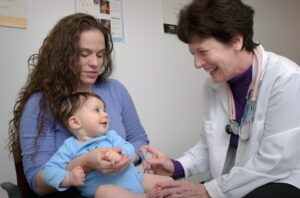
The vaccine is given by mouth as liquid drops, not as a needle. It protects against rotavirus, a common cause of stomach flu in young children. Unlike most childhood vaccines, it comes with a strict age window, which is the detail parents are most likely to miss.
The Canadian Immunization Guide says the first dose should start at six weeks of age and be given before the baby turns 15 weeks. Vaccination should not be started in infants aged 15 weeks or older. All doses should be finished before eight months of age.
Two products are authorized in Canada. Rotarix is given in two doses at least four weeks apart. RotaTeq is given in three doses, with four to 10 weeks between them. That difference explains why some provinces schedule two visits and others three. The minimum gap between any two rotavirus doses is four weeks.
If a baby spits up or vomits part of a dose, the guide says not to give a replacement dose.
Rotavirus doses by province and territory
| Jurisdiction | Routine ages (months) |
|---|---|
| British Columbia | 2, 4 |
| Alberta | 2, 4 |
| Saskatchewan | 2, 4, 6 |
| Manitoba | 2, 4 |
| Ontario | 2, 4 |
| Quebec | 2, 4 |
| New Brunswick | 2, 4, 6 |
| Nova Scotia | 2, 4, 6 |
| Prince Edward Island | 2, 4, 6 |
| Newfoundland and Labrador | 2, 4 |
| Yukon | 2, 4, 6 |
| Northwest Territories | 2, 4, 6 |
| Nunavut | 2, 4, 6 |
The schedules above come from the federal government’s page on provincial and territorial routine vaccination programs for infants and children, which was last updated in July 2026. Provinces can change products and timing, so the provincial health ministry or local public health unit has the final word on where and when a baby is vaccinated. Nova Scotia and Manitoba, for example, publish their own rotavirus vaccine fact sheets for parents.
In most places the vaccine is given at the same routine visits as other infant shots, and it is publicly funded, meaning there is no charge to families. Parents who are unsure whether a baby is on track can ask their public health nurse, family doctor or pharmacist to check the immunization record.
Why the vaccine matters
The Canadian Immunization Guide says rotavirus accounts for 10 per cent to 40 per cent of childhood gastroenteritis cases. Illness typically starts with fever and vomiting, followed by diarrhea that usually lasts five to seven days.
Among children who get rotavirus gastroenteritis, about seven per cent are hospitalized, the guide says. Between one in 62 and one in 312 children under five will be hospitalized for it, and children under two account for 63 per cent of those hospital stays. Death is described as extremely rare in Canada.
The guide reports that the vaccines are 85 per cent to 98 per cent effective against severe diarrhea and 74 per cent to 87 per cent effective against diarrhea of any severity in developed countries. In Ontario, hospitalizations for rotavirus gastroenteritis fell 75 per cent after the vaccine program began, when comparing August 2011 to March 2013 with January 2003 to July 2006.
What the guide says about safety
Rotavirus vaccines carry a small, known risk of intussusception, a rare condition in which part of the bowel folds into itself. The guide estimates one to seven extra cases per 100,000 doses, within seven days of the first or second dose. For comparison, the background rate in the first year of life is about 34 cases per 100,000 babies a year. The guide states that the risk following current vaccines is small.
In clinical trials, serious adverse events were not significantly different from placebo: 2.4 per cent versus 2.6 per cent for RotaTeq and 1.7 per cent versus 1.9 per cent for Rotarix. Parents who notice severe vomiting, bloody stools or unusual fussiness after a dose should seek medical care promptly.
Because of the 15-week cutoff, a missed appointment is more consequential for this vaccine than for most others. Families who have moved between provinces, or whose baby was born early or sick, are the most likely to run into the age limit, and are best off contacting public health early.
Readers following other routine vaccines can also see Canada News Media’s guides to the measles vaccine schedule by province and territory, meningococcal vaccine age and grade by province and pneumococcal vaccine eligibility by province.
This article is based on official guidance from the Public Health Agency of Canada and is provided for general public information. It’s not a substitute for medical advice, if you have questions about how this applies to you, talk to your doctor or pharmacist.
If you find reporting like this useful, consider supporting Canada News Media, an independent Canadian newsroom with no corporate parent.
Sources: Public Health Agency of Canada, Provincial and territorial routine and catch-up vaccination schedule for infants and children in Canada; Public Health Agency of Canada, Canadian Immunization Guide: Rotavirus vaccine; Nova Scotia Rotavirus Vaccine Guide; Manitoba rotavirus vaccine Q&A.
Follow Canada News Media
Get the day's top Canadian stories and our two daily 60-second news videos wherever you scroll.
X Threads Facebook Instagram LinkedIn TikTok YouTube Pinterest Reddit Substack Flipboard Newsletter RSS