

Protein Industries Canada announced Sept. 2 it is investing up to $2.2 million in two artificial intelligence projects for Western Canadian farms, part of a $4.9-million total investment aimed at predicting crop disease earlier and measuring grain inventories without sending anyone up a bin ladder.
The first project is led by TerraVision360, the new public-facing brand of Ukko Agro, working with Metos Canada and Rocky Mountain Equipment. According to the cluster’s release, issued from Regina, the partners will pair crop and disease data with localized weather to forecast Ascochyta blight risk at both the regional and individual-field level, so growers know when to scout and when to apply fungicide. “Every fungicide pass a grower doesn’t need to make is money back in their pocket,” TerraVision360 chief executive Avi Bhargava said in the release.
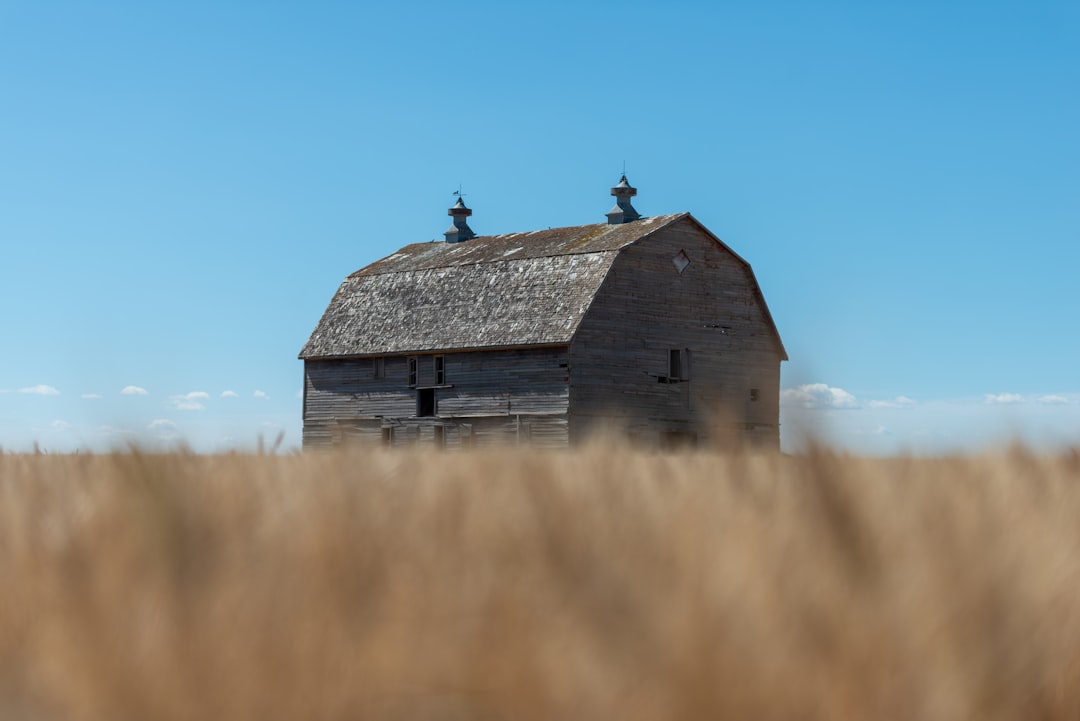
The second project pairs Super GeoAI Technology Inc. with Southview Farms to build an AI, drone and LiDAR system that measures grain volumes in on-farm bins and generates what the release describes as audit-ready documentation. Founder and chief executive Weiping Zeng said current inventory practices remain “time-consuming, labour-intensive and potentially hazardous.” Industry Minister Melanie Joly and Buckley Belanger, secretary of state for rural development, both endorsed the announcement in the release.
What the announcement does not spell out is the scale of the two problems being targeted, and both are considerable. Ascochyta blight is described by Saskatchewan Pulse Growers as the most serious disease of chickpea and the largest single obstacle to chickpea production in the province, capable of causing yield losses of up to 90 per cent in Kabuli varieties and 50 per cent in Desi, on top of seed staining that pushes a crop into a lower grade. That risk sits on the world’s largest pulse export base. Canada is the leading global exporter of peas, lentils, chickpeas, dry beans and faba beans, with roughly 5.1 million tonnes shipped in 2024 at an export value near $3.4 billion, and Statistics Canada recorded a record 3.4-million-tonne lentil crop in 2025. A spray-timing tool that shaves even one pass off a season is operating on a very large denominator.
The grain bin project addresses a hazard that Canada measures poorly. The Canadian Centre for Health and Safety in Agriculture at the University of Saskatchewan reports that Canadian Agricultural Injury Reporting logged 29 grain-suffocation deaths between 1990 and 2008, and cautions that the figure is almost certainly an undercount because no national entrapment registry exists. The same research notes that once grain begins to flow, an average adult can sink to chest height in about 15 seconds, which is faster than a second worker can usually intervene. Canada has no equivalent to the annual entrapment tally Purdue University publishes in the United States, so a technology sold on keeping farmers out of bins will be difficult to evaluate against any hard baseline.
The money is also modest in context. Protein Industries Canada’s AI stream is funded through the Pan-Canadian Artificial Intelligence Strategy, which accounts for $30 million of the cluster’s roughly $353-million federal envelope running from 2018 to 2028. The $2.2 million committed here is a single-digit share of that AI allocation.
Neither project has a stated commercial availability date, and the grain-scanning work is to be validated on one operation, Southview Farms, before it goes anywhere else. For growers deciding whether to spray this coming season, that is the number that matters most and the one the announcement leaves out.
Sources: Protein Industries Canada release, Sept. 2, 2026; Saskatchewan Pulse Growers; Canadian Centre for Health and Safety in Agriculture, University of Saskatchewan; Statistics Canada; Pulse Canada.
Follow Canada News Media
Get the day's top Canadian stories and our two daily 60-second news videos wherever you scroll.
X Threads Facebook Instagram LinkedIn TikTok YouTube Pinterest Reddit Substack Flipboard Newsletter RSS