



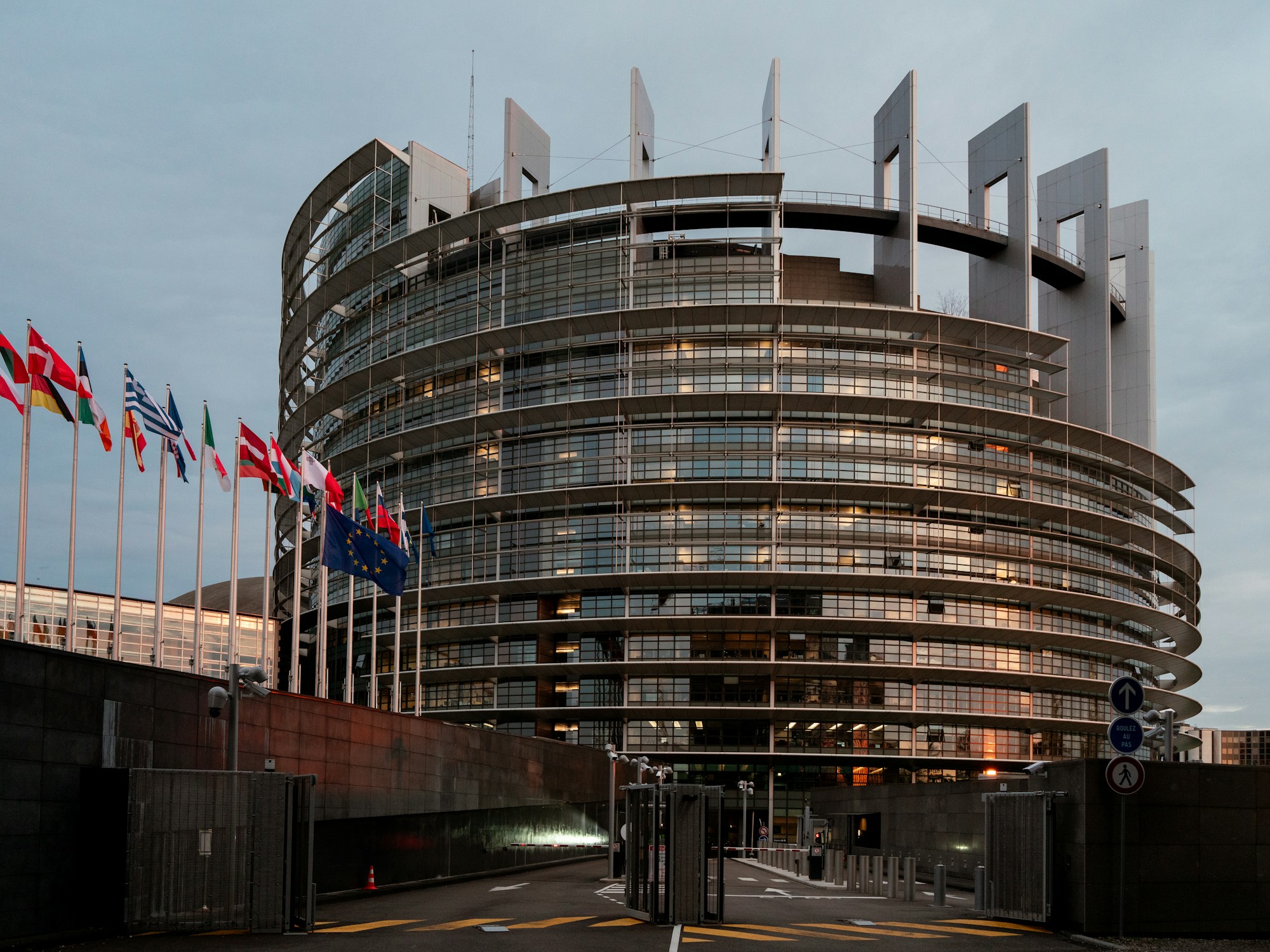
The European Union and Canada are preparing a far-reaching partnership spanning trade, security, defence, critical supply chains and scientific research, Bloomberg reported Tuesday, with the framework expected to be announced in Strasbourg, France, on Sept. 16.
European Commission President Ursula von der Leyen is expected to set out the plan during her annual state of the union address to the European Parliament, according to the Bloomberg report. Prime Minister Mark Carney is expected to attend that speech and to address European lawmakers the following day. Both sides are expected to settle further steps at a Canada-EU summit to be held in Canada in October, Bloomberg reported.
CTV News carried the report Tuesday in its live coverage of the trade war, saying Canada is eyeing a new alliance with the European Union. The Bloomberg account was also picked up by outlets including The News International and The Japan Times. The Canadian government had not publicly confirmed the plan as of Tuesday evening, and no text of any agreement has been released.
The reporting frames the effort as an attempt by two middle powers to build out a partnership that does not depend on Washington, at a moment when the Canada-U.S. relationship is at its most strained in decades. The report landed on the same day Canada’s counter-tariffs on $27.6 billion worth of American goods took effect at 12:01 a.m., and hours before the White House announced bans on imports of certain Canadian alcohol, dairy and other products effective Sept. 29.
According to the Bloomberg report, the discussions centre on what officials describe as strategic capabilities, including cooperation on defence, space exploration and scientific research, alongside deeper co-operation on essential supply chains and raw materials. Officials are also assessing how far Canada could be integrated legally with the EU single market, the report said, with Ottawa looking at arrangements short of actual membership. Regulatory clearances and the legal mechanisms involved remain under negotiation.
The plan would build on a security and defence partnership Canada and the EU signed at their summit in Brussels in June 2025. Under that track, Canada became the first non-European country admitted to the bloc’s 150-billion-euro Security Action for Europe defence procurement program, known as SAFE. EU member states endorsed Canada’s participation in December 2025, and Defence Minister David McGuinty signed the agreement in February. Canada negotiated terms permitting a higher share of Canadian content on joint procurements than the standard rules allow for countries outside the bloc, and a Canadian firm has since been awarded work under the program.
Trade between the two sides is already covered by the Comprehensive Economic and Trade Agreement, which has been provisionally applied since 2017 and eliminated tariffs on the large majority of goods lines. What the reported partnership would add beyond CETA, and whether it would carry binding commitments or take the form of a political declaration, is not spelled out in the coverage published Tuesday.
Several questions remain open. Neither the Bloomberg report nor the coverage that followed it indicates what portions, if any, would require approval by Parliament in Ottawa or ratification by individual EU member states, a process that took years in CETA’s case and remains incomplete. It is also unclear whether any market-access provisions would be negotiated as amendments to CETA or as a separate instrument, and no figures have been attached to the supply chain, raw materials or space components.
Von der Leyen’s address is scheduled for Sept. 16. Until then, the specifics rest on a single originating report and its pickups, and on what Ottawa and Brussels choose to confirm.