




Build Canada Homes signed housing agreements with two provinces in the space of 48 hours this week, bringing the federal Crown corporation to 19 partnerships as it approaches its first anniversary on Sept. 14. Canada’s parliamentary budget officer estimates the agency will produce about 26,000 housing units over five years, a 2.1 per cent increase in national housing completions.
On Sept. 9 in Edmonton, Housing and Infrastructure Minister Gregor Robertson announced a partnership with Alberta to support at least 1,460 affordable units across roughly 21 projects. Build Canada Homes will contribute up to $220 million and Alberta more than $165 million, with a further $238 million expected from municipalities, federal housing programs, non-profits and private partners, for roughly $623 million in total housing investment, according to the agency’s release.
A day earlier in Winnipeg, the agency announced a three-way agreement with the Manitoba Housing and Renewal Corporation and the City of Winnipeg covering at least 820 units, including at least 740 affordable homes. Build Canada Homes committed up to $104.7 million, alongside $21.3 million in provincial capital funding, $52 million in provincial operating funding, $22.1 million in municipal capital funding and up to $22.3 million in municipal tax increment financing. The agency said the package is expected to unlock more than $400 million in housing investments.
What the budget officer found
The Parliamentary Budget Officer published the only independent costing of the agency to date on Dec. 2, 2025. It found Build Canada Homes plans to spend $7.3 billion between 2025-26 and 2029-30, of which $6.7 billion is new money. Counting loans and asset development, total planned disbursements reach $13 billion.
“Build Canada Homes is expected to add only a modest amount to the housing supply,” Jason Jacques, then interim parliamentary budget officer, said in releasing the report. “We estimate about 26,000 units will be created over five years, a 2.1 per cent increase in housing completions relative to our baseline projection.” About 13,000 of those units would serve low-income households, the report said.
The same report found planned federal spending on housing programs is on track to fall 56 per cent, from $9.8 billion in 2025-26 to $4.3 billion in 2028-29, as existing programs expire and cuts set out in Budget 2025 take effect.
Measured against the construction data
Cross-referencing the budget officer’s forecast against Canada Mortgage and Housing Corp.’s monthly construction data puts the agency’s scale in context.
CMHC reported that builders completed 19,773 units in July 2026 in centres of 10,000 people or more, up 8.1 per cent from June. Build Canada Homes’ projected 26,000 units over five years works out to roughly 5,200 a year, or about a quarter of what Canadian builders finished in that single month.
Annualizing July’s completion rate produces about 237,000 units a year. Against that figure, 5,200 units represents 2.2 per cent, which lands within rounding distance of the budget officer’s independently modelled 2.1 per cent. The two calculations, one drawn from the PBO’s model and one from CMHC’s raw monthly counts, point to the same order of magnitude.
A third CMHC figure sharpens the comparison. In July, 141,480 units held approved building permits but had not yet broken ground, up three per cent from June. That backlog of already-permitted, unstarted housing is about 5.4 times the total number of units the budget officer expects Build Canada Homes to create over its entire five-year spending horizon.
The caveats
The comparison measures different things and should be read that way. Build Canada Homes’ mandate is affordable housing, not aggregate supply, and the agency does not claim it will move national completion totals on its own. Its partnership figures also describe commitments rather than construction: both of this week’s releases state that individual projects remain subject to due diligence, underwriting, funding availability, approvals and project-specific agreements.
The PBO report also predates the partnership push. It was published in December 2025, before agreements with Quebec, British Columbia, Manitoba, Alberta and others were signed, and before the Build Canada Homes Act received royal assent on June 19, 2026.
The wider gap is unchanged. CMHC’s supply gap research, published in June 2025, concluded Canada needs as many as 4.8 million new homes over a decade to restore affordability to pre-pandemic levels, roughly double the current pace of construction. CMHC put the seasonally adjusted annual rate of housing starts at 229,074 units in July, down five per cent from June’s 240,773.
Ana Bailao, the agency’s president and chief executive, framed the Alberta agreement as pipeline building rather than immediate output. “This is how we increase housing supply over the long term: by strengthening the partnerships and delivery capacity that make more homes possible,” she said in the release.
Sources
- Build Canada Homes and Alberta partner to deliver more affordable homes across the province, Build Canada Homes, Sept. 9, 2026
- Build Canada Homes partners with Manitoba and Winnipeg to accelerate affordable housing delivery, Build Canada Homes, Sept. 8, 2026
- Build Canada Homes and the Outlook for Housing Programs under Budget 2025, Office of the Parliamentary Budget Officer, Dec. 2, 2025
- Housing starts and construction data, July 2026, Canada Mortgage and Housing Corp., Aug. 18, 2026
- Canada’s Housing Supply Shortages: Moving to a New Framework, Canada Mortgage and Housing Corp.
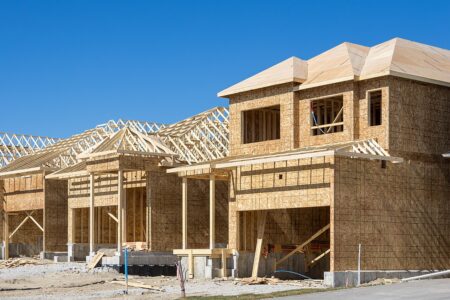
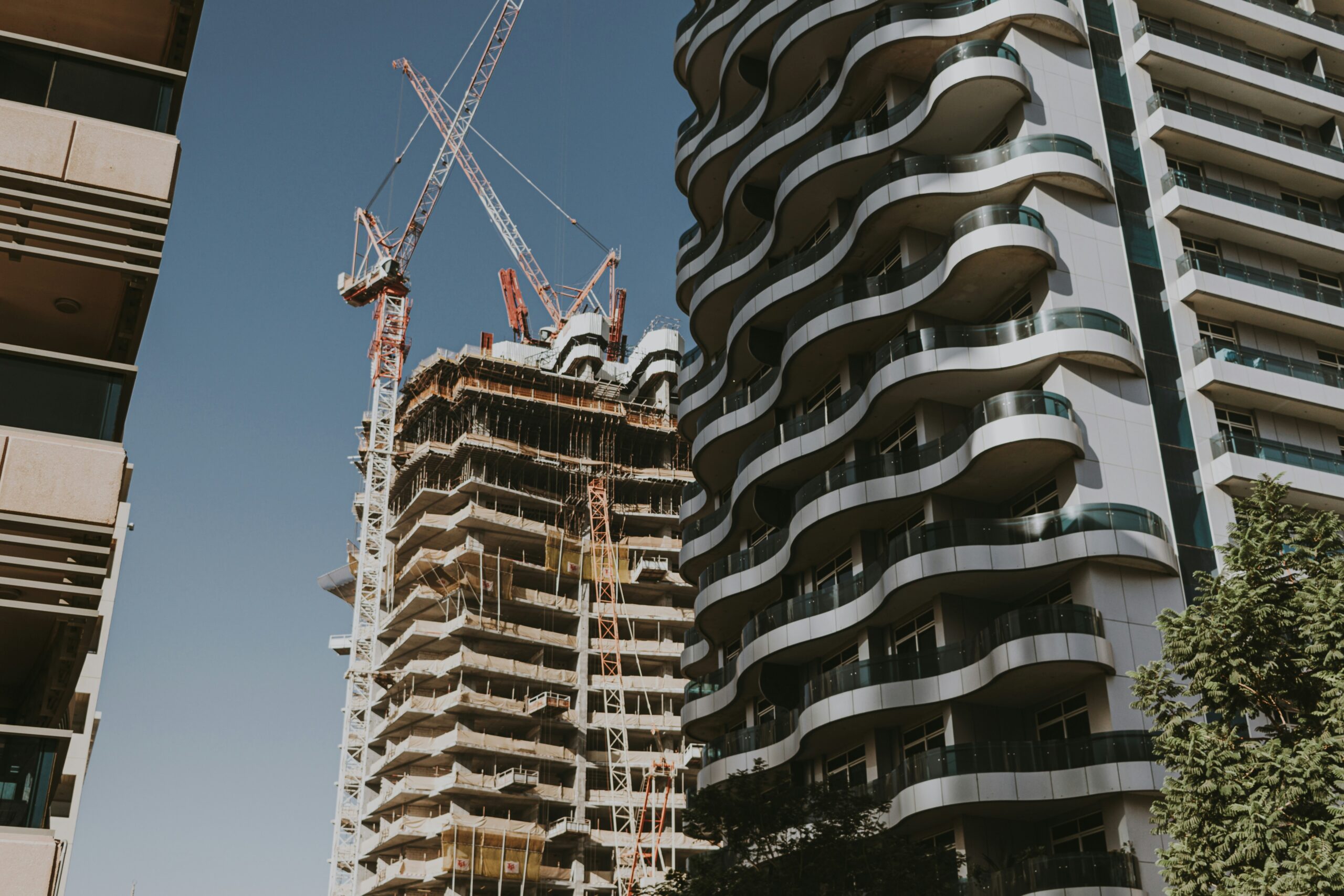
Photographs in this article are illustrative stock images from Unsplash and do not depict any specific Build Canada Homes project or property discussed above.
Follow Canada News Media
Get the day's top Canadian stories and our two daily 60-second news videos wherever you scroll.
X Threads Facebook Instagram LinkedIn TikTok YouTube Pinterest Reddit Substack Flipboard Newsletter RSS