

Canada’s largest banks, insurers and pension funds have announced financing and investment commitments totalling roughly $338 billion in the days surrounding the opening of the country’s first investment summit in Toronto, according to announcements reported Monday by the Financial Post and Investment Executive.
Toronto-Dominion Bank committed $150 billion over five years toward new lending, underwriting, advisory, investment and other financing activities, with a focus on energy, critical minerals, defence, artificial intelligence and infrastructure, the Financial Post reported. Bank of Nova Scotia pledged more than $100 billion in financing over five years and launched a research body called the Scotia Growth Institute, naming Kirsten Hillman, Canada’s former ambassador to the United States, as its lead strategic adviser.
“Canada is entering a defining period of investment and industrial growth that will shape the country’s economy for decades to come,” TD chief executive Raymond Chun said in a statement carried by the Financial Post. Scotiabank chief executive Scott Thomson said the new institute “will examine where Canada can accelerate and what it will take to turn the country’s strengths into lasting prosperity.”
Bank of Montreal said last week it plans to mobilize up to $70 billion in new capital over 10 years, Investment Executive reported, quoting chief executive Darryl White as saying the bank is committed to “mobilizing capital, expertise and advice to support the country’s next era of growth.” Canadian Imperial Bank of Commerce committed $2 billion to small and medium-sized firms in the defence industry and to businesses with dual civilian uses. Royal Bank of Canada announced a $1.4-billion initiative to invest in Canadian technology companies, the Financial Post reported. Sun Life pledged $5 billion over five years for Canadian infrastructure, including technology, energy, transportation and logistics, according to Investment Executive.
On the pension side, the Ontario Teachers’ Pension Plan Board said it plans to invest an additional $10 billion in public and private Canadian assets by the end of 2027. Jo Taylor, the plan’s president and chief executive, said in a release that about $100 billion of its gross assets, representing 30 per cent of its total portfolio, is already invested in Canada. The Public Sector Pension Investment Board, one of the summit’s two pension co-hosts alongside the Canada Pension Plan Investment Board, said it expects to increase its Canadian investments by 30 to 40 per cent over the next few years, lifting its domestic assets above $100 billion, the Financial Post reported.
The combined figures land within reach of Prime Minister Mark Carney’s stated goal of catalyzing $1 trillion in investment in Canada over five years. They are not, however, denominated in comparable units, and the institutions have not published the arithmetic that would make them comparable.
The horizons differ. BMO’s $70 billion runs over 10 years, while the TD, Scotiabank and Sun Life commitments run over five, and the Ontario Teachers’ figure is tied to the end of 2027, roughly 16 months away. Adding the numbers together produces a total with no single time frame attached to it.
The categories differ as well. TD described its commitment as lending, underwriting, advisory, investment and other financing activities, which is intermediation rather than capital the bank puts at risk itself. Scotiabank described its pledge as financing. The Ontario Teachers’ figure is an asset allocation decision. CIBC’s $2 billion is framed as support for a sector. None of those are the same instrument, and the releases do not break the totals down by type.
The Ontario Teachers’ commitment is also explicitly incremental to an existing position. Measured against the roughly $100 billion the plan says it already holds in Canada, a further $10 billion is an increase of about 10 per cent in domestic exposure rather than a new allocation.
One of the pledges depends on Parliament. Sun Life is simultaneously calling for an amendment to the Insurance Companies Act that would permit insurers to make equity investments in infrastructure, Investment Executive reported, meaning part of the capacity the insurance sector is offering does not currently exist in law.
What none of the institutions disclosed is a baseline. Without a figure for what each would have lent or invested in Canada over the same period in the absence of the summit, the portion of the roughly $338 billion that represents new activity cannot be determined from the announcements. TD’s own estimate points to the difficulty: the bank said new investments worth $1 trillion across more than 300 projects in its target sectors have already been approved or are on the table, a pipeline it describes as existing rather than as something the summit will create.
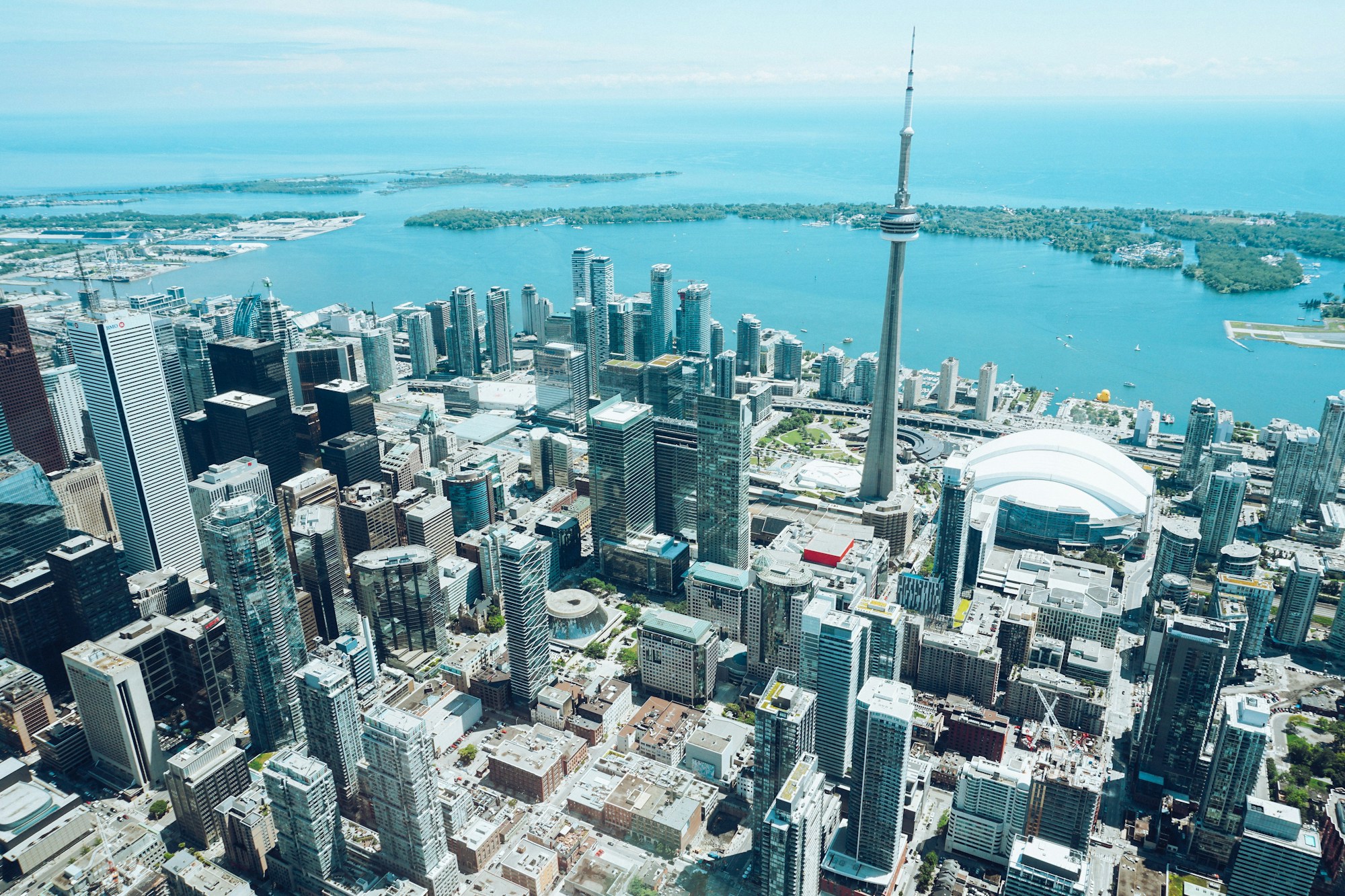
The summit opened Monday evening with a closed gala dinner at the Art Gallery of Ontario and continues Tuesday at the Four Seasons Hotel in downtown Toronto.
With files from the Financial Post (Naimul Karim) and Investment Executive (Jonathan Got).