
On Sept. 24, 1950, a vast plume of wildfire smoke from northern British Columbia and Alberta swept across Ontario and the eastern United States, plunging communities into midday darkness in an episode Americans came to call Black Sunday, according to Cordy Tymstra’s 2014 book “The Chinchaga Firestorm: When the Moon and Sun Turned Blue,” published by the University of Alberta Press.
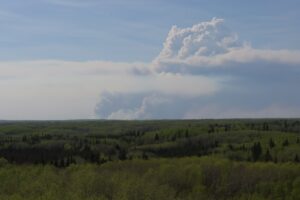
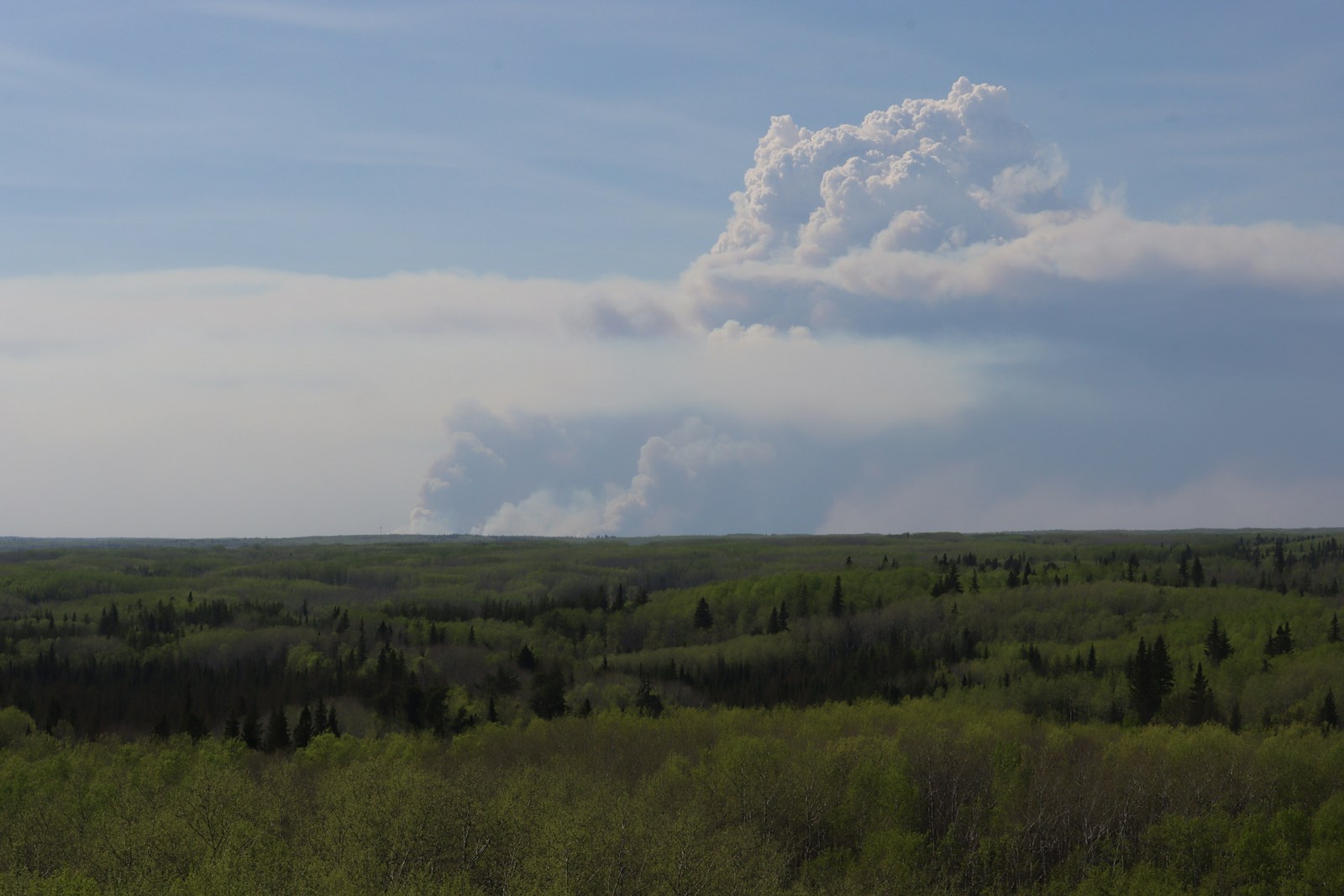
The smoke came from the Chinchaga fire, also known as the Wisp fire or Fire 19, which had been burning since June 1, 1950, north of Fort St. John, B.C. Believed to have been human caused, the fire was left largely unfought under a provincial policy at the time of not actively suppressing blazes in sparsely settled backcountry, Tymstra writes. Fed by a hot, dry spring and driven by shifting winds, it spread northeast into Alberta over the summer, finally burning itself out near Keg River in late October.
By the time it was extinguished, the Chinchaga fire had consumed between 1.4 million and 1.7 million hectares, or roughly 3.5 million to 4.2 million acres, of boreal forest, according to a 2008-09 aerial survey conducted by Natural Resources Canada and the University of Victoria. It remains, by that measure, the single largest recorded fire in North American history.
The most dramatic single event tied to the fire came in late September, when a massive column of smoke rose high into the upper atmosphere and was carried southeast. Atmospheric scientist Robert Field, writing in the Canadian Smoke Newsletter in 2008, traced the plume’s first recorded sighting to Ennadai Lake, in territory that was then part of the Northwest Territories and is now in Nunavut, on Sept. 24, hours before it swept down across Ontario later that same day.
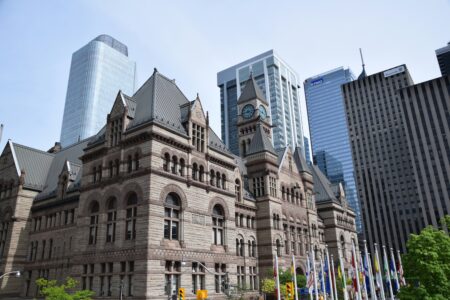
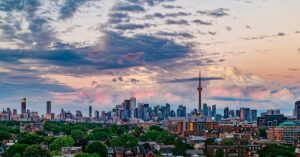
Ontario communities reported the sky dimming to an eerie orange, then black, around midday, with streetlights switching on automatically in Toronto and other towns, according to accounts collected by Tymstra and by Newspapers.com’s history blog. The smoke pushed on into the United States that afternoon. Pilots approaching LaGuardia Airport in New York encountered zero visibility and were forced to land using instruments alone, the blog reported. In parts of Pennsylvania, witnesses described the sky shifting through strange colours before turning completely dark within about half an hour, around 4 p.m.
Because the smoke sat high in the atmosphere, it carried no smell, and many people had no idea a wildfire was to blame. In the early years of the Cold War, some residents in the eastern U.S. speculated the darkness might signal a nuclear attack, while others wondered whether a forecast lunar eclipse had arrived early, according to Tymstra’s account. That confusion, combined with the sheer scale of the darkness, is part of what gave the day its “Black Sunday” nickname in American newspapers.
The smoke did not stop at the Atlantic coast. Over the following days it crossed the ocean, and by early October observers in Scotland, England, France, the Netherlands, Portugal and Denmark reported seeing the sun, and later the moon, tinted blue or lavender, an optical effect caused by the particular size of the particles suspended in the smoke, according to Tymstra’s research.
The Chinchaga fire drew relatively little formal scientific study for decades, its story overshadowed at the time by Cold War anxieties and, more recently, by modern wildfire seasons. It has drawn renewed attention in recent years, a comparison researchers and journalists have often drawn since smoke from Canada’s record 2023 wildfire season blanketed much of North America in turn. Tymstra’s book remains the most detailed account of what residents of Ontario and the northeastern United States lived through on a Sunday in September, 76 years ago this week.