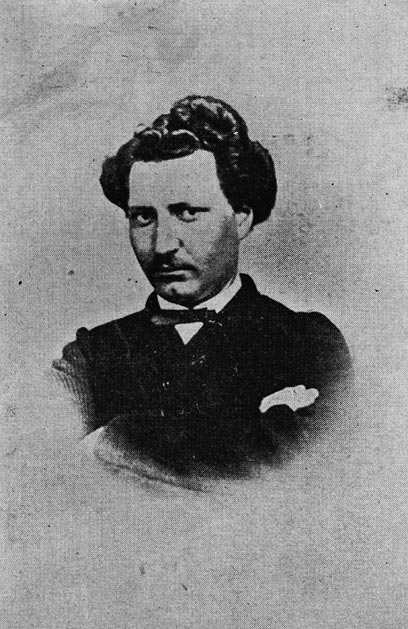



Sir Alexander Tilloch Galt, one of the lesser-known Fathers of Confederation, died in Montreal on Sept. 19, 1893, months after undergoing a tracheotomy for throat cancer, according to the Dictionary of Canadian Biography. He was 76.
Galt was born Sept. 6, 1817, in Chelsea, London, England, the youngest son of the Scottish novelist John Galt, the Dictionary of Canadian Biography says. He emigrated to Sherbrooke, in what was then Lower Canada, in 1835 to work for the British American Land Company, eventually rising to head its Canadian operations. He later built a career in railways, founding the St. Lawrence and Atlantic Railroad and serving as its president from 1849, the same year he entered politics as the member for Sherbrooke.
Galt’s most consequential contribution came in 1858, when he joined the Cartier-Macdonald cabinet as inspector general, the era’s term for finance minister. According to The Canadian Encyclopedia, he made his acceptance of the post conditional on the government adopting a plan for federal union of Britain’s North American colonies, a structure he had already sketched out with a central government holding both defined and residual powers, a supreme court and federal subsidies paid to the provinces. That October, Galt travelled to London with fellow ministers George Etienne Cartier and John Ross to pitch the idea to the Colonial Office. The Dictionary of Canadian Biography notes the response was lukewarm, saying the imperial authorities had no great enthusiasm for the plan.
The idea resurfaced six years later. At the Charlottetown Conference in August 1864 and the Quebec Conference that October, Galt worked out the financial architecture of Confederation, according to the Dictionary of Canadian Biography, resolving a dispute between the larger and smaller colonies over the size of federal subsidies by proposing that Ottawa assume provincial debts and pay each province 80 cents per resident.
After Confederation, Galt served briefly as the new dominion’s first finance minister but resigned that post on Nov. 7, 1867, following a dispute with his cabinet colleagues over how much government help should go to the failing Commercial Bank. He remained an influential voice in Ottawa’s finances and diplomacy for another decade before Prime Minister Sir John A. Macdonald appointed him Canada’s first high commissioner to Britain in 1880. Galt officially took up the post in London on May 11, 1880, but resigned it on June 1, 1883, amid friction over inadequate funding for the office and tension between his own public statements and government policy, the Dictionary of Canadian Biography says.
It was during that London posting that Galt launched the venture that would leave his most lasting mark on Western Canada. In 1881, his son Elliott alerted him to coal deposits in what is now southern Alberta. After inspecting the region himself, Galt founded the North Western Coal and Navigation Company in 1882 with two British partners, William Henry Smith and William Lethbridge, the Dictionary of Canadian Biography records. The company’s mines and a rail line built to Dunmore, near Medicine Hat and completed in 1885, gave rise to the city that took Lethbridge’s name. A follow-on company, the Alberta Railway and Coal Company, extended a line from Lethbridge into Montana by 1890, while the Alberta Irrigation Company, founded the year Galt died, helped set the stage for the region’s irrigated farmland.
Galt was made a Knight Commander of the Order of St. Michael and St. George in 1869 and promoted to Knight Grand Cross of the same order in 1878, according to the Dictionary of Canadian Biography. He is buried at Mount Royal Cemetery in Outremont, Que.
Historians still debate how much credit Galt deserves relative to better-remembered figures such as Macdonald and Cartier, but his fingerprints are on both the financial bargain that made Confederation possible and the industry that built up southern Alberta a generation later.
Follow Canada News Media
Get the day's top Canadian stories and our two daily 60-second news videos wherever you scroll.