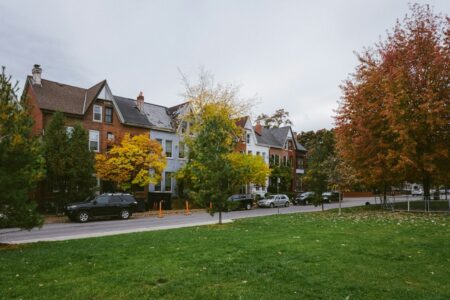



Canada Mortgage and Housing Corp. says the country needs to build as many as 4.69 million new homes by 2036 to restore affordability, a bigger, more distant target than the one the same federal agency published four years ago.
In its Fall 2026 Housing Supply Report, released Sept. 10, CMHC said Canada needs 417,000 to 469,000 new homes built every year through 2036 to close the country’s supply gap and bring housing costs back down to where they stood before the pandemic. BNN Bloomberg, reporting on the release the same day, calculated that annual range works out to as many as 4.69 million homes over the decade. Against the country’s current construction pace of roughly 231,000 homes a year, that leaves an annual shortfall CMHC pegged at 187,000 to 238,000 units.
CMHC deputy chief economist Aled ab Iorwerth warned in the report that the gap could widen rather than close. “Although slower population growth has brought some improvements in affordability, new construction is slowing faster than demand,” he said. “The key risk now is that Canada underbuilds during this softer market and finds itself further short of housing when demand strengthens again.”

Four years ago, CMHC’s own target looked smaller and more urgent. In a June 2022 report, the agency said Canada needed 3.5 million additional homes by 2030, a figure tied explicitly to the last stretch it considered housing broadly affordable. “The last time housing was affordable was in 2003 and 2004,” CMHC wrote at the time, and it repeated the 3.5-million, 2030 target in a follow-up report the next year.
That target no longer stands. In a methodology paper titled Canada’s Housing Supply Shortages: Moving to a New Framework, CMHC said restoring 2003-04-level housing costs “isn’t realistic, especially after the post-pandemic price surge,” and dropped the fixed 2030 deadline in favour of what it called a rolling 10-year horizon. The new affordability benchmark is 2019, the last full year before COVID-19 upended the market, rather than the early 2000s. CMHC said multi-year approval and rezoning timelines were part of why 2030 stopped being workable. Better Dwelling, an independent Canadian housing data outlet, was among the first to lay the two targets side by side, in a Sept. 17 post that cross-referenced CMHC’s current report against its own earlier framework paper.
The revised national figures have also shifted slightly within the past year alone. A CMHC estimate from July 2025 called for 430,000 to 480,000 new homes annually; the Fall 2026 range of 417,000 to 469,000 is marginally lower, which CMHC linked mainly to slower population growth easing demand, while cautioning the improvement could reverse if builders keep pulling back.
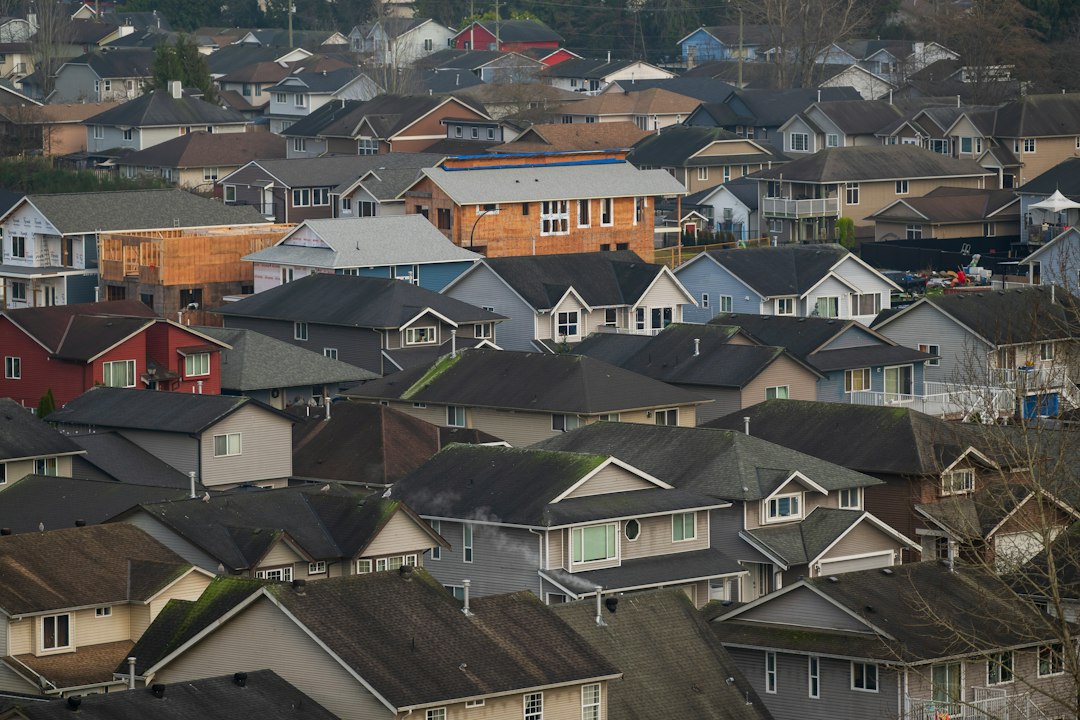
The report’s city-by-city breakdown shows the gap narrowing in some markets and widening in others. Toronto’s annual shortfall shrank to a range of 20,000 to 26,000 homes, down from 31,000 a year earlier, though CMHC’s data show that improvement came mostly from softer resale demand rather than a construction rebound: the city’s condo sector started just 156 new units in the first half of 2026, against a decade-long average near 7,000 a year. Vancouver’s gap held roughly steady at 5,000 to 7,000 units annually as condo starts there fell 40 per cent, their weakest first half since 2011. Calgary’s gap narrowed substantially on record construction, while Montreal’s, at 42,000 to 56,000 units, and Ottawa’s, at 22,000 to 27,000, both widened. Edmonton remains the only major market CMHC says has no measurable supply gap at all.
Nationally, what’s being built has shifted as much as how much. CMHC’s report found purpose-built rental apartments now account for roughly two-thirds of apartment starts in Canada’s biggest markets, up from less than 20 per cent a decade ago, as the condo presales that once drove new construction in cities like Toronto and Vancouver have largely dried up.
CMHC’s own paper does not put a dollar figure on how much less ambitious, in practical terms, a 2019 affordability target is compared with 2004: home prices and rents nationally were far lower in 2004 than in 2019, itself already several years into the run-up that preceded the pandemic-era price spike. The agency has not said what it would take to build back to 2004-level affordability, or whether that target is now considered permanently out of reach.
Follow Canada News Media
Get the day's top Canadian stories and our two daily 60-second news videos wherever you scroll.