


OTTAWA: Immigration Minister Lena Metlege Diab appeared not to recognize the Supreme Court of Canada’s 1985 Singh decision, the landmark ruling on refugee rights, when asked about it in a Radio-Canada interview, CBC reported.
The exchange took place in July during an interview for the Radio-Canada documentary podcast Les murs: le périple des migrants vers le Canada, according to CBC. Diab was asked several times about Singh v. Minister of Employment and Immigration and said she would have to check with her team. “There are many Singhs and many decisions,” she said, according to the report.
When she was told the ruling led to the creation of the Refugee Board, she replied: “Ah, OK.”
The topic is trending in Canada this week after CBC published its report on Oct. 7, and opposition and commentary pieces followed. The Globe and Mail ran an opinion column on the weakest links in Prime Minister Mark Carney’s cabinet that names Diab, and MP Jenny Kwan issued a media release calling for the minister’s removal.
The Singh decision held that refugee claimants in Canada are guaranteed the Charter right to fundamental justice. Experts cited by Radio-Canada said the ruling also recognizes a right to an oral hearing. McGill University professor François Crépeau told Radio-Canada the Immigration and Refugee Board was created in 1989 to meet the ruling’s requirements.
The ruling is central to legal challenges against Bill C-12, the Carney government’s immigration reform law, which CBC said passed last March. Under the law, asylum claims made more than a year after a person’s first entry into Canada no longer go to the Refugee Board. They instead receive a pre-removal risk assessment, which is usually a written submission rather than an oral hearing. Lawyers are challenging the law in court, arguing it breaches Canada’s domestic and international legal obligations.
Diab said in French that C-12 respects the Charter and noted that she is a lawyer, according to CBC. She said the changes address the asylum backlog. Asked about the oral-hearing argument, she said the law is new and the government would continue to monitor it.
Her office said right after the interview that she knew the Singh decision well and that French is not her first language, which affected her understanding of the questions, CBC reported. CBC also said Diab did not answer Singh questions in two English-language appearances before Senate committees and deferred to officials.
Immigration, Refugees and Citizenship Canada maintains that C-12 respects Singh. A department lawyer told a parliamentary committee in February that an oral hearing is required only when credibility is at issue, CBC reported.
Gauri Sreenivasan of the Canadian Council for Refugees said she was “extremely shocked,” according to CBC. Louis-Philippe Jannard of the TCRI, a Quebec refugee-rights group, cited a competence concern and noted the issue was raised while C-12 passed through both chambers. Crépeau said removing a full hearing violates the conditions set by Singh.
The Conservative opposition has called for Diab to be fired for months, CBC reported. The Prime Minister’s Office said she plays an “essential” role in the government’s immigration agenda and that “she continues this work.”
The story is developing. Canada News Media has not independently confirmed the interview exchange and relies on CBC’s reporting of Radio-Canada’s podcast.
If you find reporting like this useful, consider supporting Canada News Media, an independent Canadian newsroom with no corporate parent.
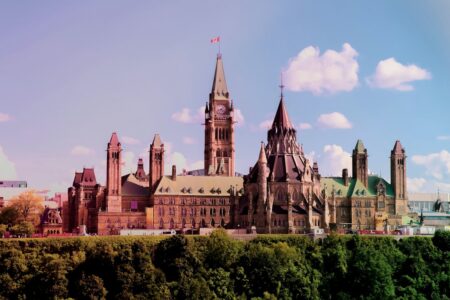
Sources: CBC News (Oct. 7, based on Radio-Canada reporting), The Globe and Mail, and a media release from MP Jenny Kwan. File photo of Parliament Hill in Ottawa, not related to a specific event in this story.
Follow Canada News Media
Get the day's top Canadian stories and our two daily 60-second news videos wherever you scroll.