
Quebec voters began casting advance ballots this weekend in a provincial election that could deliver the separatist Parti Québécois its first majority government since 2018, reopening a sovereignty debate that had gone mostly quiet for a generation.
Advance polling opened ahead of the Oct. 5 general election, according to CTV News, with polls showing PQ Leader Paul St-Pierre Plamondon’s party well ahead of Premier Christine Fréchette’s Coalition Avenir Québec. A Léger poll released Aug. 30 put the PQ at 29 per cent support, followed by the CAQ at 24 per cent, the Quebec Liberals at 22 per cent, the Conservative Party of Quebec at 15 per cent and Québec solidaire at 10 per cent. Seat projection models from aggregators Qc125 and Polling Canada suggest that lead could translate into a majority government, with the PQ needing 64 of the National Assembly’s 127 seats to govern outright.
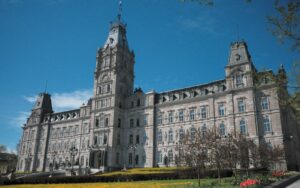
The race has been shaped as much by turmoil inside the governing party as by the PQ’s rise. Lieutenant Governor Manon Jeannotte issued the writs of election Aug. 27, after Fréchette asked her to dissolve the legislature. Fréchette became premier in April, months after François Legault announced he would step down, and has since watched several Coalition members of the legislature leave caucus. The Liberals, meanwhile, picked Charles Milliard as leader in February after Pablo Rodriguez resigned amid internal party turmoil in December.
What sets this campaign apart from Quebec’s past sovereignty pushes is timing. Plamondon has said that, if elected, he would not hold a referendum until after Jan. 20, 2029, the date U.S. President Donald Trump’s second term is due to expire. He has argued that ongoing tariff threats and talk from Washington about Canadian sovereignty make this the wrong moment to hold a vote on Quebec’s own future. It is an unusual bet, tying the province’s constitutional timeline to the American political calendar rather than to a fixed date at home.
That caution has not extended to the price tag. In a Canadian Press interview published Sept. 11, Plamondon estimated a future referendum, which he said could be held in 2029 or 2030, would cost at least $130 million to administer. Rival party leaders seized on the figure within days, framing it, according to Global News and CTV News, as evidence the PQ is preparing to spend heavily on a question Quebecers have already rejected twice, in 1980 and in 1995.
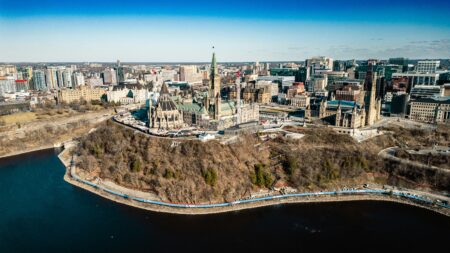
For Canadians outside Quebec, the stakes reach beyond provincial politics. A PQ majority would put a sovereignty referendum back on Ottawa’s radar for the first time since the 1995 vote, which federalists won by little more than one percentage point, at a moment when the federal government is already managing a trade dispute with the United States and simmering separatist talk of its own in Alberta. The Quebec campaign has also turned on cost of living, housing affordability and health care, the same pressures shaping politics across the country, alongside language policy and immigration levels, issues central to the PQ’s platform that continue to shape debates about who gets to belong in the province and how newcomers are received.
Advance polls remain open through the weekend before the Oct. 5 general election, with all five major parties, the PQ, CAQ, Liberals, Conservatives under Éric Duhaime and Québec solidaire, making their final pitches. If current polling holds, Quebecers could choose, for the first time in eight years, a government committed to eventually asking them to leave Canada. Just not, its leader says, until Trump is out of office.
Via CTV News, CBC News, Global News and the Canadian Press. Read the original CTV News live coverage here.