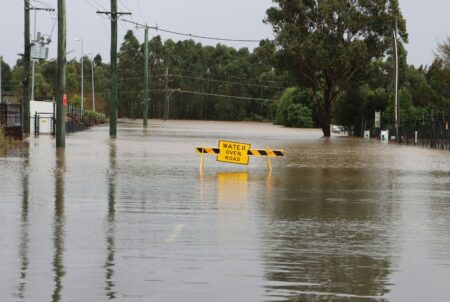

Canada’s pipeline of new housing supply weakened on two separate fronts last month, as national housing starts stalled in August and the value of building permits issued in July sank 17.3 per cent, according to data from the Canada Mortgage and Housing Corp. and Statistics Canada.
CMHC said the seasonally adjusted annual rate of housing starts came in at 229,046 units in August, essentially flat from July’s 229,360 units. The six-month trend, which CMHC considers a more reliable gauge of underlying activity, fell 1.3 per cent to 244,149 units.
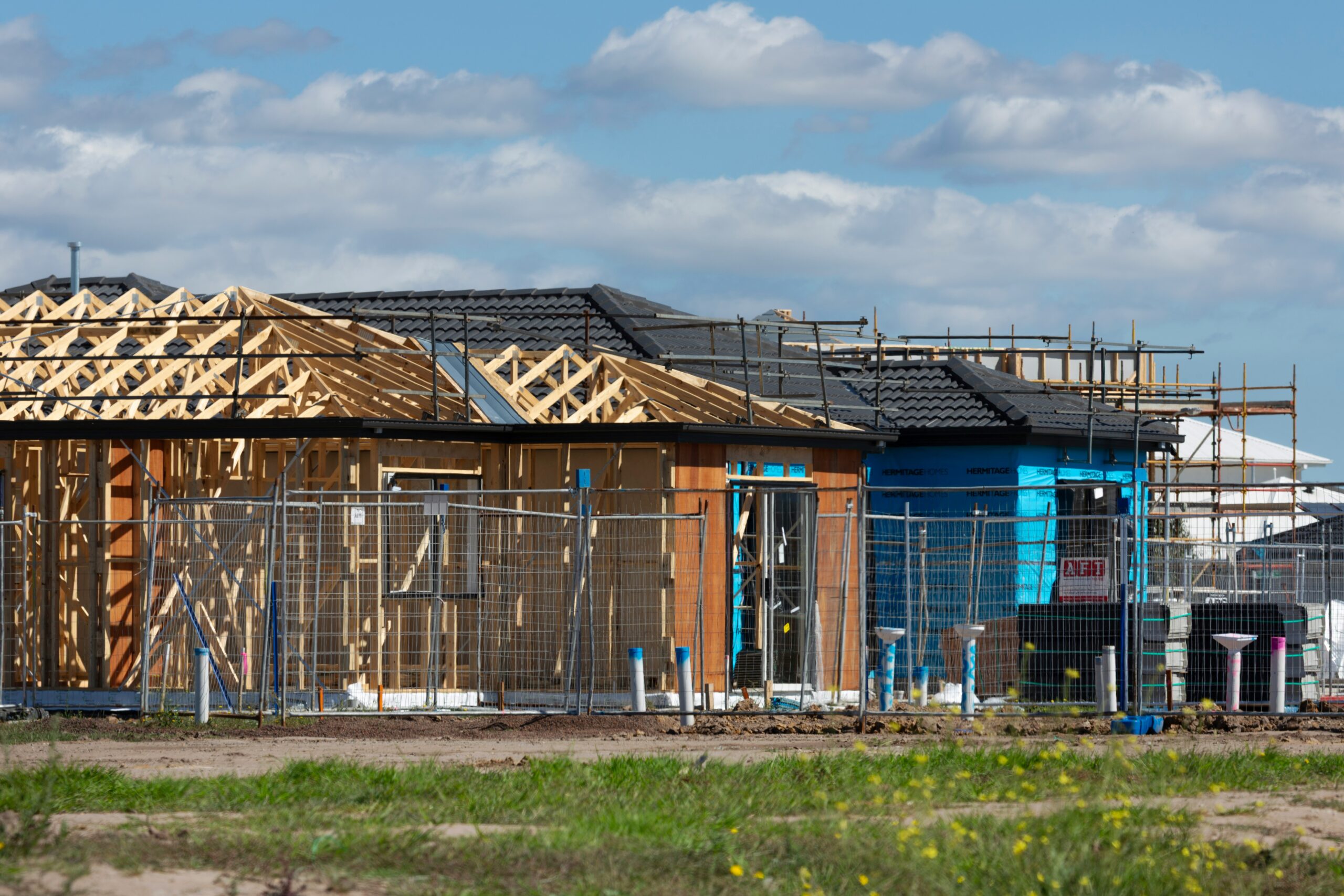
Illustrative stock photo of new-home construction. Not a specific project named in this article.
Actual starts in centres with a population of 10,000 or more totalled 17,691 units in August, down 2 per cent from 18,112 units a year earlier. For the first eight months of 2026, starts are running 4 per cent behind last year’s pace, at 149,542 units compared with 155,658 units over the same stretch of 2025.
“Housing starts continued to trend slightly down in August, as modest gains in Quebec and Alberta only partially offset the decline in other provinces, most notably, Ontario,” said Kevin Hughes, CMHC’s deputy chief economist, in the agency’s release.
The Ontario weakness showed up clearly in CMHC’s city-by-city breakdown. The six-month trend for Toronto held flat at 25,131 units, and Ottawa-Gatineau slipped 2 per cent to 14,583 units. Other major markets moved the other way: Vancouver’s trend rose 6 per cent to 24,523 units, Montreal climbed 6 per cent to 30,492 units, and Calgary gained 7 per cent to 23,298 units.
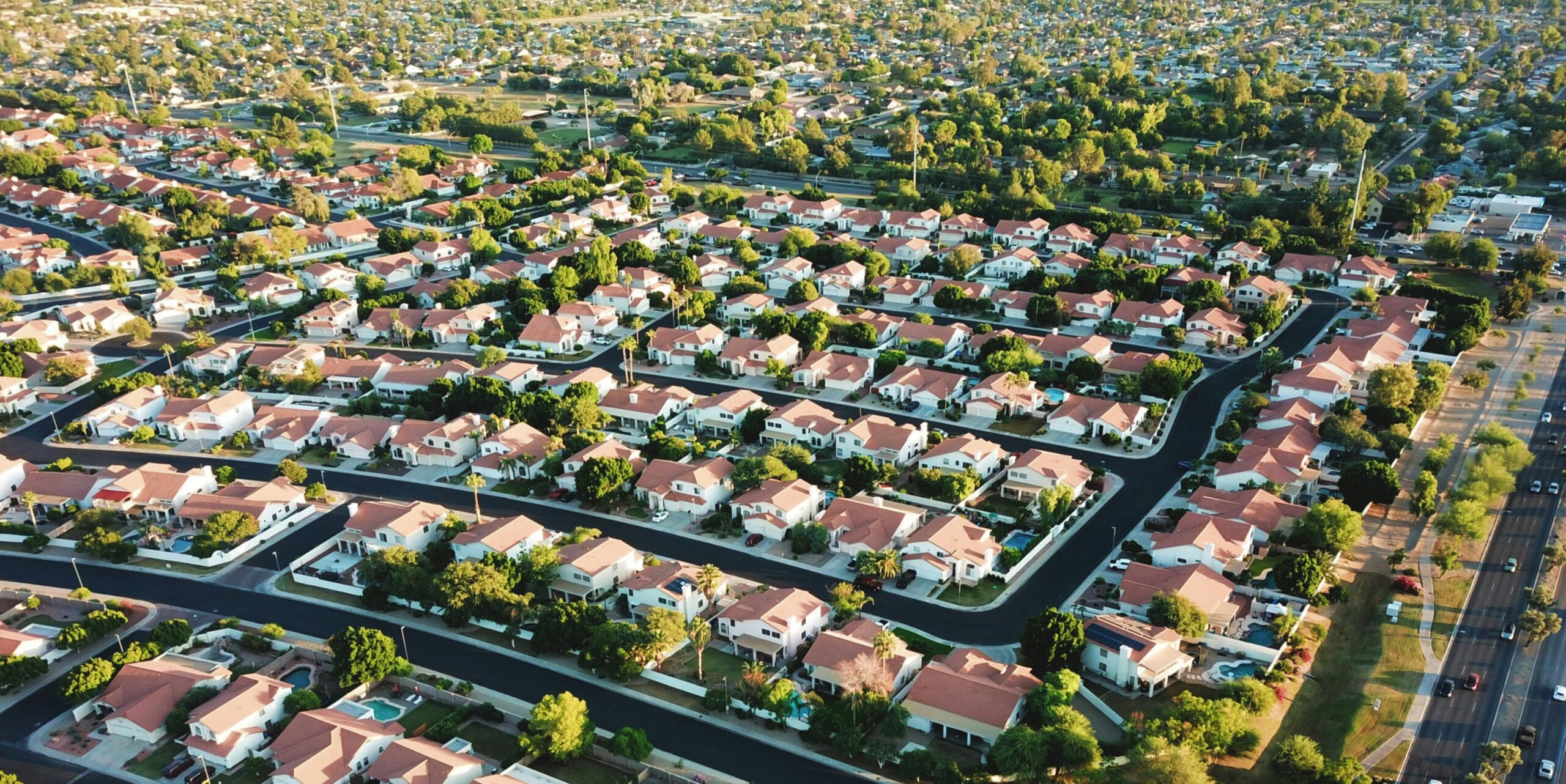
Illustrative stock photo of a residential subdivision. Not a specific city or development named in this article.
The starts data landed alongside a sharper signal from Statistics Canada, whose building permits survey showed the total value of permits issued by Canadian municipalities fell 17.3 per cent in July to $12.2 billion, reversing most of a revised 18.5 per cent gain in June.
Residential permits accounted for $701.2 million of the decline, dropping to $7.2 billion. Multi-unit projects, the apartment and condo buildings that supply the bulk of new housing in large cities, fell $531.8 million to $4.7 billion. Single-family permits dropped $169.4 million to $2.5 billion.
The non-residential side fell even further, Statistics Canada’s data showed, down $1.9 billion to $5.0 billion. Institutional permits led that drop, falling $1.5 billion to $1.7 billion, with Ontario alone accounting for $1.1 billion of the institutional decline.
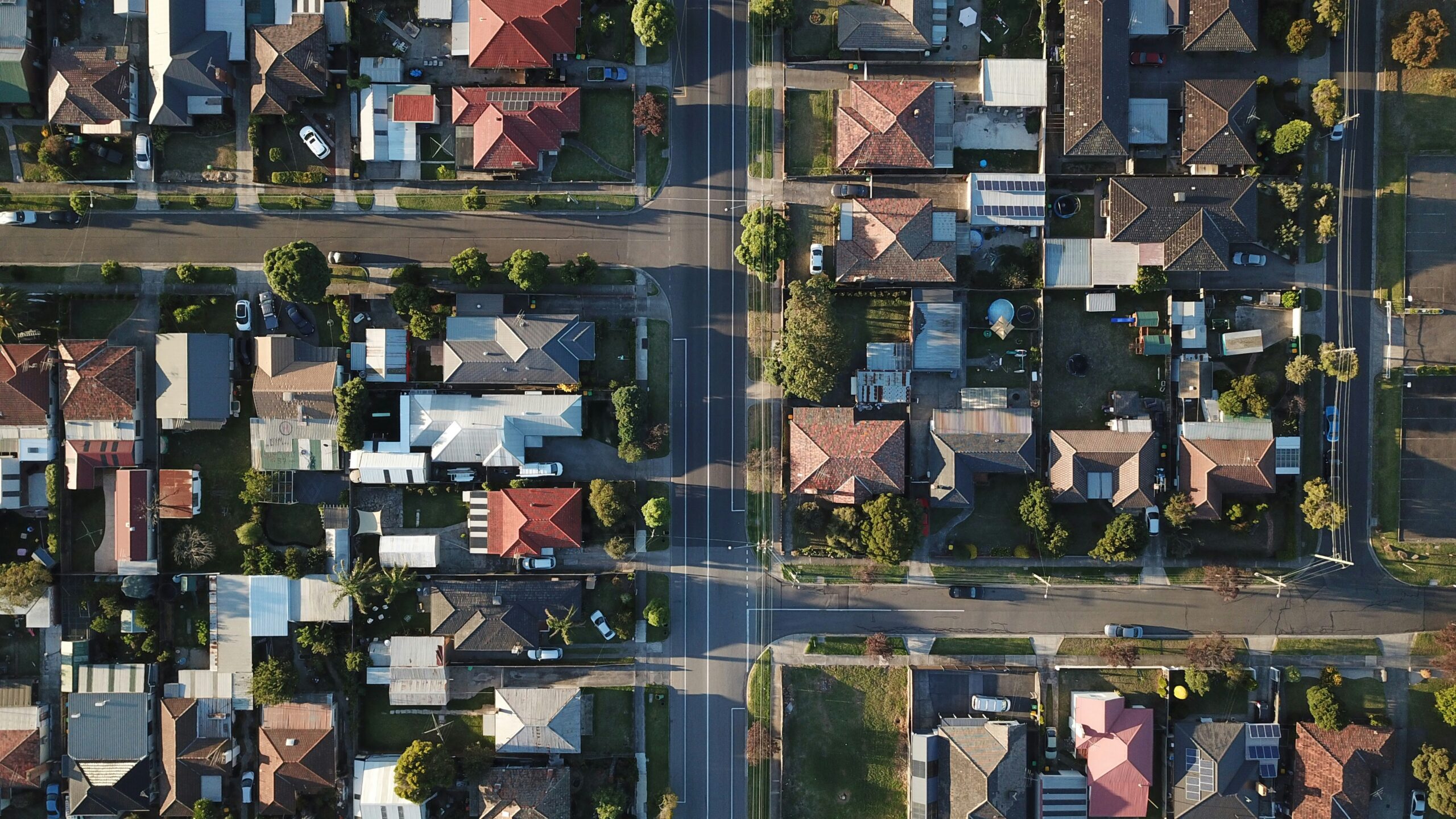
Illustrative stock photo of residential streets. Not a specific city or development named in this article.
Because permits typically lead construction by several months, July’s drop points to fewer housing starts ahead, even as CMHC’s own figures show a cushion still working through the system. The number of units with permits approved but not yet started rose 0.7 per cent in August to 142,423, and 371,658 units were under construction in centres of 50,000 or more, down just 0.4 per cent from July.
Completions are slowing too. CMHC recorded 17,550 completions in August, down 11.2 per cent from July, meaning fewer finished homes are reaching buyers and renters even as the backlog of approved-but-unstarted projects grows.
The construction slowdown comes as the Bank of Canada has held its policy rate at 2.25 per cent for a seventh straight decision. The central bank said this month that new U.S. tariffs, Canadian counter-tariffs and elevated oil prices are “raising the risk that inflation moves higher rather than settling near the Bank’s 2 per cent target,” according to its September 2 announcement. Higher borrowing costs for developers, layered on top of soft resale prices in Toronto and Ottawa this year, have made it harder for builders to pencil out new projects, particularly the multi-unit buildings that accounted for the bulk of July’s permit decline.