

Checking your tires before the first snowfall takes about 15 minutes: measure the tread depth in every groove, set each tire to the pressure on your vehicle’s sticker while the tires are cold, and replace anything worn to 4 millimetres (5/32 of an inch) or less if you will drive on snow.
Tires are the only part of a vehicle that touches the road, and cold weather changes how they behave. Rubber stiffens as temperatures fall, and tire pressure drops with the air temperature. The Cooperators, an insurer, advises that tires worn below 4 mm should not be used on snow-covered roads. Transport Canada, as cited by Kal Tire, advises against any tread depth below 5/32 of an inch on snow-covered roads.
Winter tires are generally installed once temperatures stay below about 7 C. Doing this check first tells you whether last year’s set still has a season left or needs replacing. Winter tire rules differ by province, so check yours before you buy.
Step 1: Pick a flat spot and let the tires cool
Park on level ground and let the vehicle sit. BrokerLink advises checking pressure at least three hours after you have been on the road, because tire pressure rises as tires heat up and drops as they cool. A reading taken right after a drive will be too high.
Step 2: Test tread depth with a quarter
Hold a Canadian quarter with the caribou’s nose pointing down and push it into a tread groove. If the tread covers the tip of the caribou’s nose, the tire may still have usable tread. If you can see the nose, the tire is worn and should be replaced, according to The Cooperators and Kal Tire.
The quarter test is a rough check. For a precise reading, use the method in the next step.
Step 3: Measure with a tread depth gauge
A tread depth gauge is inexpensive and sold at most auto parts stores. Find the shallowest groove on the tire, press the gauge’s pin down until its base sits flush against the tread surface, and read the number.
Kal Tire gives these guideposts in 32nds of an inch. At 6/32 a tire is adequate for three seasons but close to the minimum for winter use. At 5/32, consider replacing it if wet roads are a concern. At 4/32 to 3/32, consider replacing it as soon as possible. At 2/32, a tire is legally bald and must be replaced.
Check several spots across the width of each tire and on all four tires. Uneven wear can point to an alignment or pressure problem.
Step 4: Look for wear bars and damage
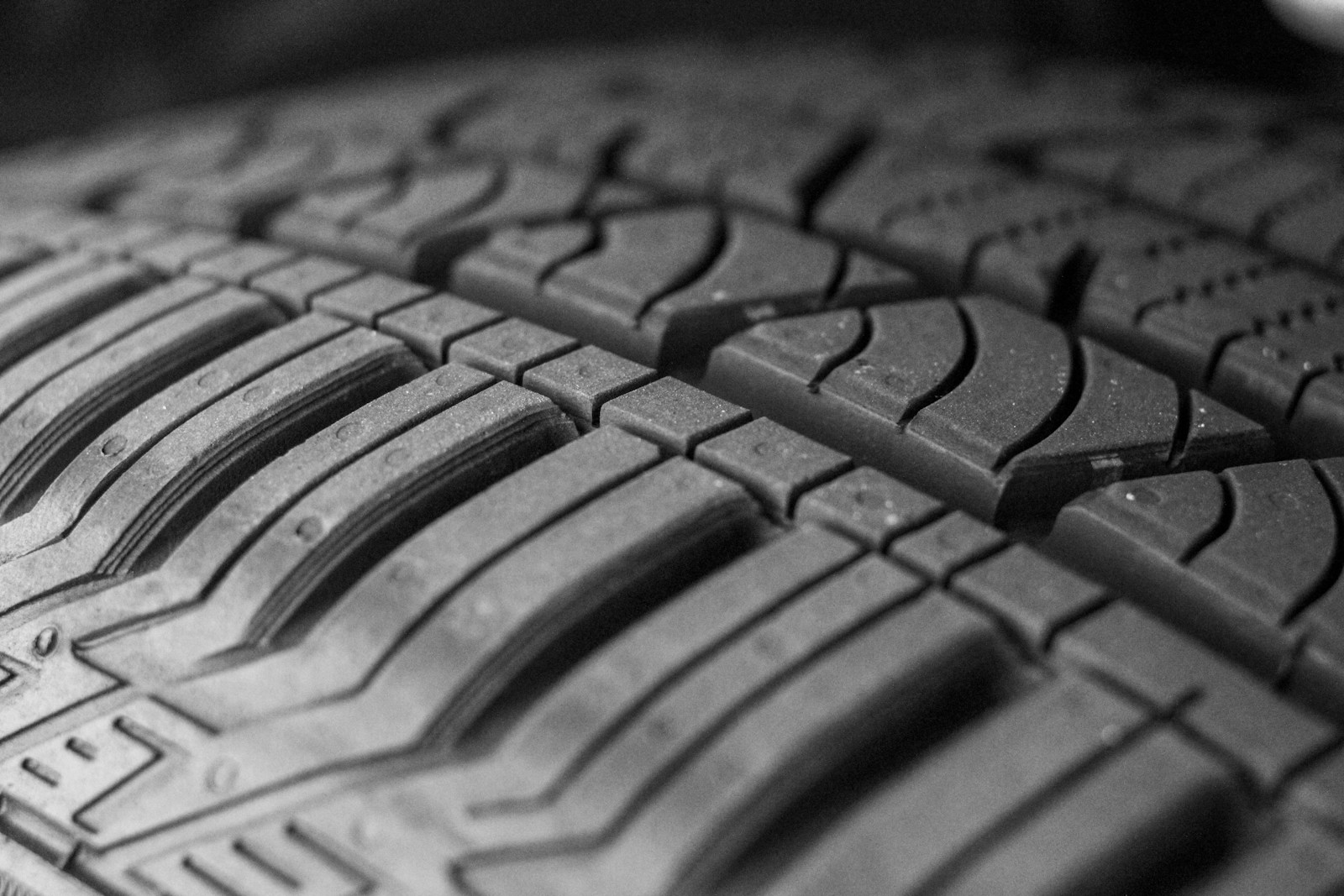
Many tires have small raised bars moulded into the grooves that mark the minimum allowable depth. If the tread is flush with those bars, the tire should be replaced, The Cooperators said. Some tires also have etched numbers that fade as the rubber wears.
Run your eyes and hand over the sidewalls too. Look for cracks, bulges or cuts, and for objects such as nails stuck in the tread. A bulge or deep cut means the tire should be inspected by a professional before you drive on it.
Step 5: Find the right pressure
The correct pressure is not printed on the tire. The tire’s sidewall shows a maximum, which is not the number you want. Look in your owner’s manual, which BrokerLink lists as the source, or on the label usually found inside the driver’s door frame. If you cannot find it, contact your dealer or check the manufacturer’s website.
Step 6: Check and adjust each tire
Remove the valve cap and press an accurate digital or analog gauge firmly onto the valve stem. Compare the reading with the recommended pressure.
If the tire is low, add air with a compressor until it reaches the target. If it is too high, release a little air and check again. Replace the valve caps when you are done.
Check all four tires, and do not forget the spare. A spare that has gone flat is no help on a cold morning on the shoulder.
Step 7: Make it a monthly habit
The Cooperators recommends checking air pressure at least monthly to improve safety and reduce wear. BrokerLink, citing Transport Canada, says pressure drops about 1 psi for every 5 C drop in temperature, so a sharp cold snap can leave tires noticeably low overnight. Check more often in winter, and before long road trips.
If a dashboard warning light comes on, check the pressure in all four tires rather than assuming one is at fault.
When to replace tires
Kal Tire says that, per most manufacturers and most provinces’ laws, tires should be replaced at 4/32 of an inch in winter and 2/32 in summer. If your tires fall at or below that line, book a replacement before the first storm, when tire shops are busiest. Winter tires carrying the three-peak mountain snowflake symbol perform better on snow and ice than all-season tires, and the symbol is what many provincial rules look for.
If you find damage you are unsure about, or you are not comfortable removing and installing wheels yourself, have a tire shop do the work.
If you find reporting like this useful, consider supporting Canada News Media, an independent Canadian newsroom with no corporate parent.
Sources: The Cooperators winter tire maintenance guide; Kal Tire, “How do you measure tread depth on your tires?”; BrokerLink, “How to check your tire pressure.”
Follow Canada News Media
Get the day's top Canadian stories and our two daily 60-second news videos wherever you scroll.