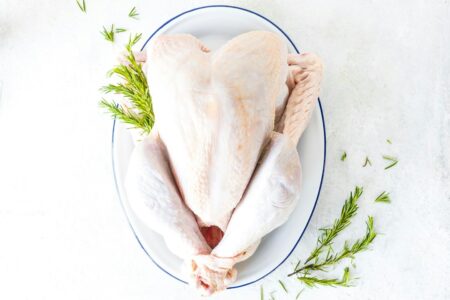

To carve a turkey, let it rest for at least 15 to 30 minutes, remove the legs and wings, lift off each breast whole, then slice the meat across the grain with a sharp knife. With Thanksgiving Monday falling on Oct. 12, the job comes up in kitchens across the country this weekend.
Carving is easier than it looks, and it is mostly a matter of order. Taking the bird apart in sections, rather than slicing it on the roasting pan, gives neater pieces, keeps the meat juicy and leaves a carcass that can go straight into a pot for stock.
Two food sources give slightly different resting times. Food Network advises 15 to 30 minutes depending on the bird’s size, while the Turkey Farmers of Canada’s U.S. counterpart, the National Turkey Federation, advises 30 to 60 minutes and says not to tent the bird with foil, which keeps the skin crisp. A rest of about 30 minutes suits most home-sized birds. The turkey stays hot enough to serve in that time, and the juices settle into the meat instead of running onto the board.
Before starting, make sure the turkey was cooked safely. Health Canada says whole poultry should reach an internal temperature of 82 C (180 F), measured with a food thermometer in the thickest part of the thigh. Our guide to thawing a turkey covers the earlier steps.
The tools are simple: a sharp chef’s knife or carving knife about 20 to 25 centimetres long, a large cutting board, a sturdy fork, a serving platter, a second board or plate to hold cut pieces, and paper towels. Food sources advise against serrated or electric knives, which tend to shred the meat.
Step 1: Rest the turkey. Move it to a cutting board with a groove to catch juices, or leave it on the rack in the roasting pan. Tip any juices from the cavity into the pan, since they can go into gravy.
Step 2: Set up the station. Remove any twine or skewers holding the legs, and scoop out and discard the stuffing aromatics, such as onions, herbs or citrus. If the stuffing is inside the bird, spoon it into a separate dish. Carve in the kitchen if space is tight, and move pieces to the platter as you go.
Step 3: Remove the legs. With the turkey breast side up, cut through the skin between the leg and the body. Pull the leg away from the bird and bend it back until the joint pops, then cut through the joint and the remaining meat. Repeat on the other side.
Step 4: Remove the wings. Untuck each wing, pull it back until the joint pops and slice through it. Set the wings on the platter.
Step 5: Remove the breasts. Steady the bird with a fork. Make a long, deep cut along one side of the breastbone, following its curve, and keep the knife against the bone as you pull the meat away. The whole breast should come off in one piece. Repeat on the other side, then set the carcass aside for broth.
Step 6: Separate the legs. Wipe the board clean. Cut each thigh from its drumstick at the joint and place the drumsticks on the platter.
Step 7: Slice the dark meat. Cut the meat off each thigh bone in large pieces, then slice it across the grain, about 1 centimetre thick, and move it to the platter.
Step 8: Slice the white meat. Place each breast skin side up on the board and slice straight across, about 0.5 to 1 centimetre thick, using long, smooth strokes rather than short sawing motions. Stack the slices and fan them out on the platter.
Step 9: Serve right away. Carved meat cools quickly, so bring the platter to the table while it is warm. Pour some of the pan juices or gravy over the slices to keep them moist.
Leftovers should be refrigerated within two hours of serving. Our guide to storing Thanksgiving leftovers safely explains how long cooked turkey keeps and how to freeze it.
The carcass is worth saving. Wrap it and refrigerate it, or freeze it, and use it within a few days to make turkey stock or soup.
If you find reporting like this useful, consider supporting Canada News Media, an independent Canadian newsroom with no corporate parent.
Sources: Food Network, “How to Carve a Turkey: A Step-by-Step Guide”; National Turkey Federation (eatturkey.org), “How to Carve a Turkey”; Health Canada safe internal cooking temperatures.
Follow Canada News Media
Get the day's top Canadian stories and our two daily 60-second news videos wherever you scroll.