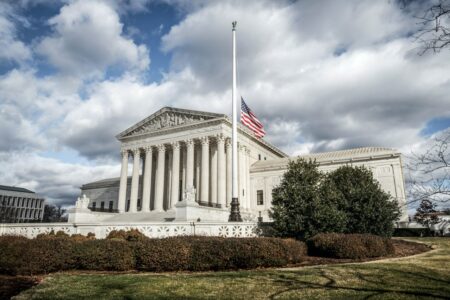


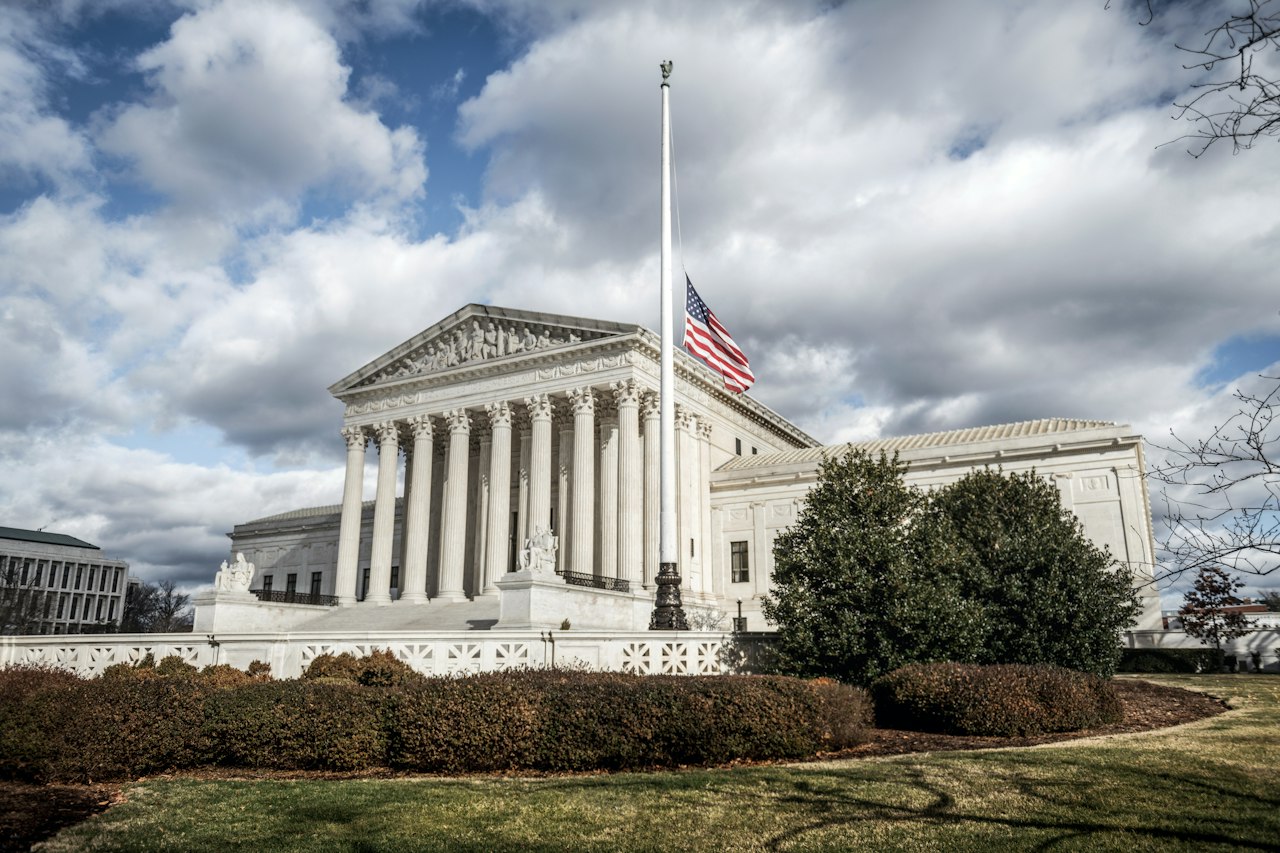
The U.S. Supreme Court agreed on Oct. 1, 2026, to decide whether the Trump administration can hold immigrants who entered the country illegally, and were arrested away from the border, without bond hearings while their deportation cases proceed.
The ruling will settle a split among the federal appeals courts. Axios reported that nine of 11 appeals courts that have considered the administration’s reading of the law have rejected it. The 5th and 8th Circuit courts of appeals sided with the administration, WLOS reported.
The lead case is Rhoney v. Barbosa da Cunha. It comes from the 2nd U.S. Circuit Court of Appeals, which upheld a lower-court order releasing the detained man and concluded that the mandatory-detention provision applies to people apprehended at or near the border, according to Regional Media News.
The administration adopted its current approach in July 2025, the American Civil Liberties Union said in a statement on the court’s decision. Under it, people who entered without inspection are held without a bond hearing, however long they have lived in the United States.
The administration argues that a 1996 immigration law requires mandatory detention for people found to have entered unlawfully, regardless of how long they have been in the country, WLOS reported. It says conflicting lower-court rulings have produced inconsistent enforcement and thousands of legal challenges.
Lawyers for the administration have argued that only people who were admitted to the United States and charged with deportability are eligible for release on bond, Regional Media News reported. No administration or Department of Homeland Security official was named in the coverage reviewed for this article.
The ACLU, the New York Civil Liberties Union and attorney Paul Dwyer brought the case. “The courts have repeatedly and resoundingly rejected the Trump administration’s radical misinterpretation of the law,” Michael K.T. Tan, deputy director of the ACLU’s Immigrants’ Rights Project, said in the statement. The challengers argue the policy could affect millions of noncitizens and unlawfully denies individualized bond hearings, WLOS reported.
The case does not involve immigrants convicted of certain crimes, who can already be detained during deportation proceedings under separate federal provisions, WLOS reported.
Slate, citing the research group TRAC, reported that about 65,000 people were in federal immigration detention as of July 2026, and that about 70 per cent of detainees had no criminal convictions. Those figures come from a single outlet and were not independently confirmed by Canada News Media.
The court is expected to hear arguments in its current term, with a decision likely by the end of June 2027, WLOS reported. The court’s order itself could not be opened from its website at the time of writing, so the date and framing rest on the reports cited here.
For Canadians, the decision matters mainly as a measure of how far U.S. immigration enforcement can reach. Canada News Media reported on Oct. 9 that Ottawa said arrests of Canadians in the United States had risen 60 per cent. The sources reviewed here do not say whether any Canadians are held under the policy at issue.
If you find reporting like this useful, consider supporting Canada News Media, an independent Canadian newsroom with no corporate parent.
Via the ACLU, Axios, WLOS, Regional Media News and Slate.
Follow Canada News Media
Get the day's top Canadian stories and our two daily 60-second news videos wherever you scroll.