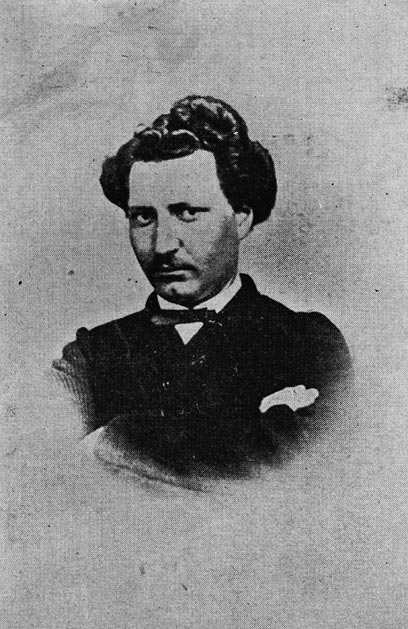

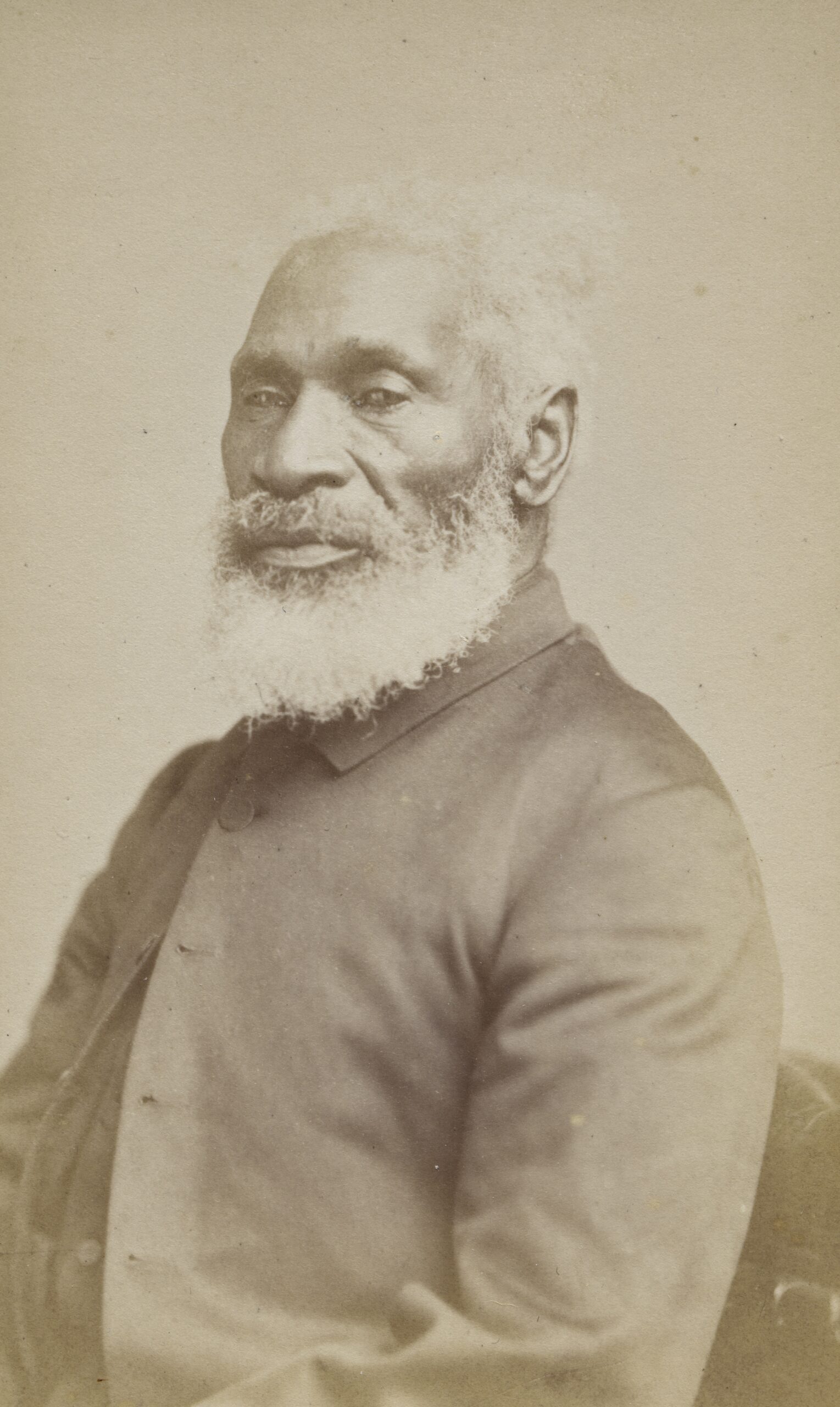
In 1842, a school opened on farmland in Dawn Township, in what is now Dresden, Ont., that asked its students to spend part of each day in a classroom and part at a trade. The British-American Institute was a manual labour school for students of all ages, and its co-founder was Josiah Henson, a man born into slavery in Maryland.
Henson was born on June 15, 1789, in Charles County, Md., according to both the Dictionary of Canadian Biography and The Canadian Encyclopedia. The Encyclopedia says that in 1829 he, his wife and their four children were taken toward New Orleans to be sold. They fled instead, and reached Upper Canada on Oct. 28, 1830, the Dictionary of Canadian Biography said.
The Dictionary said Henson worked as a farm labourer in the Waterloo area for about four years. In 1834, it said, he led about a dozen associates to Colchester, where they rented government land.
The Dawn settlement grew from a purchase of land made with a partner, the missionary Hiram Wilson of Oberlin, Ohio. The Dictionary of Canadian Biography said Henson, Wilson and a silent partner, probably James Cannings Fuller, bought 200 acres in Dawn Township to educate Black, white and Indigenous residents. The Canadian Encyclopedia dated the 200-acre purchase to 1841.
The acreage is not settled in the public record. The Ontario Heritage Trust, which runs the site today, gives 200 acres in one section of its history page and 300 acres in another, and does not reconcile the two figures.
The Ontario Heritage Trust said students split their day between classroom learning and trade work, and that the goods they made were sold to fund the school. Female students learned domestic skills, while male students worked in the mills or the fields.
The Dictionary of Canadian Biography said the Institute’s executive committee oversaw farms, a grist-mill, a sawmill, a brickyard and a rope-walk. The Heritage Trust described its mandate as developing the “entire being,” meaning physical, intellectual and moral powers. The Canadian Encyclopedia said the Institute also trained teachers.
The Heritage Trust said Henson travelled across Canada and the United States, and made three trips to England, to raise donations. The Canadian Encyclopedia said he published his autobiography, The Life of Josiah Henson, in 1849 to raise funds for Dawn.
That book later became tied to one of the best-known novels of the 19th century. Harriet Beecher Stowe published Uncle Tom’s Cabin in 1852. The Dictionary of Canadian Biography said Stowe stated she had met Henson and read his book, and called his status as the prototype for the title character “putative,” meaning it is asserted rather than firmly established. The Canadian Encyclopedia said many consider the autobiography an inspiration for the novel, and noted concern that the novel portrayed Black people in a stereotyped way.
The Institute’s own record was not free of dispute. The Dictionary of Canadian Biography said a convention at Drummondville in 1847 cleared Henson of wrongdoing, but that in 1848 the Institute’s trustees described the executive committee as “unfit.” Investigations in 1849 and 1852 reached equivocal findings, it said. Canada News Media found no second independent source detailing those disputes, so the nature of the complaints, and who was right, remains an open question here.
The same caution applies to Henson’s own story. The Dictionary of Canadian Biography said his autobiography is the only known source for his early life, and that it went through numerous editions and revisions in his lifetime. Readers should treat details of his youth as his own account, not as independently documented fact.
The Institute closed in 1868, the Dictionary said, and its assets were used to establish the Wilberforce Educational Institute in nearby Chatham. The Canadian Encyclopedia said Henson stayed on the executive committee until the end.
Henson died at Dresden on May 5, 1883. The Ontario Heritage Trust said he continued to preach at the British Methodist Episcopal Church in Dresden each Sunday until his death, and that he is buried in the Henson family cemetery beside the museum that now bears his name.
That museum, at 29251 Freedom Road in Dresden, was first opened to the public in 1948 as “Uncle Tom’s Cabin,” the Heritage Trust said. The property was transferred to the trust in 2005. The site includes the Henson house, a sawmill whose restoration was completed in 2019, two cemeteries and the Pioneer Church, which dates to 1850. The trust lists seasonal hours from May 16 to Oct. 30, 2026.
If you find reporting like this useful, consider supporting Canada News Media, an independent Canadian newsroom with no corporate parent.
Sources: Dictionary of Canadian Biography, “Henson, Josiah” (biographi.ca/en/bio/henson_josiah_11E.html); The Canadian Encyclopedia, “Josiah Henson” (thecanadianencyclopedia.ca/en/article/josiah-henson); Ontario Heritage Trust, Josiah Henson Museum history page (heritagetrust.on.ca/properties/josiah-henson-museum/history). Photo: unattributed portrait, public domain, via Wikimedia Commons.
Follow Canada News Media
Get the day's top Canadian stories and our two daily 60-second news videos wherever you scroll.
X Threads Facebook Instagram LinkedIn TikTok YouTube Pinterest Reddit Substack Flipboard Newsletter RSS