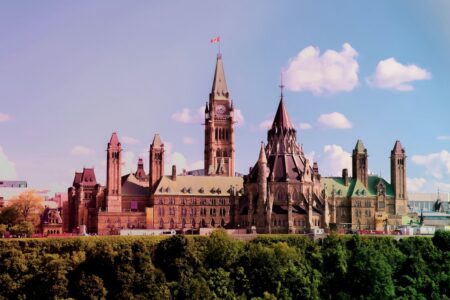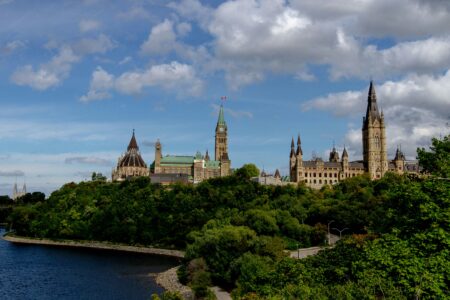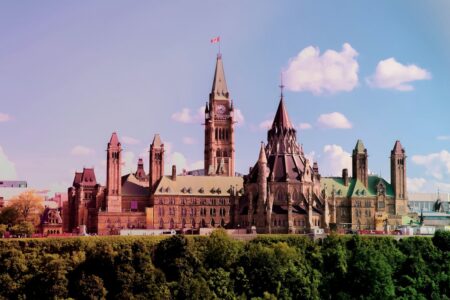

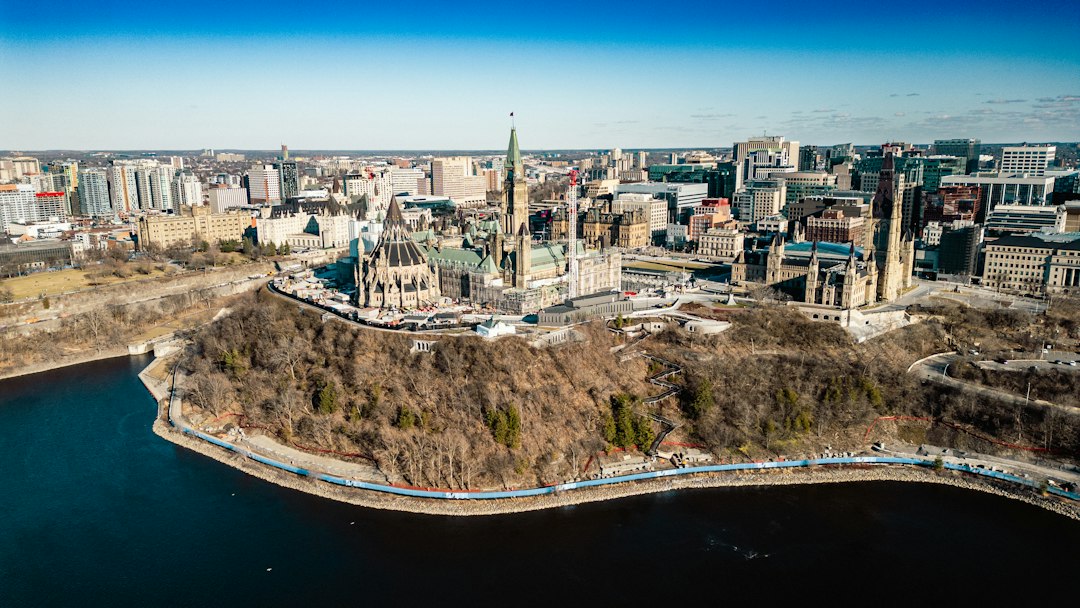
Canadian soldiers were deployed to guard federal buildings and officials in Ottawa on Oct. 12, 1970, a week into the October Crisis, as the Front de libération du Québec held two men hostage in Quebec.
The Canadian Encyclopedia says Prime Minister Pierre Trudeau asked the Armed Forces to send troops to Ottawa to protect high-profile people and locations. Legion Magazine, in its account of the crisis, says soldiers first appeared in the capital on Oct. 13, so sources differ by a day on when the troops were first seen on the streets.
The crisis began on Oct. 5, 1970, when the FLQ’s Liberation cell kidnapped British trade commissioner James Cross from his Montreal home. Five days later, after a deadline set by the kidnappers passed, the Chénier cell took Quebec cabinet minister Pierre Laporte from his home in Saint-Lambert.
The deployment in Ottawa was the first visible sign that the federal government was preparing a harder response. The decision drew its sharpest public test the following day, when CBC reporter Tim Ralfe questioned Trudeau about the soldiers on Parliament Hill. Trudeau answered with a line that became one of the best known in Canadian politics: “Just watch me.”
Events moved quickly after that. Quebec Premier Robert Bourassa asked for military assistance on Oct. 15, and the War Measures Act was invoked on Oct. 16 at the request of the Quebec government, the City of Montreal and Montreal police. The Canadian Encyclopedia notes it remains the only time the act has been used in peacetime in Canada.
The Legion Magazine account says about 1,100 soldiers were flown to the Saint-Hubert air base near Montreal, and roughly 5,000 troops were used to protect Hydro-Québec property, armouries and other military installations.
The act suspended normal civil liberties protections. The Canadian Encyclopedia reports that more than 250 people were arrested within 48 hours, police carried out 1,628 raids by Oct. 20, and 497 people were arrested in total under the War Measures Act and the Public Order Act. Of those, 435 were released and 62 were charged.
Laporte’s body was found on Oct. 17 in the trunk of an abandoned car near the Saint-Hubert airport. An autopsy showed he had been strangled. Cross was freed in early December after 59 days in captivity, in exchange for safe passage to Cuba for members of the Liberation cell.
Opposition voices raised concerns at the time. The Canadian Encyclopedia says Robert Stanfield, John Diefenbaker and Tommy Douglas spoke against the measures in the House of Commons, and Douglas called the move “a sledgehammer to crack a peanut.” Opinion polls of the day, however, showed a clear majority of Canadians supported invoking the act.
The legacy of the crisis is still debated. Inquiries in 1981, the McDonald Commission and the Keable Inquiry, criticized RCMP security tactics. The Canadian Security Intelligence Service was created in 1984, and Parliament replaced the War Measures Act with the Emergencies Act in 1988.
The Emergencies Act was invoked for the first time in February 2022, which brought the 1970 precedent back into public discussion.
If you find reporting like this useful, consider supporting Canada News Media, an independent Canadian newsroom with no corporate parent.
Sources: The Canadian Encyclopedia, October Crisis, and Legion Magazine, The October Crisis.
Follow Canada News Media
Get the day's top Canadian stories and our two daily 60-second news videos wherever you scroll.