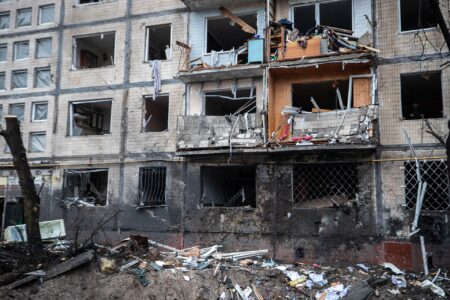

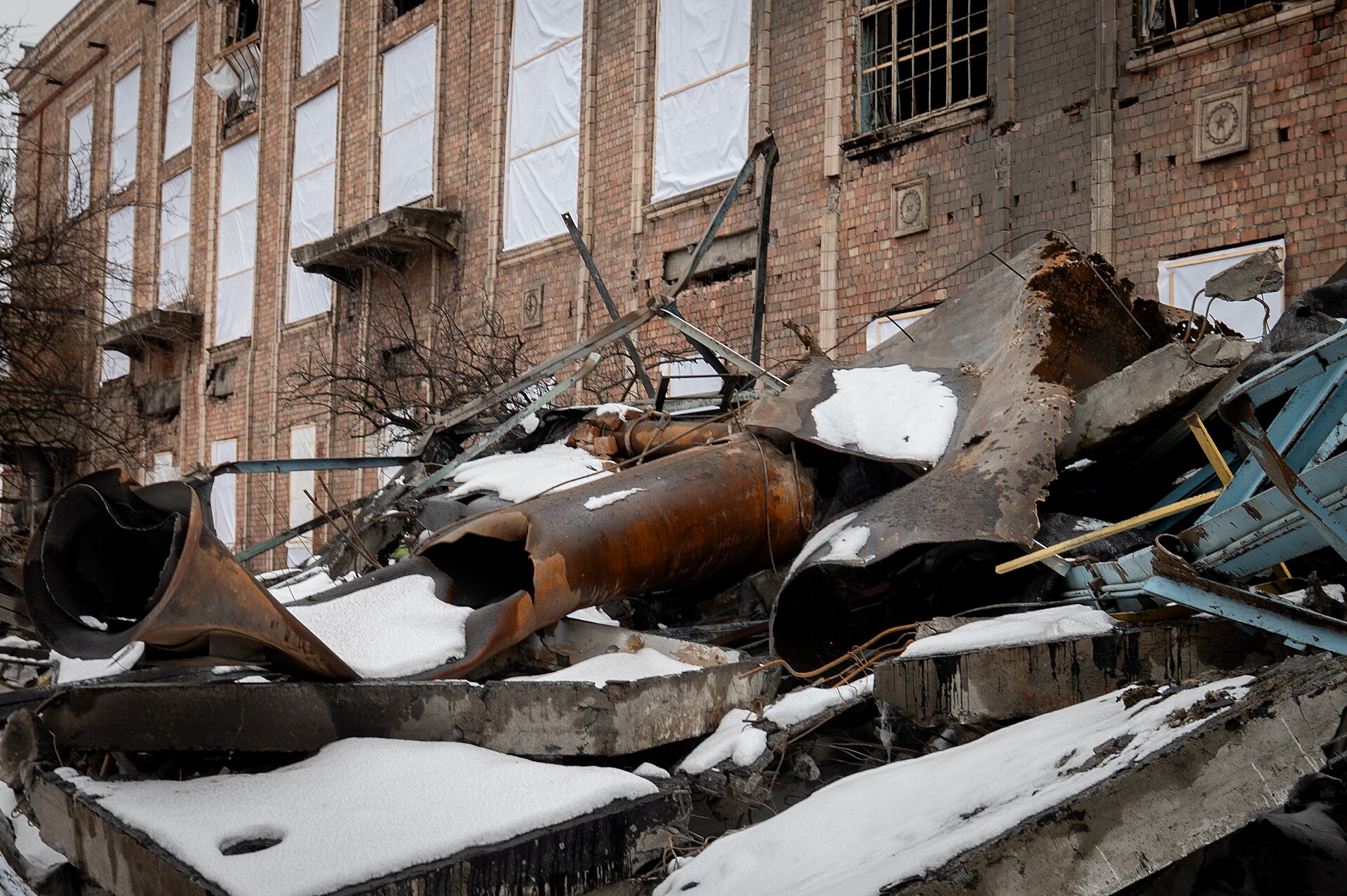
Russian missiles and drones struck energy sites in Kyiv and Kharkiv overnight on Oct. 14, killing six people and leaving about 600,000 without power, CBS News reported, as Ukraine questioned whether the United States had held back missile warnings.
Updated Oct. 14, 2026. This story is developing and casualty figures differ by outlet.
President Volodymyr Zelenskyy said Russia fired more than 39 ballistic missiles and more than 120 attack drones and loitering munitions at energy and other critical infrastructure, according to CBS News. Those figures come from Ukraine and have not been independently verified. Temperatures in Kyiv were below 10 C on Wednesday morning, the Guardian’s Europe live blog reported.
Kyiv Mayor Vitali Klitschko described “a massive ballistic missile strike” on the capital’s energy facilities that caused outages across the city. Ukrainian authorities said at least three people were killed in Kyiv overnight, the Europe live blog reported. The Kyiv Independent’s news feed put the overnight toll at four dead and 25 injured, and other regional reports described further deaths in Lutsk, Dnipropetrovsk and Zaporizhzhia. Canada News Media could not reconcile those totals.
Zelenskyy called the attack “entirely deliberate and demonstrative in its scale” and said it hit infrastructure covered by the “energy ceasefire” U.S. President Donald Trump announced on Oct. 11. On X, he wrote that “Russia has never before shown such ostentatious disrespect toward the United States,” Euronews reported. The Kremlin has confirmed only that contacts on the idea continue, as we reported on Oct. 12.
The strikes follow two nights in which Ukraine said it received no warning of incoming ballistic missiles. Air force spokesperson Yurii Ihnat said Ukraine got no warning for the first wave on Oct. 12 but did for the next three, the Kyiv Independent reported. CBS cited multiple unnamed sources as saying the U.S. may have deliberately withheld an early warning for Tuesday’s barrage. American officials reportedly blamed a failed Russian launch-detection system on bad weather, which Ukrainian officials did not accept. The sources said the U.S. system appeared to be working again for Wednesday’s wave. Our earlier report on the missing warnings has the first two nights.
Asked on Tuesday whether the U.S. had stopped sharing intelligence, Trump said: “No, we haven’t. We help them, but we’re really helping them get to a final answer.” CBS reported that a European and a Ukrainian official said the administration had threatened to cut intelligence sharing and halt European purchases of U.S. weapons for Ukraine through the PURL system unless Kyiv stopped deep strikes on Russian energy sites. CBS said it had asked the White House, the Pentagon and SpaceX for comment and received no reply.
A second dispute centres on Starlink, the satellite service owned by SpaceX. Serhii Beskrestnov, a military technology adviser to Zelenskyy, confirmed on social media that “SpaceX implemented speed restrictions on Starlink terminals while in motion last night.” He said it “cannot be a coincidence and is associated with the current political situation,” but gave no evidence of a link, the Kyiv Independent reported. Euronews reported that connectivity is cut when military-grade terminals move faster than about 160 km/h, which disrupted several drone missions. Ukraine’s Defence Ministry said it was contacting the U.S., SpaceX and NATO partners and testing backup channels, CBS reported. Neither SpaceX nor the White House has explained the change.
In Brussels, European Commission chief spokesperson Paula Pinho said the Commission had “no indications that intelligence sharing has stopped,” and declined to comment on the Starlink reports until it had more information. NATO Secretary General Mark Rutte, speaking in Estonia, said Trump had been clear that sharing continues, the Europe live blog reported.
The EU also announced money for Ukraine’s defence on Wednesday. Commission President Ursula von der Leyen said the bloc had sent €2.86 billion, about $3.3 billion, from the defence component of its €90-billion Ukraine Support Loan, European Pravda reported, citing a Commission press release. “Europe’s steadfast support to Ukraine matters more than ever,” she wrote. We did not read the release itself.
For Canada, the dispute matters because Ottawa has tied its Ukraine policy to the allied position. Prime Minister Mark Carney’s office said Carney told Zelenskyy on Oct. 11 that Canada would keep its sanctions on Russia and strengthen them if needed, as we reported after the U.S. eased diesel sanctions. More than 1.2 million Canadians reported Ukrainian origin in Statistics Canada’s 2021 census, and many have relatives facing the outages as winter begins.
What happens next depends on whether Washington restores or confirms the warning and Starlink arrangements. Zelenskyy was due to meet U.K. officials on Wednesday, CBS reported, and has asked the U.S. for tougher sanctions on Russia and more Patriot interceptors. The Commission said it would comment further on Starlink once it has more information.
Via CBS News, Euronews, the Kyiv Independent and the Guardian’s Europe live blog (read through republished copies).
If you find reporting like this useful, consider supporting Canada News Media, an independent Canadian newsroom with no corporate parent.
Follow Canada News Media
Get the day's top Canadian stories and our two daily 60-second news videos wherever you scroll.
X Threads Facebook Instagram LinkedIn TikTok YouTube Pinterest Reddit Substack Flipboard Newsletter RSS