The B.C. Greens say a wealth tax on residents with more than $50 million in net worth would raise about $22.2 billion in its first year, a figure the party has not backed with published calculations, according to Daily Hive and the Canadian Centre for Policy Alternatives.
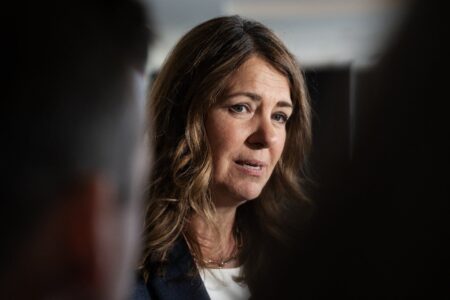
Green Leader Emily Lowan announced the “Fair Share Act” on Oct. 6, ahead of the provincial election on Oct. 24. Emmanuel Saez, a University of California, Berkeley economist who helped design California’s proposed billionaire tax, endorsed the plan on Oct. 12 and said it has “the right structure,” the Canadian Press reported.
The proposal has two parts. A one-time levy would take 5 per cent of net wealth above $50 million, 10 per cent above $100 million and 20 per cent above $1 billion. An annual tax would start in year two at 2 per cent above $50 million, 3 per cent above $100 million and 5 per cent above $1 billion.
The party estimates the annual tax would bring in $5.4 billion a year after the first-year payment. It says that estimate accounts for administrative costs and for taxpayers changing their behaviour. Daily Hive reported that the policy brief does not show how the numbers were reached or how many households would pay.
The Greens say the money would go toward universal child care, free public transit, affordable housing and paying down provincial debt. Lowan said “the money exists in this province,” according to Daily Hive.
The size of the first-year figure is what stands out. For comparison, the B.C. NDP’s own tax plan raises income taxes on top earners and is projected by the party to bring in about $1 billion a year by 2028-29, Daily Hive reported. The CCPA put that income-tax measure at roughly $750 million. The Green first-year estimate is more than 20 times the NDP’s claim, and even the Greens’ annual figure is more than five times larger.
The details that would decide whether the money materializes are not in the announcement. Daily Hive reported that the Greens have not explained how assets such as private companies, real estate or art would be valued, or how the brackets would apply. Those are the questions that have complicated wealth taxes in other jurisdictions.
Marc Lee, an economist with the CCPA, called the proposal well-intentioned but very difficult to implement at the provincial level, and said wealth taxes work better federally. His analysis, published Oct. 7, did not estimate the Green plan’s revenue or how many people it would affect.
Critics cited by Daily Hive said the rates are excessive and would discourage investment. They also raised concerns that wealthy households could face large bills without ready cash, and that some could move or restructure their assets. The article did not name those critics.
The B.C. Conservatives have not been reported to have responded directly to the wealth-tax plan in the sources reviewed. The Canadian Press reported that the Conservatives have been focused on the NDP’s child-care record this week, after Premier David Eby confirmed his family uses the $10-a-day program at a YMCA.
The wealth tax is the most far-reaching tax proposal on the ballot, and the Greens are the only party to put one forward. Voters who want to compare the plans can read the Greens’ policy brief alongside the CCPA analysis. Details on voting dates and locations are in our B.C. voting guide.
Canada News Media could not independently confirm the Greens’ revenue estimates. The Saez endorsement comes from a single Canadian Press report, and this story will be updated if the party publishes its costing.
If you find reporting like this useful, consider supporting Canada News Media, an independent Canadian newsroom with no corporate parent.
Via Daily Hive and the Canadian Press, with analysis from the Canadian Centre for Policy Alternatives.
Follow Canada News Media
Get the day's top Canadian stories and our two daily 60-second news videos wherever you scroll.
X Threads Facebook Instagram LinkedIn TikTok YouTube Pinterest Reddit Substack Flipboard Newsletter RSS