


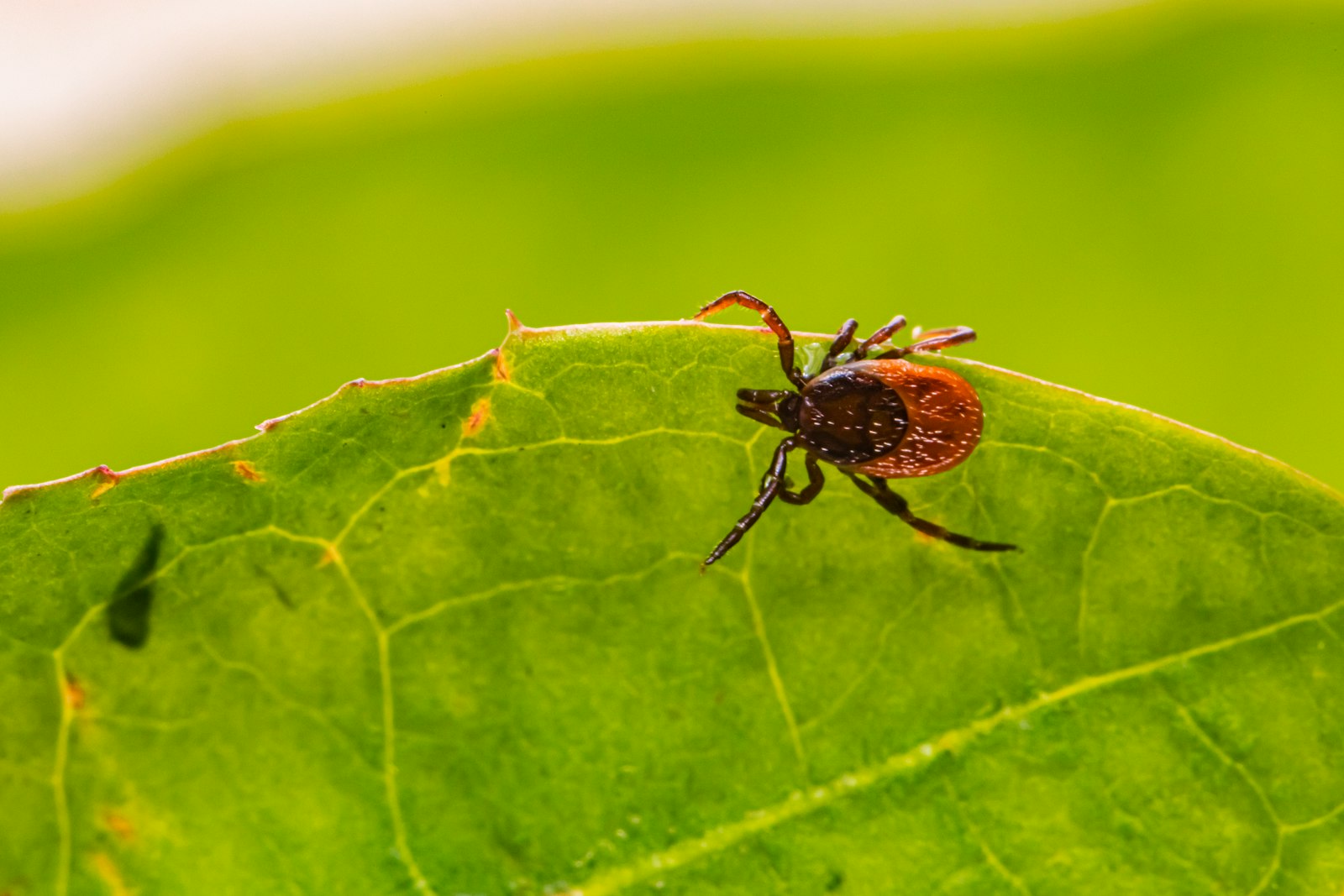
Ticks do not stop looking for a host when the leaves fall. The Public Health Agency of Canada says ticks are active whenever temperatures stay consistently above freezing and the ground is not covered by snow, which means a mild October afternoon in a leafy backyard or wooded trail can still carry a risk of a bite.
The agency says encounters with ticks are most likely in spring, summer and fall, though ticks can be active at any time of year when conditions allow. Tick bites are usually painless and the insects are small, so many people never notice one.
Time is the key detail in the agency’s guidance on Lyme disease. Infected ticks usually need to be attached for at least 24 hours before they can pass on the bacteria that cause the illness. That is why a quick check at the end of a day outdoors matters. Finding and removing a tick early cuts the chance of infection.
Higher-risk spots include areas near trees, shrubs, tall grass and leaf piles. Raking leaves, walking a dog in a wooded park, hunting, hiking or clearing brush can all put you in tick habitat. Pets that go outside can also carry ticks into the house, and the agency suggests asking a veterinarian about tick prevention for animals.
There is currently no vaccine for Lyme disease in Canada. The agency says clinical trials are under way in Europe and the United States. For now, the main protection is avoiding bites. That means using an approved insect repellent that contains DEET or icaridin, following the directions on the label, and wearing permethrin-treated clothing where it makes sense. The agency says both are considered safe in pregnancy when used as directed, and it advises tick-bite prevention throughout pregnancy.
If you find a tick, the agency’s steps are simple. Use clean, fine-point tweezers to grab the tick as close to the skin as possible, including the head, and pull slowly and steadily straight out. Do not twist or squeeze it. If the mouthparts break off, remove them with the tweezers, and if they will not come out easily, leave them and let the skin heal. Then wash the area with soap and water or an alcohol-based sanitizer.
Home remedies are discouraged. The agency says not to burn a tick or smother it with nail polish, nail polish remover, petroleum jelly or essential oils, because that can cause the tick to release infected stomach contents into the bite. To dispose of it, kill it first by drowning it in rubbing alcohol or freezing it for several days, then put it in the household garbage. Do not squash it with bare fingers.
You do not have to throw the tick out right away. The agency says you can photograph it and submit the photo to an identification platform such as eTick, which helps identify the species and supports tick monitoring across Canada. If you plan to see a health care provider, it suggests bringing the tick in a sealed bag or container, such as a pill bottle, and noting the date of the bite, the body part bitten, and the city, province or territory where it happened.
Seeing a provider is advised if you are not comfortable removing the tick, if it is buried deep in the skin, or if you feel unwell or have concerns after a bite. The agency’s clinical guidance for health professionals says the incubation period for early Lyme disease is 3 to 30 days. The typical early sign is a rash called erythema migrans, which usually appears within seven days of the bite but can show up anywhere in that window.
The same guidance says most people with Lyme disease develop a rash larger than five centimetres across at the bite site. It is usually painless and does not itch, and it often does not have the classic bull’s-eye look many people expect. A smaller red patch that fades within 48 hours can be a reaction to the bite itself rather than an infection. Telling the two apart is a job for a clinician, not a guess at home.
Where you live matters, because tick populations are not spread evenly. The Public Health Agency of Canada lets you enter the first three characters of your postal code or your municipality, or use its interactive map, to see whether you live in a Lyme disease risk area. Provincial and territorial public health sites carry local guidance on testing and reporting, and the rules differ from place to place, so check your own province’s page if you want to submit a physical tick.
Pharmacists are also part of the picture in some provinces. Our earlier reports looked at how Nova Scotia pharmacists cut tick-bite emergency room visits and what pharmacists can prescribe in each province. Both are useful starting points if you are unsure where to go first after a bite.
The practical routine is short. Check yourself, children and pets after time outdoors, because bites are easy to miss. If you do find a tick on you, write down the date so you can match it against any symptoms in the weeks that follow.
This article is based on official guidance from the Public Health Agency of Canada and is provided for general public information. It’s not a substitute for medical advice, if you have questions about how this applies to you, talk to your doctor or pharmacist.
If you find reporting like this useful, consider supporting Canada News Media, an independent Canadian newsroom with no corporate parent.
Sources: Public Health Agency of Canada, Lyme disease: prevention; How to remove a tick; Lyme disease: for health professionals.
Follow Canada News Media
Get the day's top Canadian stories and our two daily 60-second news videos wherever you scroll.
X Threads Facebook Instagram LinkedIn TikTok YouTube Pinterest Reddit Substack Flipboard Newsletter RSS