


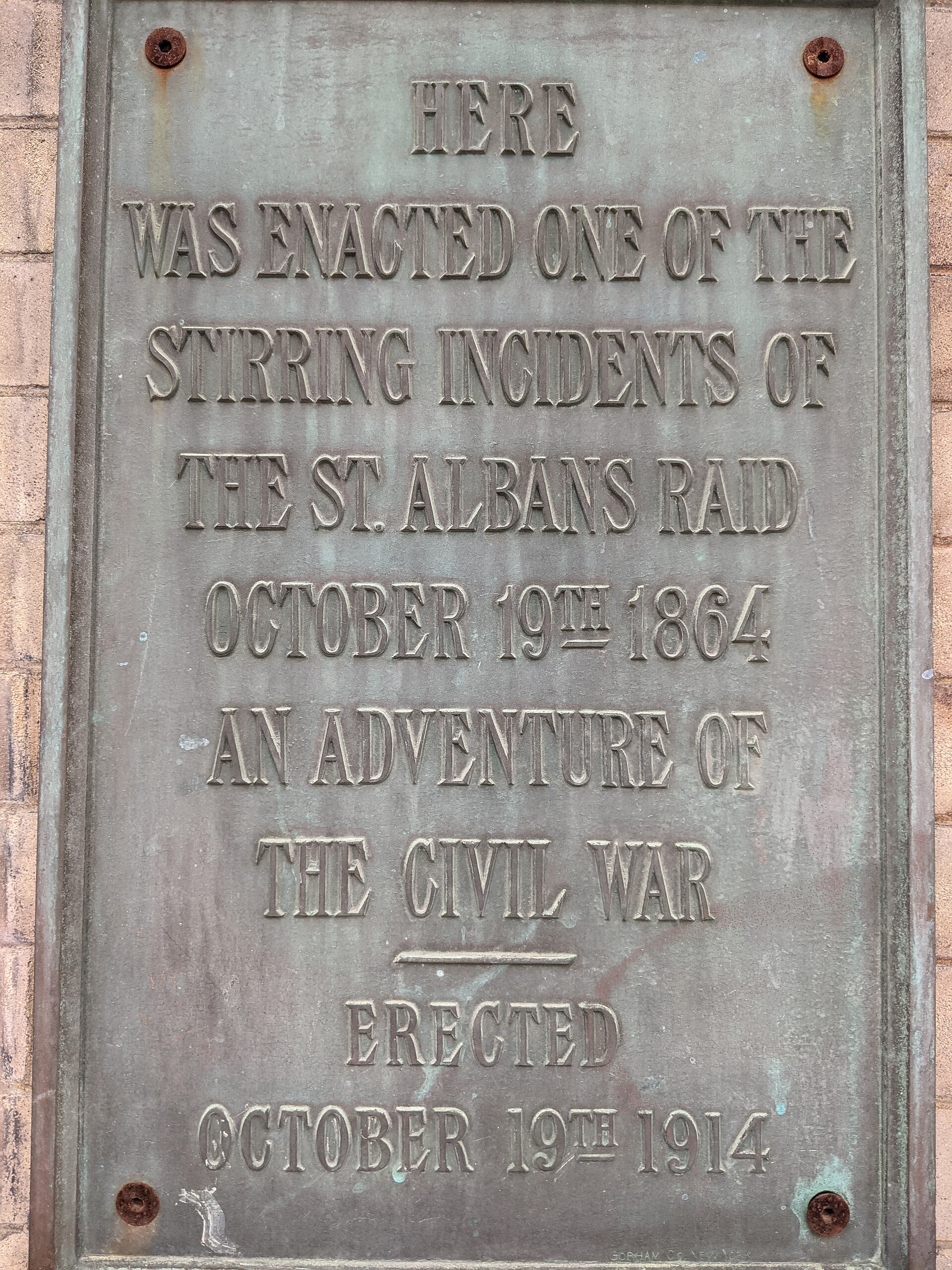
About 20 Confederate agents who had slipped across the border from Canada robbed three banks in St. Albans, Vt., on Oct. 19, 1864, according to The Canadian Encyclopedia.
The raiders took $208,000, threw about 50 bottles of incendiary Greek fire at buildings without starting any major blaze, and shot and killed Elinus Morrison, a visitor from New Hampshire. They fled north on stolen horses and reached Canada, where the fallout would strain relations between Britain, British North America and the United States for months.
The Canadian Encyclopedia said Confederate spy rings in St. Catharines and Montreal planned the raid. Clement Clay gave Lt. Bennett Young $1,400 to finance it. Jacob Thompson, the Confederate leader in Toronto, did not know of the plan beforehand, the encyclopedia said.
Canadian police arrested 14 of the raiders soon afterward. Witnesses from St. Albans identified them at Montreal Police Court on Nov. 2, according to the St. Albans Raid site, which documents the event and its aftermath.
The turning point came in December. Judge Charles J. Coursol ruled his court lacked jurisdiction and ordered the men freed. The two sources give the date as Dec. 13 and Dec. 14, 1864, and The Canadian Encyclopedia and the St. Albans site agree on the outcome. About $87,000 seized from the raiders was handed back, and the St. Albans site said it went to a Canadian banker said to sympathize with the Confederacy. An investigation later cleared the judge and the police chief of wrongdoing, the site said.
American outrage was immediate. The Canadian Encyclopedia said Gen. John Dix ordered troops to pursue raiders across the border, though President Abraham Lincoln required his approval for any such move. Congress voted to end the Rush-Bagot limits on warships on the Great Lakes and to end the Reciprocity Treaty, the free trade agreement between British North America and the United States.
Five men, including Young, were rearrested and tried under an 1842 extradition treaty. In March 1865 a Canadian court again refused to hand them over, finding that they had acted as combatants in a war. The encyclopedia and the St. Albans site give different days in March, so the exact date is uncertain. The men were later charged with violating Canada’s neutrality law, and Young was released on a $10,000 bond. Four others were discharged.
The Canadian government reimbursed the St. Albans banks for the money returned to the raiders. The encyclopedia said John A. Macdonald decided in October 1866 not to charge Young.
Young went on to a career as a railroad owner, bridge builder, author and lecturer. He helped found the Filson Club in Louisville, Ky., and died in 1919, the St. Albans site said.
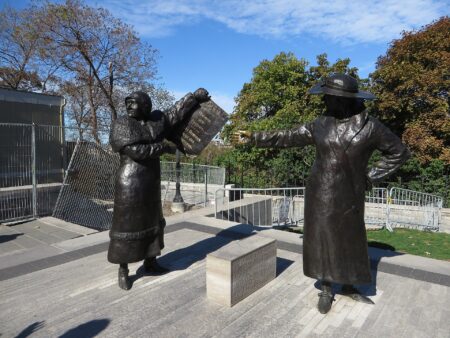
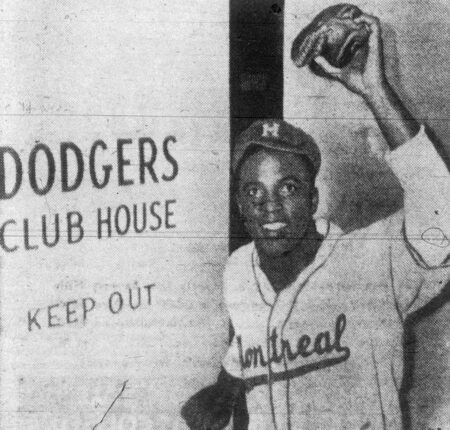
The raid came during years when the Canada-U.S. border was tested by war and diplomacy, and the Canadian court rulings that followed left lasting strain between the two countries. Readers interested in Canada’s earlier military history can read about Richard Pierpoint’s Black unit at Queenston Heights in the War of 1812, or our earlier On This Day look at the Privy Council ruling that women are persons.
If you find reporting like this useful, consider supporting Canada News Media, an independent Canadian newsroom with no corporate parent.
Follow Canada News Media
Get the day's top Canadian stories and our two daily 60-second news videos wherever you scroll.
X Threads Facebook Instagram LinkedIn TikTok YouTube Pinterest Reddit Substack Flipboard Newsletter RSS