

The Judicial Committee of the Privy Council in London ruled on Oct. 18, 1929, that women are “persons” under Section 24 of the British North America Act, overturning a Supreme Court of Canada decision and opening the Senate to women, according to The Canadian Encyclopedia.
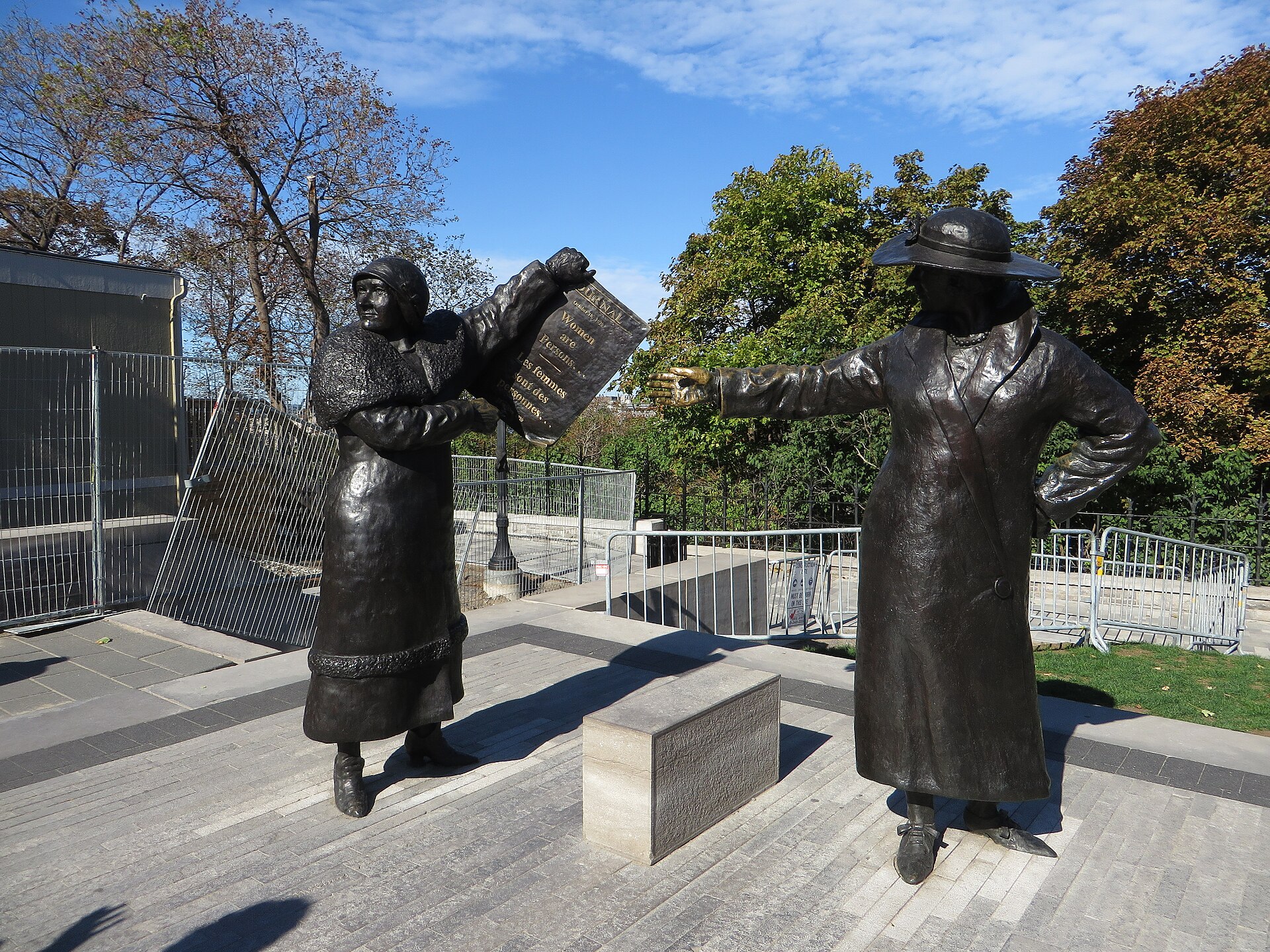
The decision ended a legal fight that began with five Alberta women. Henrietta Muir Edwards, Nellie McClung, Louise McKinney, Emily Murphy and Irene Parlby signed a petition on Aug. 27, 1927, after a meeting at Murphy’s home in Edmonton, the encyclopedia said. They used a provision of the Supreme Court Act that let any five people ask the court to rule on a constitutional question.
The question put to the court on Oct. 19, 1927, was narrower than the women had first proposed. Justice Minister Ernest Lapointe, in Prime Minister William Lyon Mackenzie King’s government, recommended asking whether the word “persons” in Section 24 includes female persons, according to the account of the case on Wikipedia.
Section 24 allowed the governor general to summon “qualified persons” to the Senate. Murphy had already been passed over. Prime Minister Robert Borden rejected her as a Senate candidate on the ground that women were not persons under the Act, and the government turned down a similar proposal in 1922, The Canadian Encyclopedia said.
The Supreme Court heard the case on March 14, 1928, and ruled on April 24, 1928, that women were not eligible for appointment. The court reasoned that the Act should be read as it was understood in 1867, when “persons” meant men, the encyclopedia said.
The five women appealed to the Privy Council, then Canada’s final court of appeal. Lord Sankey, the Lord Chancellor, wrote the decision for a panel that also included Lord Darling, Lord Merrivale, Lord Tomlin and Sir Lancelot Sanderson.
Sankey held that the word “persons” covers both men and women. “The exclusion of women from all public offices is a relic of days more barbarous than ours,” he wrote, according to The Canadian Encyclopedia. He also described the British North America Act as a “living tree capable of growth and expansion within its natural limits,” a phrase Canadian courts have cited ever since when interpreting the Constitution broadly.
Cairine Wilson was sworn in as Canada’s first woman senator on Feb. 15, 1930, about four months after the ruling, the encyclopedia said. In October 2009, the Senate named the Famous Five its first honorary senators.
The ruling did not give every woman equal footing in public life. Quebec women could not vote in provincial elections in 1927 and gained that right in 1940, The Canadian Encyclopedia said. New Brunswick women could vote provincially but could not run for provincial office until March 1934. Inuit women were excluded from federal voting until the 1950s, and First Nations women gained the federal vote in 1960.
Those gaps shaped who reached office in later decades. Rosemary Brown, for one, won a seat no Black woman had held in British Columbia, and Lincoln Alexander became Canada’s first Black MP in 1968, each building on rights that were won in court and legislatures in stages.
Sources differ slightly on how the Supreme Court split. The Canadian Encyclopedia describes its ruling as unanimous, while the Wikipedia account notes that two justices wrote separate concurring opinions and one recused himself. Both agree on the result and the dates.
If you find reporting like this useful, consider supporting Canada News Media, an independent Canadian newsroom with no corporate parent.
Follow Canada News Media
Get the day's top Canadian stories and our two daily 60-second news videos wherever you scroll.
X Threads Facebook Instagram LinkedIn TikTok YouTube Pinterest Reddit Substack Flipboard Newsletter RSS