
Federal officials told a Senate committee on Tuesday they had no choice but to revoke Indian status from 738 Innu people in Quebec’s Côte-Nord region, the first time Indigenous Services Canada publicly explained the decision, CBC News reported.
Lori Doran, director general of individual affairs, and Claire Thie, the Indian Registrar, defended the Nov. 5, 2025, decision that revoked the status of two Innu women who lived in the 1700s and all of their descendants, effective immediately.
Doran said the review began when someone applying for status contacted the registrar’s office, and the source evidence was called into question. The key document was compiled by a missionary and lists members of the community at the time. Its validity has been questioned, CBC reported.
Doran said the original decision to grant status in 2023 was an error and should have been escalated to the registrar. Thie said her team worked on the family for a year before notifying individuals and could not find additional primary evidence. “I have an obligation. I have a duty. I have no choice,” she testified.
The affected people, whose community is about 150 kilometres east of Saguenay, were long denied status because the two women had married non-Indigenous men, which under earlier Indian Act provisions meant they lost status and could not pass it on. Amendments in 2019 allowed descendants to apply.
Guillaume St-Gelais Dubé, who received status in 2023 and was given land by the band council to build a house, told senators the revocation left him shaken. “An identity is not a piece of paper,” he said.
In 2024, descendants were told their status was under review and given 120 days to provide historical proof. Lawyers for St-Gelais Dubé and others told senators the affected people were being asked to prove something almost impossible.
Status entitles members to land for houses and fishing camps, as well as health and other benefits. The Essipit Innu band council does not intend to evict anyone and has given those affected three years to regularize their status. Members have taken Ottawa to court over the decision.
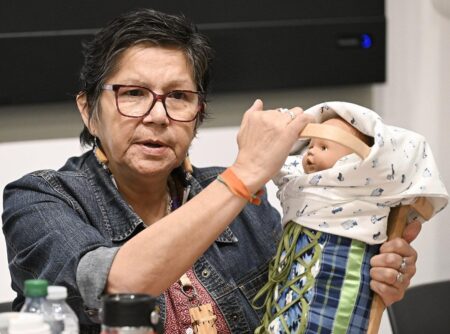
The story follows our coverage of other Indigenous issues in Quebec, including the reburial of an Atikamekw baby in Manawan, and our guide to Indigenous peoples in Canada.
If you find reporting like this useful, consider supporting Canada News Media, an independent Canadian newsroom with no corporate parent.
Follow Canada News Media
Get the day's top Canadian stories and our two daily 60-second news videos wherever you scroll.
X Threads Facebook Instagram LinkedIn TikTok YouTube Pinterest Reddit Substack Flipboard Newsletter RSS