

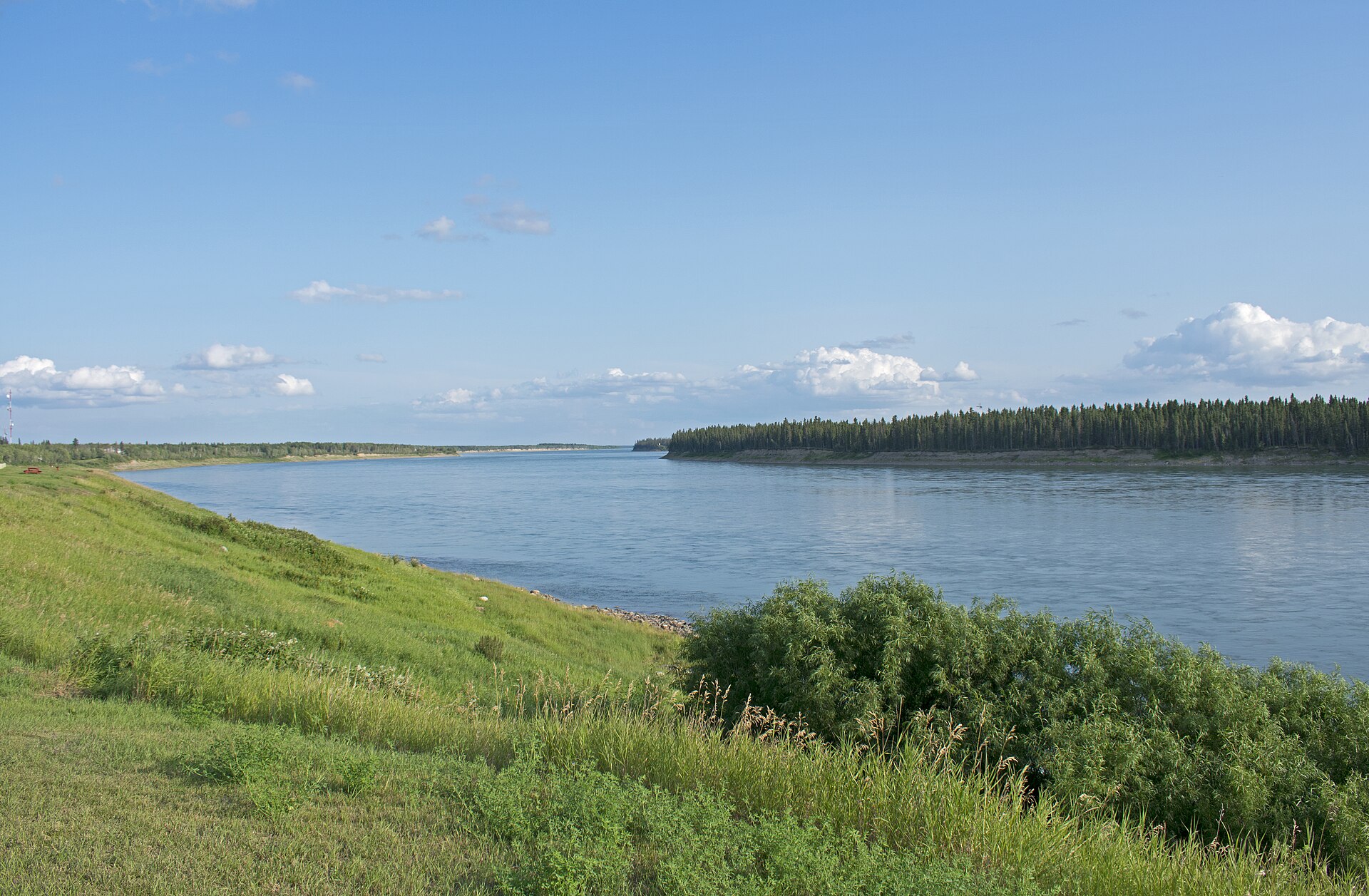
The federal and Northwest Territories governments have nominated the Mackenzie River, known to many Indigenous Peoples as Dehcho, Deho and Kuukpak, to the Canadian Heritage Rivers System, according to a Government of the Northwest Territories news release issued Oct. 8.
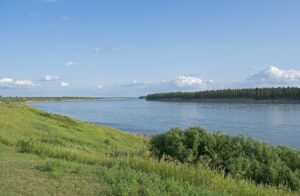
The nomination covers the river’s entire main stem, just under 1,800 kilometres, from the western tip of Great Slave Lake through the Sahtú and Gwich’in settlement areas to the Arctic Ocean in the Inuvialuit Settlement Region. With its tributaries, the river system extends more than 4,200 kilometres, the release said.
Federal Environment Minister Julie Dabrusin and N.W.T. ministers Jay Macdonald and Caitlin Cleveland made the announcement at a gathering of the N.W.T. Council of Leaders in Ottawa.
“In the Northwest Territories, rivers are our lifeblood,” said Macdonald, the territory’s environment and climate change minister, who called the nomination a significant step toward protecting the river’s future.
Cleveland, the N.W.T. minister of education, culture and employment, said waterways in the territory are “a vessel of our cultures.”
Albert J. Lafferty, president of the Fort Providence Métis Nation, said Métis voices and Elders’ knowledge must guide what comes next. Erwin Elias, chair and CEO of the Inuvialuit Regional Corporation, said Kuukpak is central to the identity, culture and way of life of many Inuvialuit.
The river’s many names, including Dehcho, Deho, Kuukpak, Nagwichoonjik, Grand Rivière and Fleuve Mackenzie, all translate to “Big River” in English. The release described it as a living Indigenous cultural landscape, with oral histories, sacred places and harvesting practices tied to it. It drains nearly one-fifth of Canada’s land mass and provides habitat for migratory birds, including in the Mackenzie Delta.
The nomination is the first of two phases. The N.W.T. government, as the nominating party, must lead development of a stewardship plan within three years, working with Dene, Métis and Inuvialuit Peoples and communities in the Dehcho, Sahtú, Gwich’in and Inuvialuit regions. If the plan is approved, the river would be formally designated and join the system.
The Canadian Heritage Rivers System, created in 1984, is the national river stewardship program. It has 42 designated rivers and river segments totalling nearly 11,000 kilometres. A stewardship plan is reviewed by the system’s technical planning committee and board of directors before the responsible ministers make a formal recommendation.
The announcement follows other northern news on this site, including a warning from Nunavut’s premier about a federal lands bill and a report that Diavik’s mine closure remains on schedule. The Government of the Northwest Territories published the full release on its newsroom.
If you find reporting like this useful, consider supporting Canada News Media, an independent Canadian newsroom with no corporate parent.
Follow Canada News Media
Get the day's top Canadian stories and our two daily 60-second news videos wherever you scroll.
X Threads Facebook Instagram LinkedIn TikTok YouTube Pinterest Reddit Substack Flipboard Newsletter RSS