

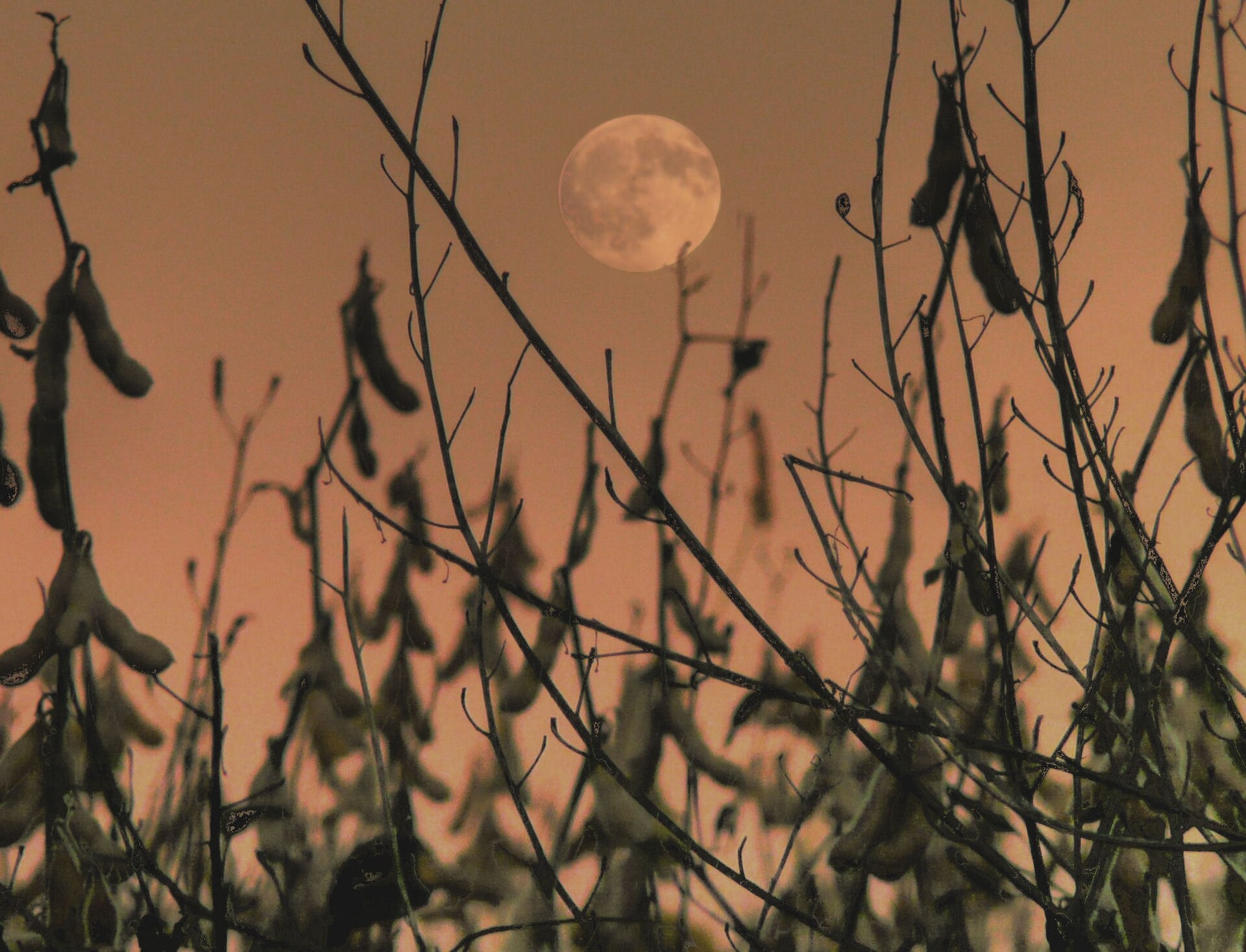
October’s full Hunter’s Moon reached its peak at 12:12 a.m. Eastern Daylight Time on Monday, Oct. 26, and it will still look essentially full in Canadian skies Monday evening, according to the Farmers’ Almanac and the Old Farmer’s Almanac.
The peak occurred at 04:12 UTC. In Central time that was 11:12 p.m. on Sunday, Oct. 25, and in Pacific time it was 9:12 p.m. on Sunday. The almanacs say the moon appears full for about a day on either side of the peak, so both Sunday and Monday evenings are good for viewing.
The Farmers’ Almanac recommends going outside about 20 minutes before sunset and looking east, where the moon rises near sunset. It says viewers should let their eyes adjust for five to 10 minutes and that no telescope is needed. Haze near the horizon can make the moon look red or amber, the almanac said.
The name Hunter’s Moon is tied to the autumn hunting season. The Farmers’ Almanac says game animals had fattened on autumn leftovers and were easier to spot in bare stubble fields, and it links the name to the opening of the Anglo-Saxon hunting season. The almanac lists other names for the October full moon, including the Travel Moon, the Dying Grass Moon, the Sanguine Moon and the Falling Leaves Moon.
Some Indigenous nations in North America have their own names for the October moon. The Farmers’ Almanac lists “Hunting Moon” among the names used by the Stockbridge-Munsee and Tunica peoples.
The almanac says no lunar eclipse occurs on Oct. 26, 2026. Where the moon looks reddish, that comes from haze or low-angle light, not an eclipse. It also does not describe this month’s full moon as a supermoon. The next full moon, the Beaver Moon, falls on Nov. 24, according to the almanac.
Interest in the moon is high this week in Canada, with Hunter’s Moon among the terms trending in Google searches. Viewing conditions depend on local cloud cover. Environment Canada’s forecasts for your area will show whether skies are expected to clear.
Clocks in most of the country go back an hour on Nov. 1, which will make evenings darker earlier. Our explainer on where clocks go back in Canada lists which provinces and territories change.
If you find reporting like this useful, consider supporting Canada News Media, an independent Canadian newsroom with no corporate parent.
Follow Canada News Media
Get the day's top Canadian stories and our two daily 60-second news videos wherever you scroll.
X Threads Facebook Instagram LinkedIn TikTok YouTube Pinterest Reddit Substack Flipboard Newsletter RSS