
On Oct. 26, 1813, a force of Canadian militia, regulars and Mohawk warriors under Lt.-Col. Charles-Michel de Salaberry turned back a much larger American army at the Châteauguay River, southwest of Montreal, ending a U.S. thrust toward the city.
The fighting took place at Allan’s Corners, near present-day Ormstown, Que. According to the Canadian Encyclopedia, the engagement is dated Oct. 25 and 26, with the decisive action on the 26th. Wikipedia’s account of the battle gives Oct. 26 as the day of the main clash.
The assault was one arm of a larger American plan in the fall of 1813 to capture Montreal. Maj.-Gen. Wade Hampton marched north from Lake Champlain with about 2,600 regulars, 200 mounted troops and 10 field guns, according to Wikipedia. The Canadian Encyclopedia puts his army at about 3,000.
Roughly 1,000 to 1,400 New York militiamen refused to cross the border into Lower Canada, depending on the source, and played no part in the fight.
De Salaberry, a veteran officer from Quebec, set up defensive lines along the river in marshy, wooded country. Wikipedia lists his command at about 1,530 militia and Mohawk warriors. The units included the Canadian Voltigeurs, the Canadian Fencibles, Select Embodied Militia and local Beauharnois and Boucherville militia, along with warriors from Kahnawake and other Indigenous nations. Lt.-Col. George Macdonell commanded the reserves.
Hampton sent Col. Robert Purdy and about 1,500 men on a night march to cross a ford and attack the Canadian position from behind. Brig.-Gen. George Izard led a frontal attack. According to the Canadian Encyclopedia, Purdy’s flanking column failed, and the Americans found themselves facing a defence that held its ground.
By about 3 p.m. on Oct. 26, Hampton had ordered a withdrawal, the Canadian Encyclopedia said. Wikipedia’s account says a council of war judged a renewed advance hopeless. Autumn rains had left the roads nearly impassable and supplies were running low. De Salaberry did not pursue, though the Canadian Encyclopedia reports that Indigenous warriors harassed the retreating Americans through the night.
Casualty figures are small on both sides. The official American report listed 23 killed, 33 wounded and 29 missing. De Salaberry first reported five Canadians killed, 16 wounded and four missing. Three of the men listed as killed later rejoined their units unharmed, which brought the revised Canadian toll to two killed, 16 wounded and four missing, according to Wikipedia.
Accounts of the odds were exaggerated at the time. Wikipedia notes that Sir George Prevost’s dispatch claimed 300 Canadians had routed 7,500 Americans, a figure it describes as inflated. Modern sources also differ on the exact size of both forces, and the unit-by-unit strengths do not always match the totals.
The strategic result was clear. The defeat, together with the British and Canadian win at Crysler’s Farm on Nov. 11, led the Americans to abandon their St. Lawrence campaign against Montreal in 1813. Hampton had already submitted his resignation before the battle, and he later refused an order from Maj.-Gen. James Wilkinson to advance toward Cornwall. He retreated to Plattsburgh and did not return to the field, according to Wikipedia.
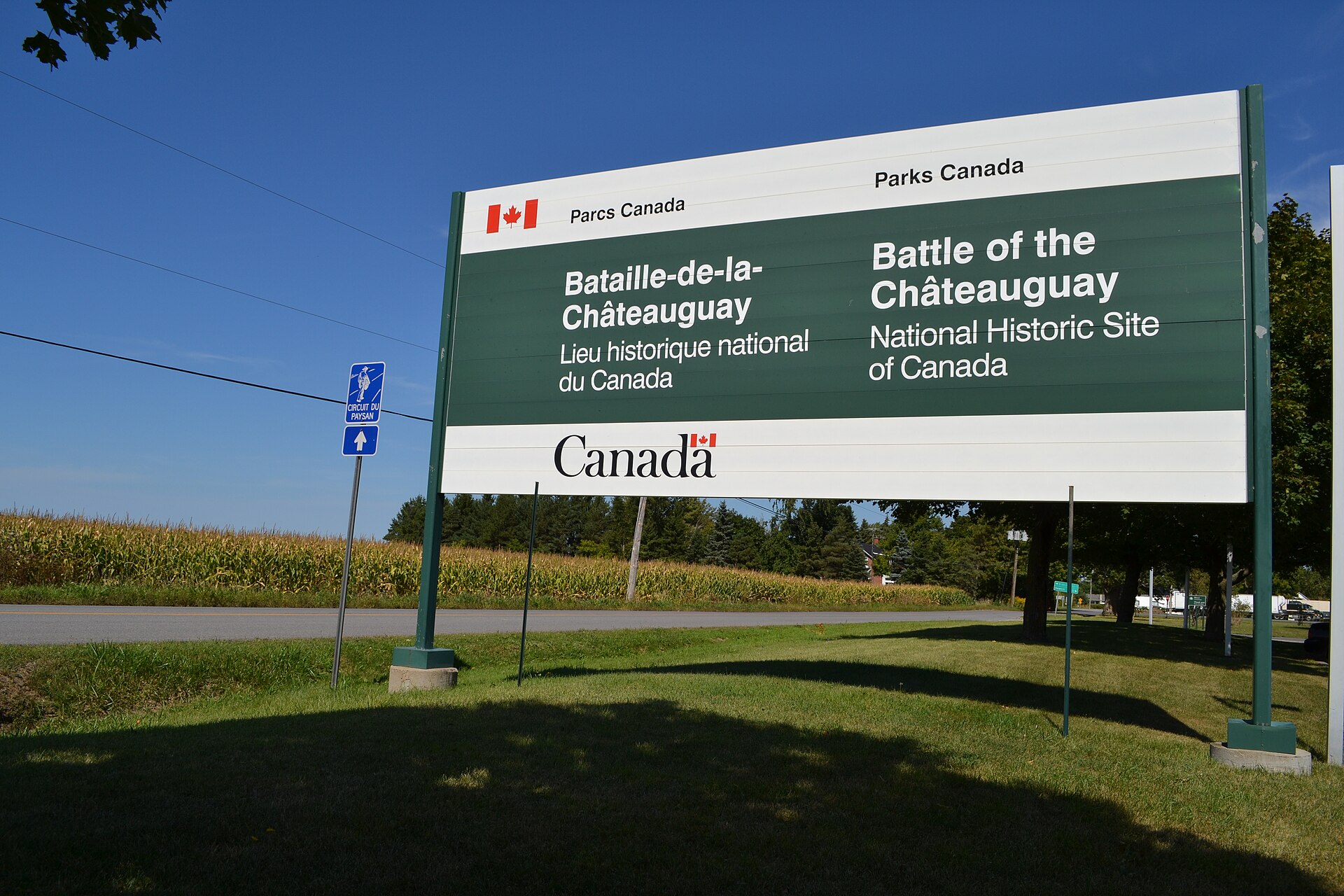
For many Canadians, Châteauguay became a symbol of local defence. The Canadian Encyclopedia says it is regarded as one of the most important battles in the development of Canadian nationalism, because the defenders, mostly Canadian-born, fought without British regulars at the front and took great pride in the result. The battlefield was designated a National Historic Site of Canada in 1920.
The battle is one of several 1812-era anniversaries the site has covered this month. Earlier pieces looked at the death of Tecumseh at the Thames in 1813, the Black unit that fought at Queenston Heights and the death of Maj.-Gen. Isaac Brock in 1812.
If you find reporting like this useful, consider supporting Canada News Media, an independent Canadian newsroom with no corporate parent.
Sources: The Canadian Encyclopedia, Wikipedia (Battle of the Châteauguay).
Follow Canada News Media
Get the day's top Canadian stories and our two daily 60-second news videos wherever you scroll.
X Threads Facebook Instagram LinkedIn TikTok YouTube Pinterest Reddit Substack Flipboard Newsletter RSS