


Binance, the world’s largest crypto exchange, suspended deposits and withdrawals on Oct. 29 after a hack that the company estimated at about $6.3 billion in stolen assets, CoinDesk reported, which would make it the largest crypto theft on record.
Spokesperson Ross O’Leary told TechCrunch that Binance had “temporarily suspended withdrawals on multiple networks following a security incident as a precautionary measure.” The company also said in a statement that “user funds are completely safe.” Dollar figures in this story are in U.S. dollars.
Binance co-founder Yi He said in a post on X that deposits and withdrawals were suspended “while our team conducts security checks, freezes funds, and works with law enforcement.” She said Binance would share a full post-mortem once its investigation is complete, and later said the exchange would cover all hacking-related losses, The Block reported.
Estimates of the loss varied widely through the evening. Chainalysis put the amount stolen at about $5.9 billion at the time of theft, according to AFP. Conor Grogan, a senior director at Coinbase, estimated up to $5.8 billion, The Block reported. Blockaid said it was investigating about $3.3 billion in suspicious outflows from Binance hot wallets on Ethereum, Arbitrum and Avalanche. TechCrunch said some of the numbers circulating were unconfirmed.
In an update cited by CoinDesk, Binance said about $3 billion had been frozen. Tether chief executive Paolo Ardoino said the stablecoin issuer froze more than 1.5 billion USDT, and Circle chief executive Jeremy Allaire said Circle froze more than $800 million in USDC, according to The Block and CoinDesk.
Binance said its initial investigation found the attack “may involve a compromised DevOps engineer’s laptop, which allowed an attacker to gain access to a service container and submit unauthorized withdrawal transactions.” The company said it had found no evidence of a wallet private key leak, CoinDesk reported. Binance said it plans to cover losses using its SAFU emergency fund, which holds about $1 billion in bitcoin, and company money.
The attacker has not been formally identified. CoinDesk reported that TRM Labs linked the attack to TraderTraitor, a North Korean hacking group, while the on-chain investigator ZachXBT named Lazarus Group as the likely attacker. The Block and AFP said the attacker remained unidentified. None of those attributions has been confirmed by Binance or by law enforcement.
Markets reacted quickly. Bitcoin fell 4.8 per cent to below $77,000, CoinDesk reported, while ether dropped 5.7 per cent and Binance’s BNB token fell about eight per cent. AFP reported similar declines of nearly five per cent for bitcoin and nearly 10 per cent for BNB. Lending platform Aave froze some markets as a precaution but said its contracts were not affected, The Block reported.
Search interest in the hack climbed in Canada on Thursday evening, according to Google Trends. None of the reports reviewed mentioned Canadian users or regulators. Binance’s messages on X were at times contradictory, AFP noted, with the company saying both that user funds were safe and that it would cover all losses. It also warned that its loss figure “may continue to increase.”
Earlier crypto-security coverage on our site includes Billionaire Watch: Zhao urges wallet security after hack. Canada News Media will update this story as Binance releases its post-mortem.
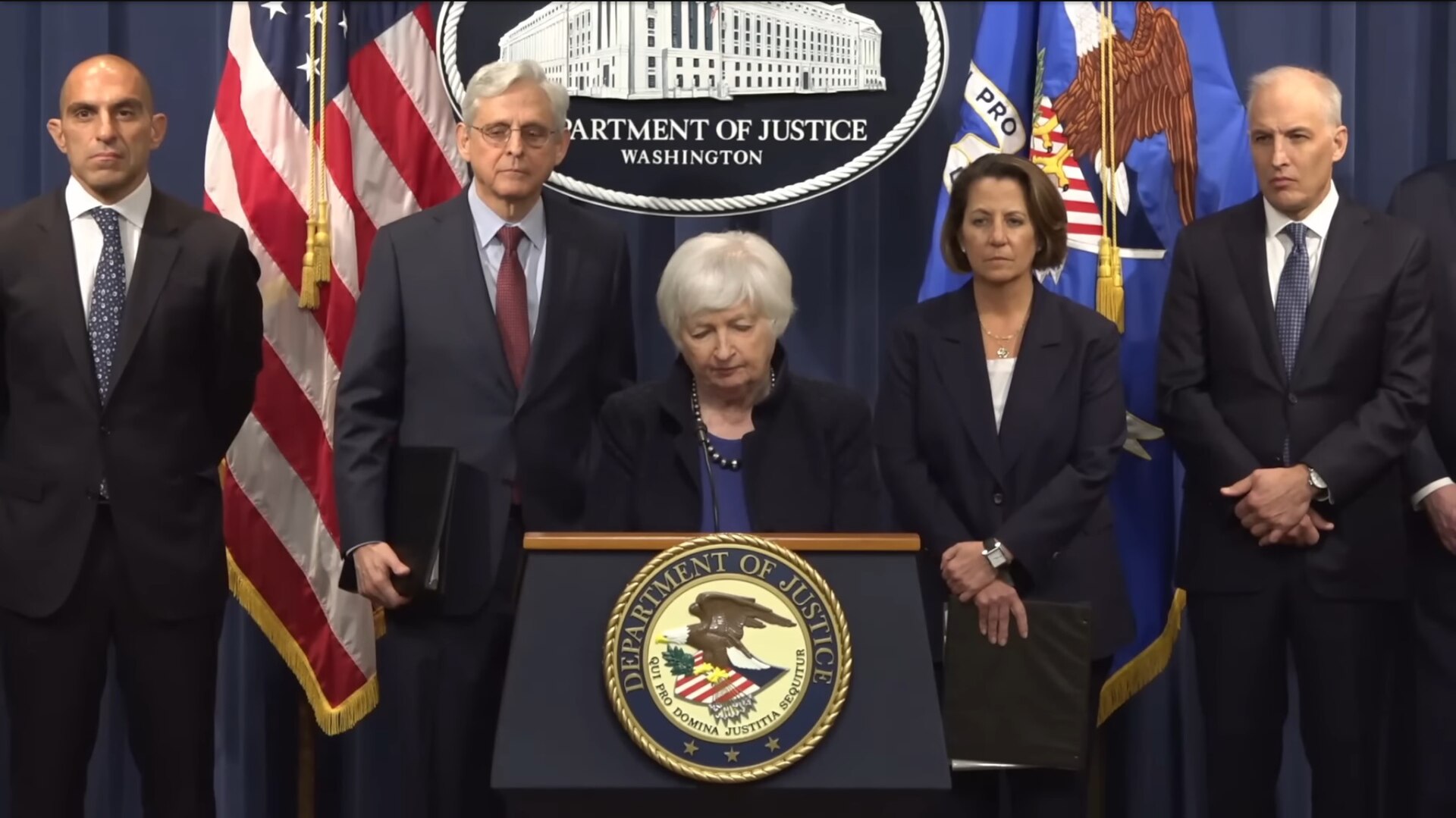
File photo: U.S. officials at a Nov. 21, 2023, news conference on Binance’s guilty plea. Photo: U.S. Department of Justice, public domain. It does not show the Oct. 29 incident.
If you find reporting like this useful, consider supporting Canada News Media, an independent Canadian newsroom with no corporate parent.
Follow Canada News Media
Get the day's top Canadian stories and our two daily 60-second news videos wherever you scroll.
X Threads Facebook Instagram LinkedIn TikTok YouTube Pinterest Reddit Substack Flipboard Newsletter RSS