




A registered retirement savings plan (RRSP) gives you a tax deduction when you put money in and taxes you when you take it out, while a tax-free savings account (TFSA) gives no deduction going in but lets you take the money out tax-free, according to the Canada Revenue Agency.
Both accounts are registered with the CRA, and both let money grow without tax while it stays inside. The CRA says income earned in an RRSP is usually exempt from tax as long as the funds remain in the plan, and that TFSA contributions and the income they earn, whether interest, dividends or capital gains, are generally tax-free even when withdrawn. The difference is when the tax bill comes.
With an RRSP, deductible contributions reduce your taxable income for the year you claim them. The CRA says you generally have to pay tax when you cash in, make withdrawals or receive payments from the plan. With a TFSA, the CRA says contributions are not tax deductible, unlike an RRSP, but withdrawals do not add to your taxable income.
The yearly limits work differently. The CRA calculates your RRSP deduction limit as 18 per cent of your earned income in the previous year, up to an annual maximum, plus any unused room carried forward, less any pension adjustment from a workplace pension. The CRA lists the RRSP dollar limit at $33,810 for 2026 and $35,390 for 2027. Your own number is on your notice of assessment or in your CRA account. The TFSA works from a flat dollar limit that the CRA lists at $7,000 for 2026.
| RRSP | TFSA | |
|---|---|---|
| Tax when you contribute | Deductible | Not deductible |
| Tax on growth inside the plan | Usually none | Generally none |
| Tax when you withdraw | Generally taxable | Generally tax-free |
| 2026 dollar limit (CRA) | $33,810, or 18 per cent of prior-year earned income if lower | $7,000 |
Withdrawals are where the two accounts part ways most clearly. When money leaves an RRSP, the CRA says your financial institution withholds tax at the source. For residents of Canada outside Quebec, the rates are 10 per cent on amounts up to $5,000, 20 per cent on amounts above $5,000 up to $15,000, and 30 per cent on amounts over $15,000. The CRA notes that the amount withheld may not cover what you owe at your tax bracket, so you may owe more when you include the withdrawal on your return. Locked-in RRSPs generally cannot be withdrawn from at all.
A TFSA withdrawal carries no tax, and the CRA says it does not affect federal income-tested benefits such as Old Age Security, the Guaranteed Income Supplement and Employment Insurance, or credits such as the Canada child benefit. The room is not restored right away, though. According to the CRA, the amount you withdraw is added back as contribution room on Jan. 1 of the next calendar year, and putting it back sooner without enough room counts as an over-contribution.
Both accounts penalize going over the limit. The CRA says an excess TFSA amount is taxed at 1 per cent per month for as long as it stays in the account. For RRSPs, the CRA says the same 1 per cent monthly tax generally applies to contributions that exceed your deduction limit by more than $2,000.
The RRSP also comes with an age limit. The CRA says you can generally contribute to your own RRSP until Dec. 31 of the year you turn 71, and only while you have deduction room. The federal budget proposed changes to the age-71 conversion of RRSPs, which we reported earlier this month. The proposals are not law, and the CRA pages describe the rules as they stand.
Timing matters for the RRSP deduction. The CRA says contributions made from March 4, 2025, to March 2, 2026, qualified for the 2025 tax return. We could not find the equivalent date for 2026 contributions on the CRA pages reviewed, so check the CRA for the current deadline. Our explainers on the TFSA and the First Home Savings Account cover the other registered accounts in more detail.
The CRA publishes the full rules on its pages for the RRSP, TFSA, tax rates on RRSP withdrawals and its table of annual limits. This article explains how the accounts work and is not tax or investment advice, so check your own situation with a qualified adviser or the CRA.
If you find reporting like this useful, consider supporting Canada News Media, an independently owned Canadian newsroom.
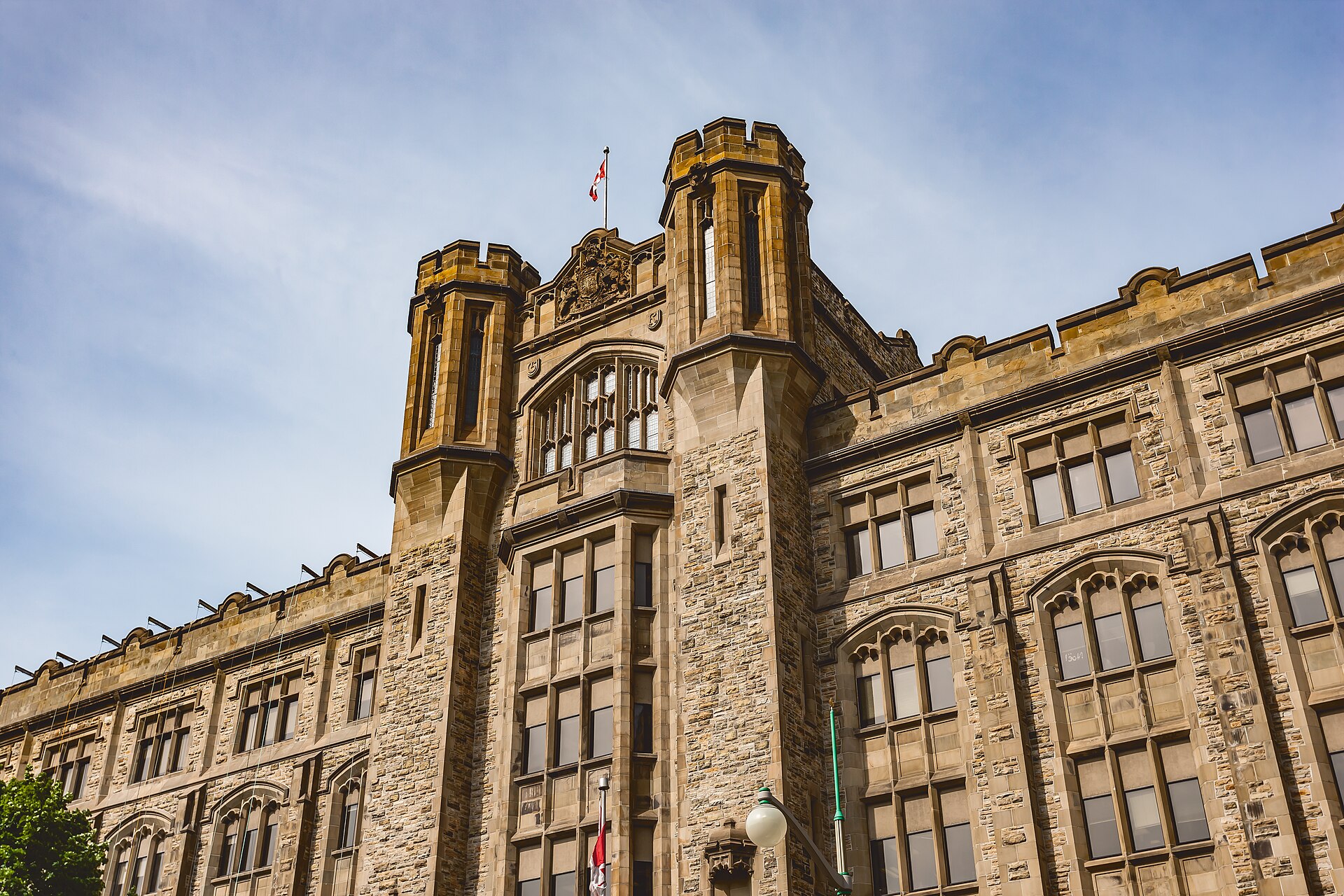
File photo: the Connaught Building in Ottawa, headquarters of the Canada Revenue Agency. Photo by Michel Rathwell, Wikimedia Commons, CC BY 2.0.
Follow Canada News Media
Get the day's top Canadian stories and our two daily 60-second news videos wherever you scroll.
X Threads Facebook Instagram LinkedIn TikTok YouTube Pinterest Reddit Substack Flipboard Newsletter RSS