


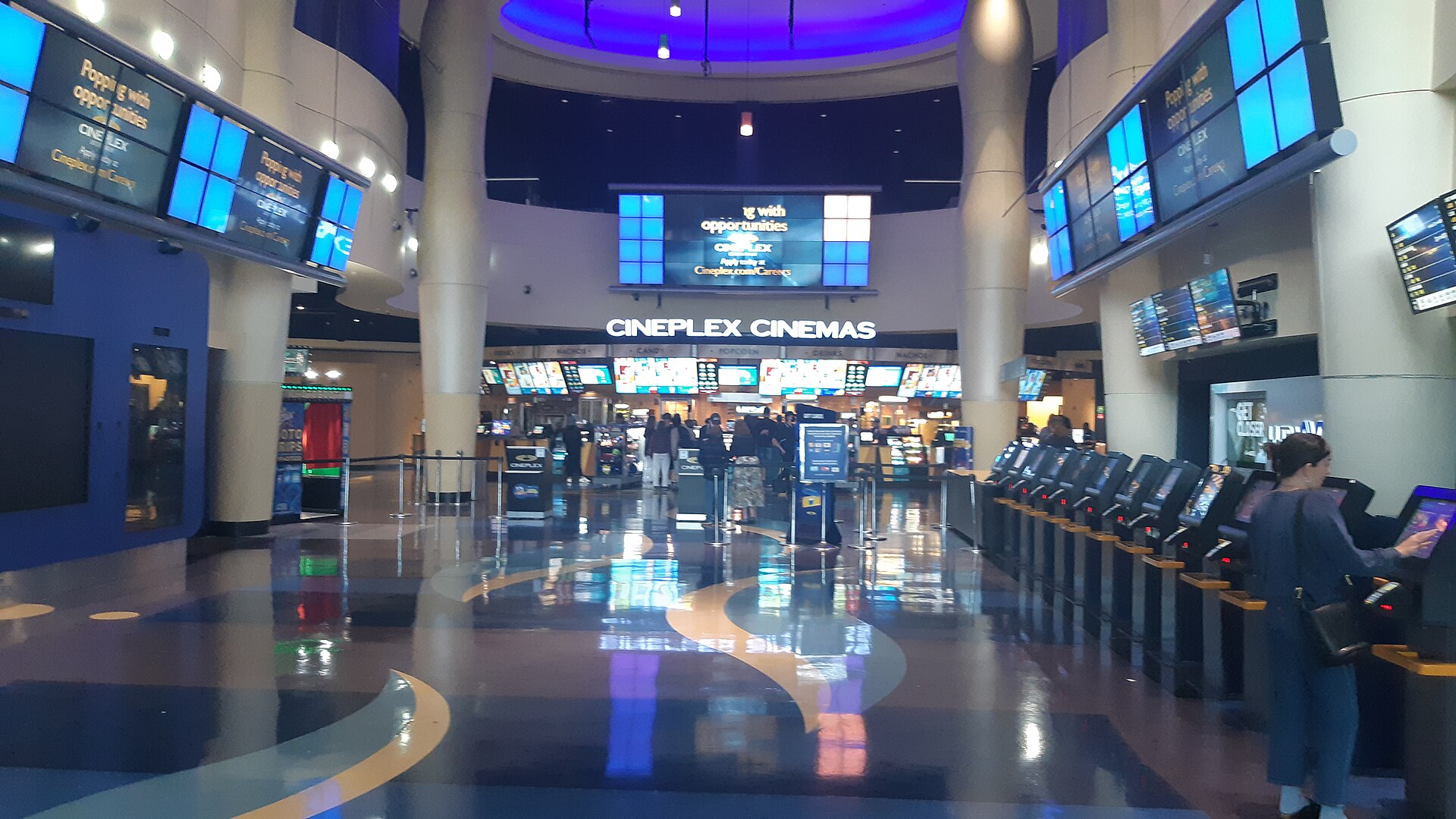
The single drip-pricing case the Competition Bureau took all the way to a ruling produced a bigger penalty than all 12 of its settled price and fee cases since 2015 put together, according to a Canada News Media review of the Bureau’s public record of deceptive marketing cases. The 12 settlements, with companies from Michaels to Ticketmaster to Sirius, carried penalties totalling $28.875 million. The Competition Tribunal ordered Cineplex to pay more than $38.9 million over a $1.50 online booking fee.
The settled penalties ranged from $700,000 to $5 million and averaged about $2.4 million. Car rental companies made up four of the 12: Avis and Budget agreed to pay $3 million in 2016, Hertz and Dollar Thrifty $1.25 million in 2017, Enterprise $1 million in 2018 and Discount Car and Truck Rentals $700,000 the same year, all over allegations that advertised prices could not be had once fees were added. Ticket sellers followed: Ticketmaster agreed to a $4 million penalty in 2019 and StubHub to $1.3 million in 2020 over mandatory fees added late in the purchase, and TicketNetwork to $825,000 in 2023 over drip pricing. Online travel agency FlightHub paid the largest settled penalty, $5 million in 2021, over hidden fees and other price claims, and two of its directors agreed to pay $400,000 each on top of that. The others were Michaels at $3.5 million in 2015 over frame and framing prices, Amazon at $1 million in 2017 over list-price comparisons, Hudson’s Bay at $4 million in 2019 over regular price claims for mattresses, and Sirius at $3.3 million in 2024 over a mandatory fee that made its advertised subscription prices unattainable. Several companies also paid the Bureau’s investigation costs, which are not counted in these totals.
All 12 ended in consent agreements, in which the company settles without a contested hearing. Cineplex chose to fight. The Bureau sued in 2023, and in September 2024 the Tribunal found that the theatre chain had engaged in drip pricing by adding a mandatory $1.50 fee to tickets bought online, and ordered a penalty of more than $38.9 million plus legal costs. That is about 7.8 times the largest settlement and roughly 35 per cent more than all 12 settlements combined. The Federal Court of Appeal rejected Cineplex’s appeal on Jan. 21, 2026, and Cineplex said that month it would seek to take the case to the Supreme Court of Canada. The Bureau’s table still lists the case as ongoing. The Bureau’s other recent contested win, a $15 million penalty against Rogers in October over how it advertised its Infinite wireless plans as unlimited, concerned data claims rather than prices or fees and is not counted here; Canada News Media reported that ruling when it came out.
The records point to some reasons for the gap. The Bureau said when the ruling came down that the Cineplex penalty was equal to the amount the chain collected from the online booking fee between its introduction in June 2022 and December 2023, so its size reflects how much money the fee raised. Amendments to the Competition Act that came into force on June 24, 2022, explicitly recognize drip pricing as a harmful practice, the Bureau said, and the Cineplex fee was challenged after that change, while 10 of the 12 settlements came before it. Settlements are also negotiated, and the Bureau’s public table does not show how each amount was arrived at.
More cases are in the pipeline, and none has been decided. The Bureau has asked the Tribunal to order Canada’s Wonderland, in an application filed May 5, 2025, and DoorDash, in one filed June 9, 2025, to stop advertising prices lower than what consumers end up paying, to pay penalties and to compensate customers; the DoorDash application also asks that the company stop portraying fees as taxes. Those are allegations the companies can contest, and the Bureau’s table, checked Nov. 18, shows no ruling in either. The Bureau also obtained a court order in November 2024 in an investigation of Leon’s and The Brick that it says covers urgency claims and potentially inflated regular prices, with no outcome listed.
On Wednesday, the Bureau said it had obtained a Federal Court order requiring Old Navy and Gap to produce records in an investigation of potentially false or misleading claims. The Bureau said the investigation includes “whether regular prices are genuine when products are advertised as being on sale,” as well as countdown timers and limited-time offers, “Selling Fast” and “Only a Few Left” messages, displays of how many people are viewing or buying a product, and claims such as “Price Drop” or “Best Deal in 30 days.” The Bureau stressed that “there has been no finding of wrongdoing at this time.” The investigation concerns sale and regular-price claims rather than added fees, so it is not a drip-pricing case. It does fit a pattern in the Bureau’s table: of the 12 settled cases, four, those of Michaels, Amazon, Hudson’s Bay and FlightHub, involved claims about prices or savings rather than only added fees.
The Competition Bureau did not respond by the deadline. Canada News Media sent the Bureau’s media relations office questions on Nov. 16, with a deadline of Nov. 18 at 5 p.m. ET, asking about the status of the pending cases, why settled penalties have been much smaller than the Cineplex penalty, how the 2022 and 2024 amendments have changed its enforcement, and whether our count of cases matched its records. No reply or acknowledgement had been received when this story was published. We will update the story if the Bureau responds. Canada News Media has also examined the Bureau’s abuse-of-dominance caseload and private access to the Tribunal as part of a series on competition in Canada.
For shoppers, the Bureau’s guidance is that the only mandatory charges that may be added to an advertised price are fixed ones imposed by government on the buyer, such as sales tax. A booking, service or convenience fee that every buyer must pay should be in the advertised price. Readers who see a price that rises at checkout, a sale price measured against a regular price that rarely applied, or a fake countdown can file a complaint with the Bureau. A complaint does not get an individual refund, but the Bureau uses complaints to choose cases, and its court actions can seek restitution for customers.
If you find reporting like this useful, consider supporting Canada News Media, an independently owned Canadian newsroom.
How we checked: We downloaded the Competition Bureau’s Deceptive Marketing Practices: Cases and outcomes table on Nov. 14, 16 and 18, 2026, and coded every case listed since 2015. We counted a case only if the Bureau’s own description concerns prices, fees or price claims and the outcome was a penalty paid by a company under a settlement; that gives 12 cases. Penalties are the amounts the table states; directors’ penalties and payments toward the Bureau’s costs are excluded. Cases about other claims, such as the Rogers unlimited-data case, billing errors or urgency cues alone, are not counted. The Cineplex penalty comes from the Bureau’s Sept. 23, 2024 news release and its appeal status from the table; the Old Navy and Gap investigation from the Bureau’s Nov. 18 news release; consumer guidance from the Bureau’s drip pricing page. The status of the Wonderland and DoorDash applications is as shown in the Bureau’s table; the Tribunal’s own docket could not be checked independently.
Follow Canada News Media
Get the day's top Canadian stories and our two daily 60-second news videos wherever you scroll.
X Threads Facebook Instagram LinkedIn TikTok YouTube Pinterest Reddit Substack Flipboard Newsletter RSS