


On Nov. 19, 1869, the Hudson’s Bay Company signed the Deed of Surrender, giving up its claim to Rupert’s Land, a territory of about 3.9 million square kilometres, so the British Crown could hand it to the two-year-old Dominion of Canada.
The price was £300,000, or about $1.5 million, according to The Canadian Encyclopedia, which calls the sale the largest real estate transaction by land area in the country’s history. Canada paid for it with a loan from Britain, the Manitoba Museum said in its account of the document.
Rupert’s Land had belonged, on paper, to the company since 1670, when King Charles II granted it a royal charter over every river that drained into Hudson Bay. The Canadian Encyclopedia said the territory was five times the size of France and ran from the Atlantic to the Rocky Mountains, covering much of what is now Manitoba, Saskatchewan, Alberta, northern Ontario and Quebec, and Nunavut. The 1670 charter itself still survives, and moving it in 2025 was a delicate operation.
The company did not walk away empty-handed. Under the deed, it kept the land around its trading posts and the right to keep trading without special taxes, the Manitoba Museum said. It could also claim up to one-twentieth of the land laid out for settlement in the fertile belt of the Prairies for 50 years. An article in the archival journal Archivaria said the company had acquired about 6.5 million acres that way by the time the claim period ran out in 1920.
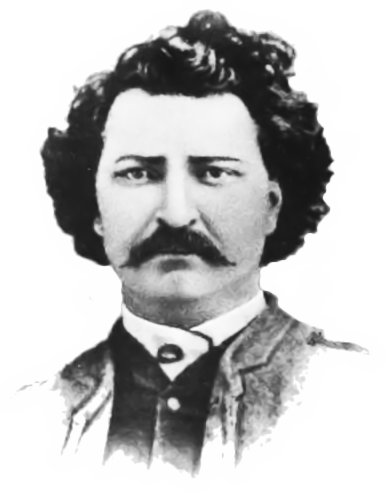
The people who actually lived on the land were not party to the deal. First Nations and Métis communities lived across Rupert’s Land, and the Métis at Red River rejected the idea that their homeland could be bought and sold over their heads, as The Canadian Encyclopedia notes. Weeks before the deed was signed, Métis led by Louis Riel had already stopped a Canadian survey crew at Red River, on Oct. 11, 1869.
That resistance changed the timetable. Métis opposition prevented the Canadian government from taking control of the territory on Dec. 1, 1869, as planned, according to The Canadian Encyclopedia’s history of the Red River Resistance. Riel’s provisional government went on to negotiate the terms that became the Manitoba Act, and the transfer did not take effect until July 15, 1870, the same day the new province of Manitoba was born, according to the Manitoba Museum.
The formal step came through Britain. Queen Victoria accepted the company’s surrender by an instrument dated at Windsor on June 22, 1870, and the Rupert’s Land and North-Western Territory Order, made at Windsor on June 23, 1870, admitted the lands into Canada from July 15, according to the text of the order. The order now forms part of Canada’s Constitution.
The original deed is not in Canada. Because it records a deal between the Crown and a British company, it is held at the National Archives in Kew, England, while the Hudson’s Bay Company Archives in Winnipeg keeps a copy, the Manitoba Museum said. The document is three pages of vellum stitched together and folded into a pouch sealed with the company’s crest, two elk rearing on either side of a shield bearing four beavers.
Signed 157 years ago today, the deed turned a fur-trade monopoly into the core of the modern West and North. It also thrust Louis Riel into national life, a path that ended with his hanging in Regina on Nov. 16, 1885.
If you find reporting like this useful, consider supporting Canada News Media, an independently owned Canadian newsroom.
Follow Canada News Media
Get the day's top Canadian stories and our two daily 60-second news videos wherever you scroll.
X Threads Facebook Instagram LinkedIn TikTok YouTube Pinterest Reddit Substack Flipboard Newsletter RSS