

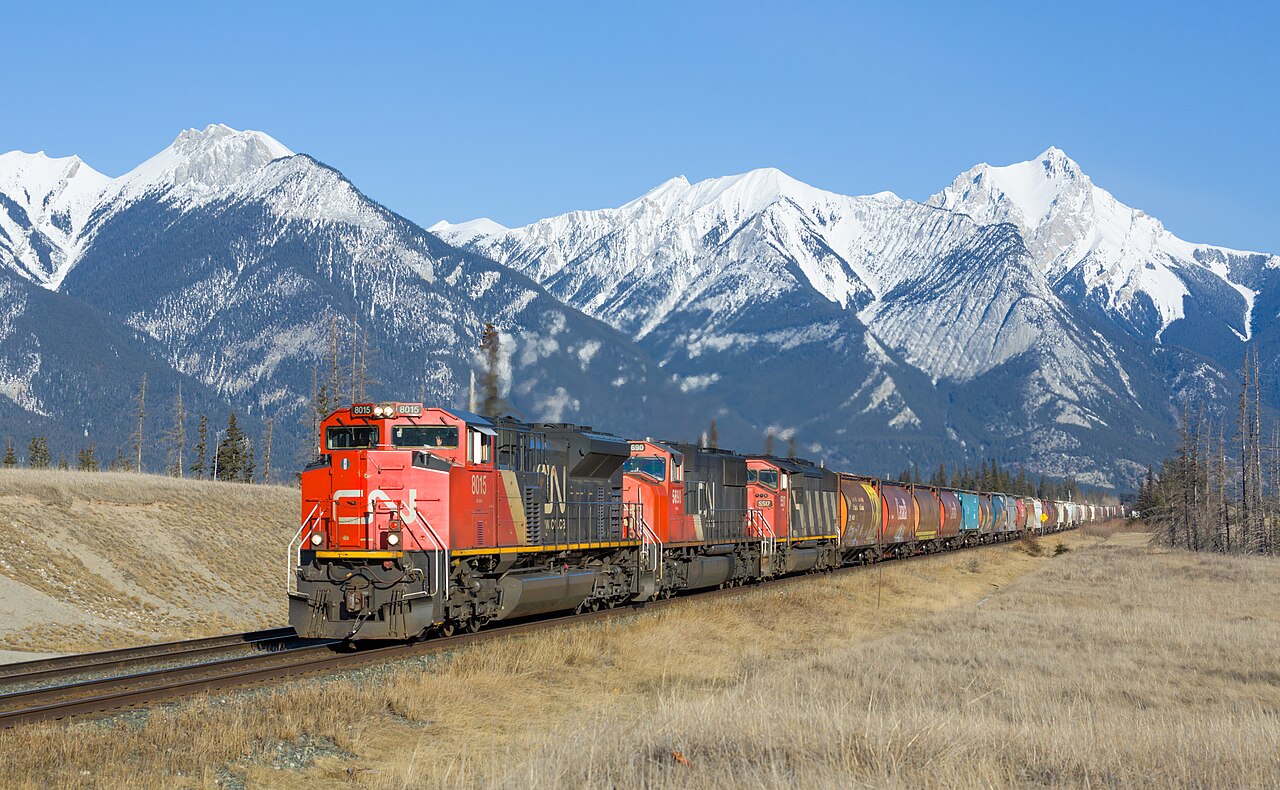
Trains came off the main track in Canada 54 times in the first nine months of 2026, the most for that stretch of the year since 2021 and up from 41 in the same months of 2025 and 32 in 2024, according to a Canada News Media count of Transportation Safety Board of Canada occurrence records. Big derailments, where six or more cars left the rails, rose even faster.
The board’s rail occurrence database, which railways must report into under federal law, lists 29 main-track derailments of six or more cars from January to September 2026, against 17 in the same period of 2025 and 14 in 2024. That is the highest January-to-September figure since 2018, when there were 34. Eleven of this year’s main-track derailments involved at least one car carrying dangerous goods, up from six a year earlier and the most for those months since 2021, when there were 12. In all, 519 rail cars came off the track in the 54 main-track derailments.
The records list no deaths in those derailments and no dangerous goods released from a tank car. One derailment, of 49 cars on the Joliette Subdivision in Quebec on July 5, is recorded with an evacuation, and one is recorded with injuries. The largest were that Quebec derailment and a 49-car derailment of loaded grain hoppers in Saskatchewan on March 12, followed by 35 loaded coal cars in British Columbia on Jan. 27 and 28 cars, including the lead locomotive, in B.C. on March 16. On June 2, 25 cars, 17 of them tank cars, derailed on the Kaministiquia Subdivision near Thunder Bay, Ont.
Ontario had the biggest jump, with 16 main-track derailments from January to September, double the eight in the same months of 2025. British Columbia had 12, Saskatchewan eight, Alberta seven (down from 10), Quebec six, Manitoba three, and Nova Scotia and Newfoundland and Labrador one each. By track owner, 31 happened on Canadian National Railway track, up from 24, and 19 on Canadian Pacific Kansas City track, up from 15, with one each on track owned by four other railways. The two big railways own most of the main-line track in the country, so most derailments of any kind are recorded on their lines.
The rise comes after a long fall. The board’s own 2025 statistical summary counts 62 main-track derailments in 2025, up from 48 in 2024 but 12 per cent below the 10-year average of 71. The board counted 93 in 2019 before the total fell to 48 in 2024. With 54 already logged by the end of September, and the last three months of the year adding 16 in 2024 and 21 in 2025, 2026 is on track to finish near or above that 10-year average for the first time since 2021.
The records do not explain the increase, and nothing in them says any railway broke a rule. Derailments can follow broken rails, wheel and axle failures, track geometry problems, train handling, weather and heavier traffic, and the board investigates only a small share of occurrences in depth. The board also measures derailments against main-track train miles, a figure that was 0.75 per million miles in 2025, but it has not yet published 2026 train miles, so we cannot say whether the rate rose as much as the count. Federal fines against railways are a separate record; our October story on how often CN contests rail-safety fines looked at those, and our Nov. 17 count found trespasser deaths on rail lines at their highest since 1995.
The board calls its 2026 figures preliminary. Occurrences can be reclassified as reports are reviewed, and recent months tend to fill in later, so the 2026 count is more likely to rise than fall.
How we checked: We downloaded the Transportation Safety Board’s rail occurrence data (64,424 occurrences from 1983 to Oct. 10, 2026), kept one row per occurrence, and counted occurrences classed as main-track train derailment accidents from January to September of each year, along with the number of cars derailed, the dangerous-goods flags, the province and the subdivision owner. We left out reportable incidents with no damage. We checked full-year totals against the board’s Statistical summary: railway occurrences 2025, which lists 62 main-track derailments for 2025 and a 10-year average of 71, and the board’s monthly rail statistics for September 2026. Descriptions of individual derailments come from the board’s own occurrence summaries.
Follow Canada News Media
Get the day's top Canadian stories and our two daily 60-second news videos wherever you scroll.
X Threads Facebook Instagram LinkedIn TikTok YouTube Pinterest Reddit Substack Flipboard Newsletter RSS