

Taiwan’s deputy foreign minister has warned that Prime Minister Mark Carney risks exposing Canada to the economic coercion he has cautioned against by deepening trade ties with China, even as a trade framework between Ottawa and Taipei sits unsigned about 20 months after it was finalized.
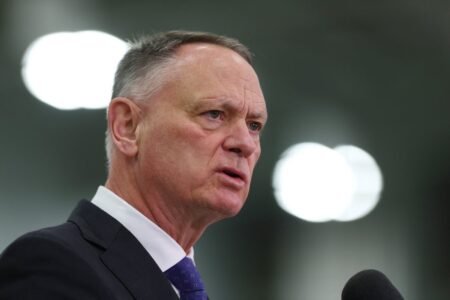
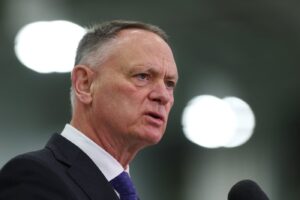
“We worry. We worry,” Chen Ming-chi told The Associated Press in an interview Saturday at the Halifax International Security Forum, when asked about Carney’s efforts to improve relations with Beijing. “Who do you want to choose as your partners?” Chen asked, adding: “You have your own history. You have two Michaels.” He was referring to Michael Kovrig and Michael Spavor, the Canadians held in China for nearly three years after Canada arrested Huawei executive Meng Wanzhou in 2018 on a U.S. extradition request. Beijing has denied their detention was politically motivated.
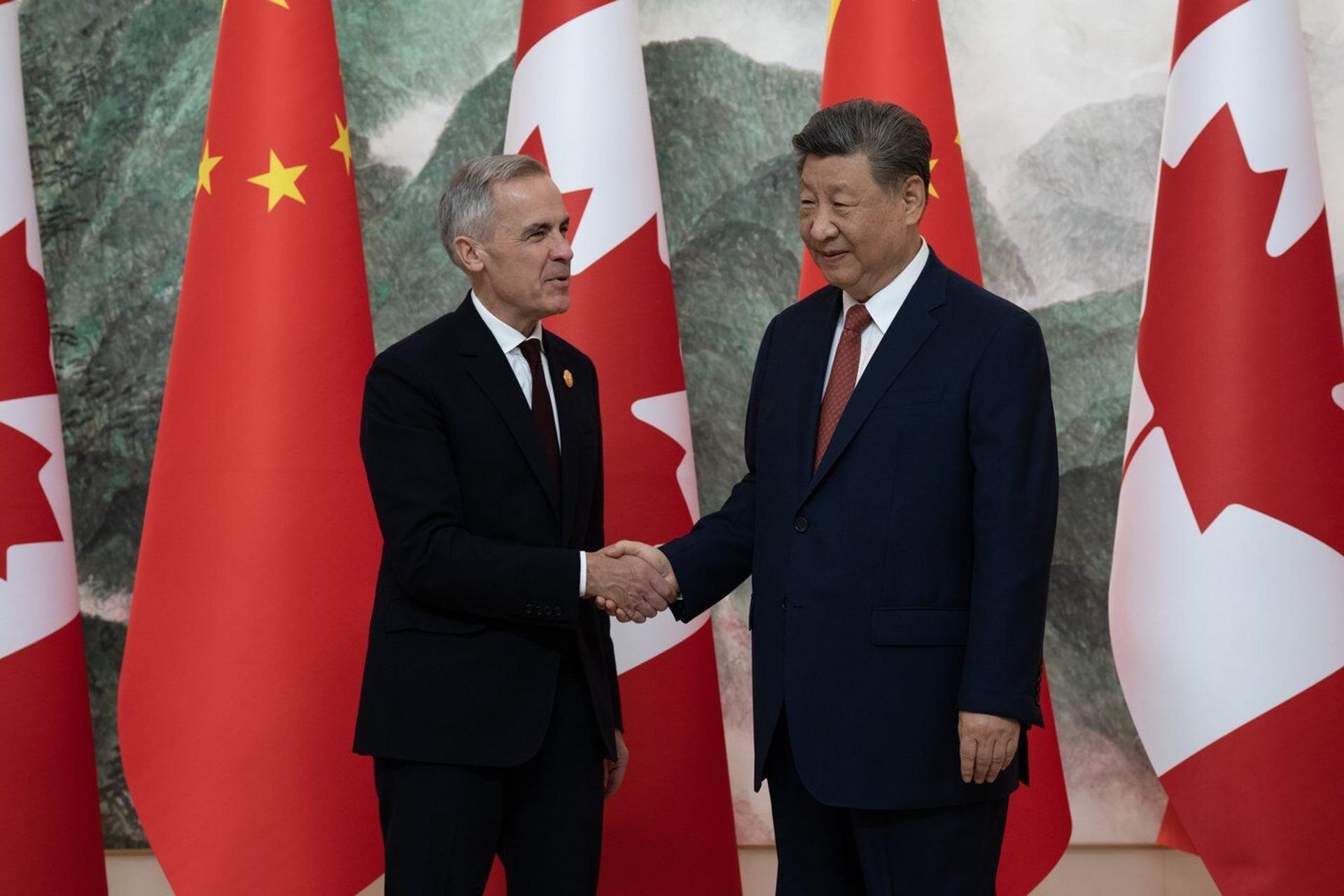
The warning comes days after Carney met Chinese President Xi Jinping in Shenzhen at the Asia-Pacific Economic Co-operation summit. There, the two leaders widened a trade arrangement that removes a 25 per cent Chinese tariff on Canadian frozen pork and shrimp, covering about $400 million in annual exports, in exchange for Canada easing restrictions on 32 Chinese steel and aluminum items. That deal sits on top of a January arrangement in which Canada lowered its tariff on Chinese electric vehicles and China cut duties on canola products. Carney has also said Canada could turn to Chinese automakers if talks with Washington fail; U.S. President Donald Trump has threatened 50 per cent tariffs on Canadian vehicles and parts from Jan. 1.
Chen told AP that Chinese electric vehicles could threaten Canadian manufacturers and pose surveillance risks because of their connected technology, even if they were built in Canada. “They are very good at weaponizing interdependence,” he said of Beijing. “They are very good at leveraging our dependence to reach political goals.”
He pointed to Taiwan’s own shift. Chen said the share of Taiwan’s outbound investment going to China fell from more than 80 per cent in 2010 to 3.8 per cent last year, and Taiwanese government figures show exports to China and Hong Kong fell from nearly 44 per cent of the island’s total in 2020 to about 27 per cent last year, AP reported.
The Canadian side of the ledger has been moving the other way. Canadian trade data suggests exports to China have risen about 40 per cent since January, led by oil, canola and peas, as Ottawa looks for markets beyond the United States.
Meanwhile, a deal with Taipei is still waiting. Documents the government tabled in Parliament in September show Ottawa and Taiwan finalized the Canada-Taiwan Trade Cooperation Framework Arrangement in March 2025 and consulted the provinces two months later. The text has been translated into French and Chinese and is “being considered for signature,” the documents say. Carney said in Shenzhen on Wednesday that he hoped it would be signed “soon,” and the House of Commons foreign affairs committee recommended last month that the government sign it. Chen welcomed that commitment. “We have a high respect of Prime Minister Carney’s vision. And we want to be part of this vision,” he said.
Ottawa’s own travel advice already flags the risks Chen described. Global Affairs Canada’s advisory for China tells visitors to exercise a high degree of caution and warns of the risk of arbitrary detention, and Foreign Affairs Minister Anita Anand pointed Canadians to that advisory during the APEC trip.
Carney has argued that Canada’s trade with China is different from Washington’s, since Canada mostly sells agricultural products, energy and other commodities rather than sensitive technology. His office has said critical minerals and artificial intelligence are off the table in talks with Beijing. Chen also said China is stepping up military activity around Taiwan and warned that Chinese vessels could be rehearsing for a maritime quarantine of the self-governing island, which Beijing claims as its territory. Canada’s “One China” policy recognizes the government in Beijing as the sole government of China while maintaining unofficial ties with Taiwan.
The Halifax forum, where Canada also announced it is joining the NATO Innovation Fund, wraps up Sunday.
With files from The Associated Press and The Canadian Press.
If you find reporting like this useful, consider supporting Canada News Media, an independently owned Canadian newsroom.
Follow Canada News Media
Get the day's top Canadian stories and our two daily 60-second news videos wherever you scroll.
X Threads Facebook Instagram LinkedIn TikTok YouTube Pinterest Reddit Substack Flipboard Newsletter RSS