



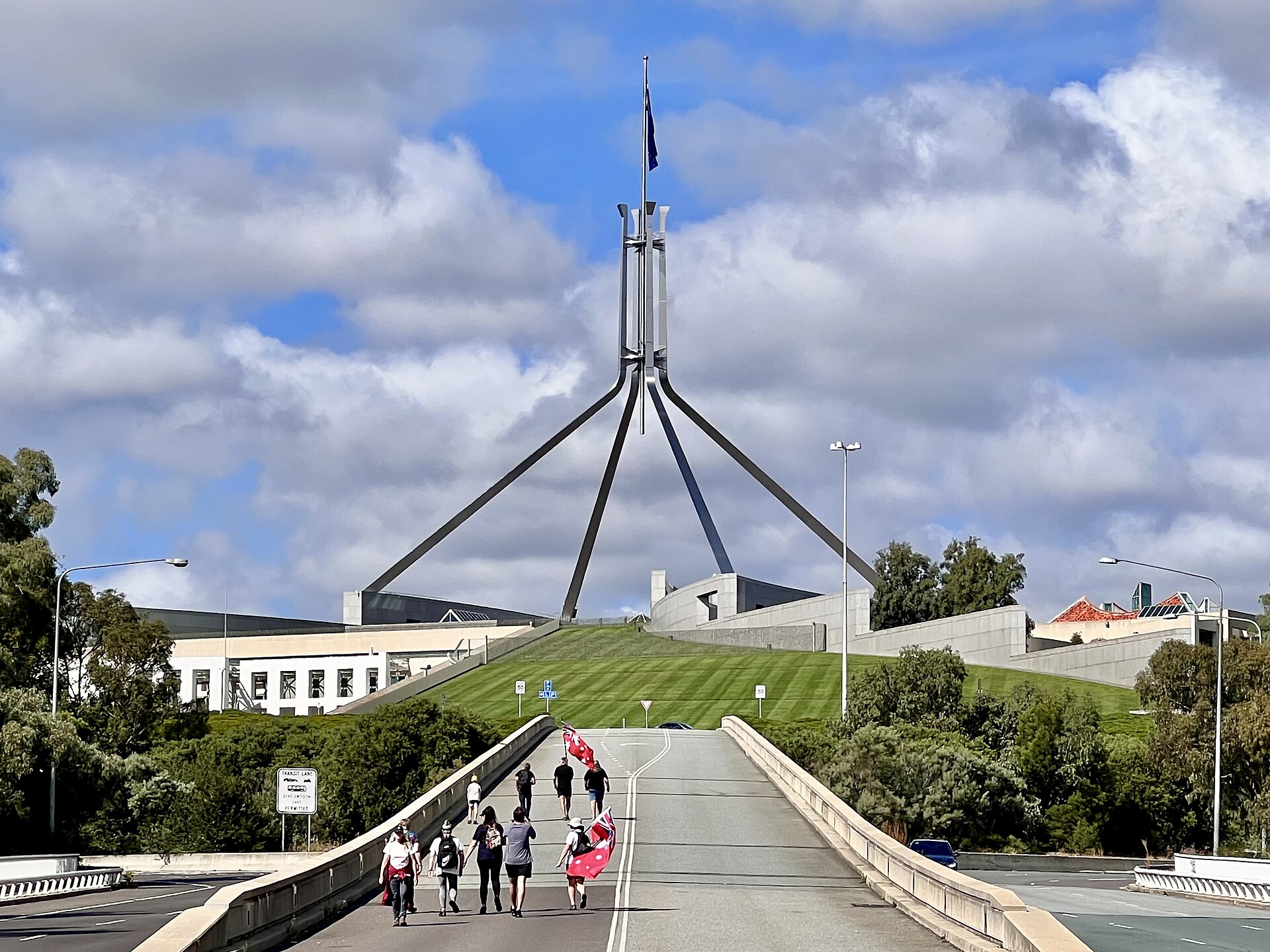
Australia’s Parliament passed an online safety law Wednesday, Nov. 25, 2026, that allows fines of up to 5 per cent of a tech company’s global revenue, the same percentage as the highest court fine for operators in Canada’s Bill C-34, which is still before a House of Commons committee.
The Digital Duty of Care Act requires large technology companies to reduce the risk of harm before it happens, according to The Associated Press. It sets minimum safety standards for online services, including games, apps and artificial intelligence chatbots.
The Senate passed the bill 36-23 and it became law with a 97-43 vote in the House of Representatives, AP reported. Amendments from the Greens raised the maximum penalty to 5 per cent of global revenue. The government had originally proposed a cap of 109 million Australian dollars.
Australians will also be able to sue platforms that breach the duty, and companies get 12 months before it takes effect, The Next Web reported. It said Communications Minister Anika Wells described the 5 per cent figure as sitting between Canada’s 3 per cent and the European Union’s 6 per cent.
The Canadian bill has more than one ceiling. In the first-reading text of C-34, 3 per cent applies to administrative penalties: the maximum is $10 million or 3 per cent of gross global revenue, whichever is greater.
Offences carry higher limits. An operator that, for example, breaks an order from the proposed regulator or obstructs it could be fined up to $20 million or 5 per cent of gross global revenue, whichever is greater, on conviction on indictment. On summary conviction, the limit is the greater of $15 million or 4 per cent. The bill allows a due diligence defence.
The two measures also differ in how they define who is covered. C-34 applies its main duties to regulated services, which for social media and chatbots means those that meet user thresholds to be set by cabinet or that are designated by regulation. Chatbot operators would have to take steps to limit harmful content and intervene in crisis situations.
The first-reading text does not name video games or gaming, while AP reports Australia’s standards cover games. Identity Minister Marc Miller has said he would consider extending C-34 to gaming platforms such as Roblox.
The Canadian bill would also require specified social media services to use age checks meant to keep people under 16 from holding accounts, subject to exemptions. Australia already has a ban on social media for children under 16 that took effect in December 2025, according to The Record.
The Record reported that the new Australian law also requires annual written risk assessments, lets users opt out of algorithm-driven feeds and requires age proof to access pornography.
Australian Prime Minister Anthony Albanese told Parliament the law is a “powerful instrument to protect our children and our society from online harms,” AP reported. Opposition Leader Angus Taylor said he would repeal it if his party wins the 2028 election and called it censorship. The United States had also warned it would lead to censorship of lawful speech.
C-34 passed second reading in the Commons on Oct. 29 and is at committee, according to Parliament’s LEGISinfo. It still needs further Commons votes and Senate approval, and the figures above could change through amendments. Our earlier report sets out what Bill C-34 would do, and the 2026 federal budget proposed $176.3 million over five years to set up an online safety commission.
If you find reporting like this useful, consider supporting Canada News Media, an independently owned Canadian newsroom.
Sources: Bill C-34 first-reading text and LEGISinfo; The Associated Press via The Canadian Press; The Next Web; The Record.
Follow Canada News Media
Get the day's top Canadian stories and our two daily 60-second news videos wherever you scroll.
X Threads Facebook Instagram LinkedIn TikTok YouTube Pinterest Reddit Substack Flipboard Newsletter RSS