


A Senate committee amended the federal lawful access bill, Bill C-22, this week but made no substantial change to its metadata rule, Toronto password manager 1Password said an attacker copied some customer data, and two Quebec venture funds announced first closes worth a combined $75 million.
That fund total is $45 million for Montreal’s Real Ventures and $30 million for Sherbrooke’s Ascension Capital. Real is targeting $60 million and Ascension up to $50 million, so together they have reached about 68 per cent of a combined $110-million goal, according to a Canada News Media calculation from figures reported by BetaKit.
Lawful access and online rules
The Senate’s national security, defence and veterans affairs committee went through C-22 clause by clause Tuesday and Wednesday. Its changes include a clearer definition of “systemic vulnerability,” but it defeated an amendment on collecting metadata, as we reported in our story on the committee’s C-22 amendments. The bill would still require service providers to keep metadata for up to six months.
The amendments are not law. As of Thursday morning, Parliament’s bill tracker listed C-22 at consideration in Senate committee. It must still pass third reading in the Senate and go back to the House of Commons. Avery Pennarun, chief executive of Tailscale, told BetaKit the Senate had made “some meaningful improvements,” but he was disappointed it had not dealt with measures that would make some companies collect more information than they normally would.
Abroad, Australia’s Parliament passed an online safety law Wednesday with fines of up to 5 per cent of a tech company’s global revenue. Our comparison with Canada’s Bill C-34, which is still before a House committee, shows how the two differ.
Security
1Password said Wednesday that it began investigating on Nov. 19 after signs someone had gained access to an employee’s corporate GitHub account. The attacker copied account records for a subset of users, including names and sign-in email addresses, the company said. It said customer vaults and the keys that protect them were not affected, and users do not need to change anything in their accounts. It urged caution about unexpected messages that mention 1Password. The company did not say how many customers were affected. Our 1Password story lists the other records the company said were copied.
Bell, meanwhile, widened its account of the Nov. 17 cyberattack. A company spokesperson told CBC News on Monday that customers of Bell, Bell Aliant, Bell MTS, Virgin Plus and Lucky Mobile were affected, after earlier statements concerned business customers. Bell said no credit card numbers, banking information or other highly sensitive personal information was accessed, and did not say how many people were affected. See what changed in the Bell breach.
AI rules, contracts and data centres
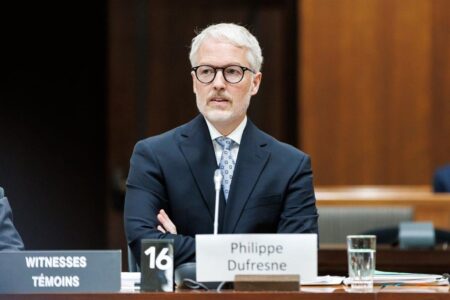
The Competition Bureau told the House ethics committee Monday that algorithmic pricing is not against the Competition Act in itself, and that what matters is how companies use it, according to its prepared remarks. The same day, Privacy Commissioner Philippe Dufresne said his office will launch an exploratory consultation on personalized algorithmic pricing, with a view to developing guidance in the new year. Our report covers what the bureau told MPs.
A Canada News Media review of federal open contracts data found three non-competitive contracts with Toronto AI company Cohere worth a combined $2.64 million, signed between November 2025 and March 2026. Those are disclosed contract values, not necessarily money paid, and a non-competitive code on its own does not show that a rule was broken. Ottawa announced in October that it would invest up to $1.6 billion in the company.
In Nova Scotia, Liberal Leader Becky Druhan called Wednesday for a pause on the planned Point Tupper AI data centre until regulations are in place. The project’s 95-megawatt first phase equals about 3.8 per cent of the record demand Nova Scotia Power has reported, 2,481 megawatts, by our calculation. That compares project size with past demand and does not forecast actual power use. Premier Tim Houston has said the centre will not raise power bills.
South of the border, U.S. President Donald Trump threatened last Friday to put “a tremendous tax” on American companies that build data centres outside the United States. It is not clear how serious the proposal is or how it would be enforced, BetaKit reported. A spokesperson for Alberta Premier Danielle Smith told the outlet the province is waiting to see what happens. We have more on the U.S. data centre plan.
Ottawa has also named 12 members to a new advisory council on AI and culture.
Funding
Real Ventures announced the first close of its sixth pre-seed fund, Antifragile Fund I, on Wednesday, BetaKit reported. It is the firm’s first new fundraise since 2017. Backers include the Quebec government, whose support through Investissement Québec is up to $30 million. Real is also relaunching its FounderFuel accelerator in Montreal and plans to invest $500,000 in each company in a first group of eight. That works out to $4 million, equal to about 9 per cent of the first close, although the report did not say all of it would come from that money.
“We’re looking to help you build the conditions for commercial success, but not at the expense of the purpose that you’re about,” managing partner John Stokes told BetaKit.
Ascension Capital, a new early-stage fund from the partners behind Sherbrooke incubator ACET’s venture arm, plans to back 16 to 20 pre-seed and seed startups, including in deep tech and AI, according to BetaKit. The first close is backed by Fonds de solidarité FTQ and undisclosed private investors from the Estrie region. BetaKit reported that Investissement Québec has committed up to $25 million if private investors match it dollar for dollar.
In biotech, Apiary Therapeutics said Monday it raised $7.3 million in a seed round co-led by Genesys Capital and BDC Capital’s Life Sciences Venture Fund, BetaKit reported. The company’s stem cell technology has yet to be tested in humans.
Money was also a theme in a MaRS Discovery District survey of founders and executives at 21 high-growth companies in its portfolio. Access to growth capital came up as a challenge in 17 responses, slow procurement or trouble finding Canadian customers in 12, and seven were considering moving their headquarters abroad, BetaKit reported. The small sample does not represent the whole tech sector. For last week’s files, see our previous Tech and AI Watch.
Canada Tech & AI Watch is a weekly roundup of what Canadian technology and AI companies shipped, raised or announced, plus federal and provincial rules on AI and privacy. Funding figures are as reported and were not independently confirmed with the companies.
Want to present Canada Tech & AI Watch? Email [email protected].
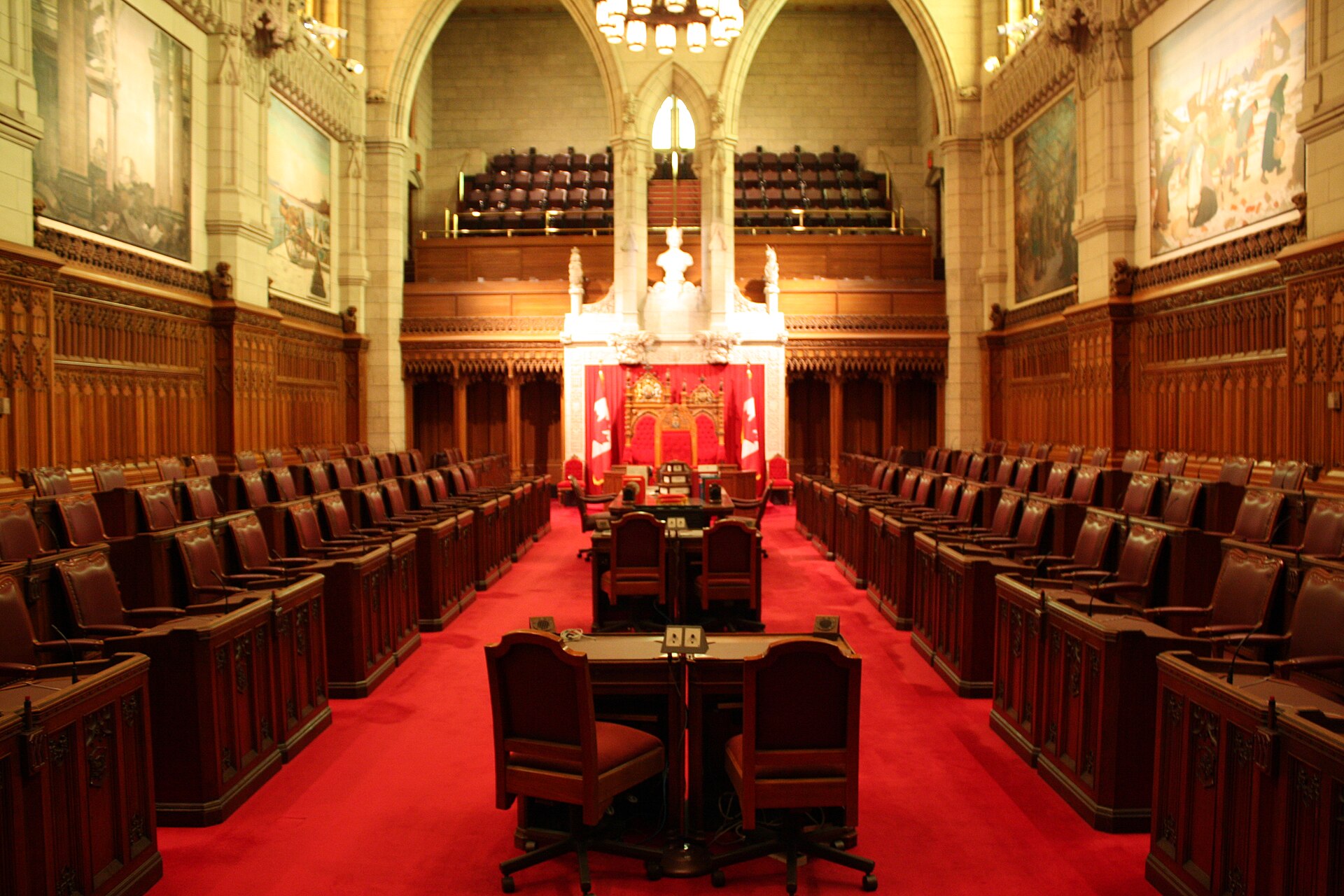
File photo: The Senate chamber in the Centre Block on Parliament Hill in Ottawa. Photo: Makaristos, Wikimedia Commons, public domain.
If you find reporting like this useful, consider supporting Canada News Media, an independently owned Canadian newsroom.
Sources: 1Password; Office of the Privacy Commissioner of Canada; Parliament of Canada, LEGISinfo; Competition Bureau; BetaKit; and Canada News Media’s earlier reporting as linked.
Follow Canada News Media
Get the day's top Canadian stories and our two daily 60-second news videos wherever you scroll.
X Threads Facebook Instagram LinkedIn TikTok YouTube Pinterest Reddit Substack Flipboard Newsletter RSS