


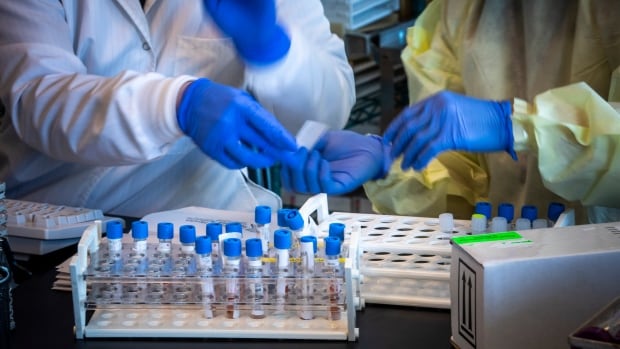

Ontario reported 173 new coronavirus cases on Thursday, pushing Canada’s total number of confirmed and presumptive cases above 100,000.
As of 11:20 a.m. ET on Thursday, Canada had 100,146 confirmed and presumptive coronavirus cases, with 62,442 considered recovered or resolved. A CBC News tally of deaths based on provincial data, regional health information and CBC’s reporting stood at 8,349.
Prime Minister Justin Trudeau on Thursday said that as parts of the economy reopen, testing and contact tracing “is crucial.”
Trudeau said testing for a voluntary nationwide mobile app that will let users know if they have been exposed to COVID-19 will soon begin in Ontario.
“There are already a number of provinces, including B.C., who are working with us on this, but it will be available to everyone in the coming weeks.”
Prior to Ontario’s case update on Thursday, Quebec and Ontario represented roughly 87 per cent of the total case numbers in Canada.
Long-term care homes have been an area of major concern in the country, with several facilities in Quebec and Ontario facing such severe staffing issues that the provincial governments requested help from the Canadian Armed Forces.
Quebec’s coroner’s office has ordered a vast public inquiry into COVID-19 deaths at some of the province’s long-term care homes, private seniors’ residences and other accommodations for vulnerable people. Pascale Descary, the province’s chief coroner, said in a statement the public inquiry will allow Quebecers to learn the facts about what happened during the pandemic.
Ontario was the first province to announce it would look into the long-term care system, announcing in May that it would hold an independent commission. But critics decried the move, saying a full public inquiry is required.
The global pandemic has caused massive strain on health systems and economies worldwide — including in Canada, where provinces struggled to ramp up testing in early days and worried about shortages of critical protective gear and trained staff.
Public health officials responded to growing case numbers with public health measures aimed at slowing the spread of the disease, but widespread closures came with significant economic strain for governments, businesses and families as organizations closed their doors.
As daily new case numbers decline, provinces have been taking steps toward reopening after months of closures and strict health measures aimed at fighting the novel virus, for which there is no proven cure or treatment.
Dr. Theresa Tam, Canada’s chief public health officer, has warned that there is no place for complacency around public health measures, and urged people to keep up hand hygiene and physical distancing.
Nunavut remains the only jurisdiction in Canada with no confirmed cases of COVID-19, but Yukon, Northwest Territories and Prince Edward Island have to date had no deaths attributed to the novel virus.