

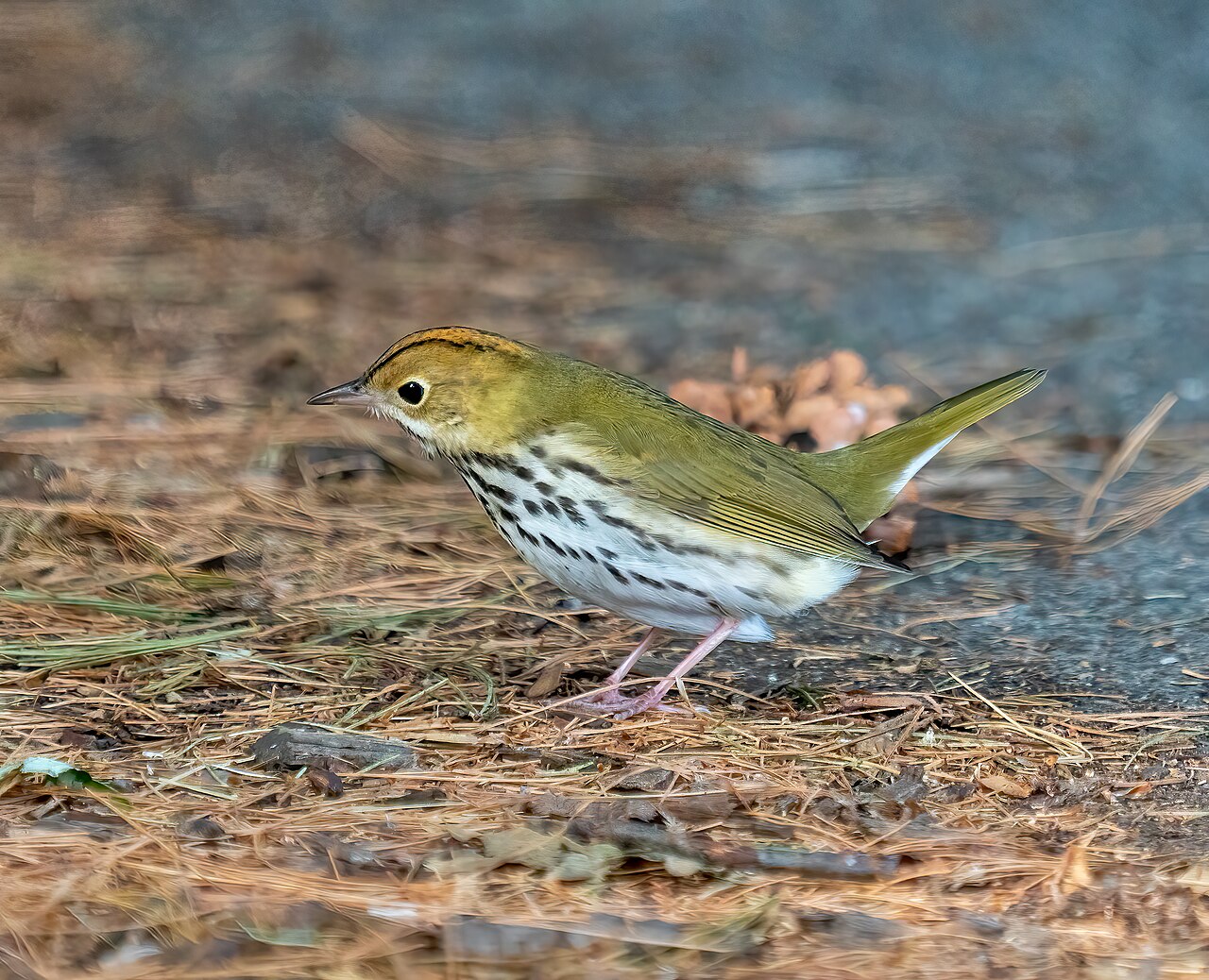
Biologists have shown that artificial intelligence can identify individual ovenbirds by their songs alone, and recordings made in Alberta’s boreal forest were used to test it, according to a study published in the journal Nature Methods.
The paper, posted online Nov. 5, describes a neural network trained to pick out the features that make each bird’s song distinct. It was led by Sam Lapp, who did the work at the University of Pittsburgh and is now a postdoctoral researcher at the University of Colorado, with co-authors including Erin Bayne, a biology professor at the University of Alberta.
Male ovenbirds, ground-dwelling warblers with a rapid “teacher-teacher-teacher” call, sing one version of a single song for life. To human ears they sound alike, but their songs differ in ways that show up on a spectrograph, Lapp told CBC News.
The team trained the model on 9,072 hours of audio from nearly 130 sites in Pennsylvania, recorded over four years, and tracked 405 individual birds. It then tested the model on recordings from mixed-wood and boreal forest in Alberta from the 2016 breeding season. Lapp said it linked songs to the same bird with up to 96 per cent accuracy.
The standard way to follow individual songbirds from year to year is leg banding, which means catching a bird, fitting a marker and trying to catch it again the next spring. Passive microphones could cut that work sharply, said Richard Hedley, a statistical ecologist with the Alberta Biodiversity Monitoring Institute who was not involved in the study. He told CBC News that acoustic recorders have long been used to detect species, but telling individuals apart is a step further, and that a wealth of existing recordings could be reanalyzed.
The method has limits. It cannot track female ovenbirds or juveniles, whose calls are simpler, and it would not work for mimics such as magpies and mockingbirds that sing dozens of songs. The researchers said it suits birds that keep one unchanging song, roughly 30 per cent of songbird species, as well as some bats and owls. The code has been released on open-source sites so other teams can use it.
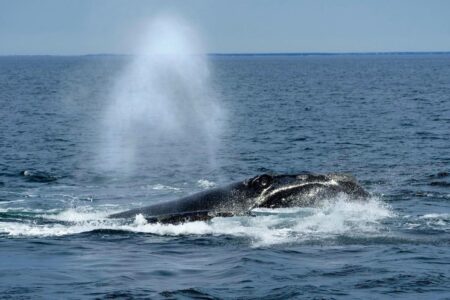
For Canada, the appeal is monitoring species across large, remote forests where banding is costly. Several Canadian birds are already under pressure: a separate study found loon chick numbers falling across the country, and surveys this month counted fewer North Atlantic right whales despite a strong calving year, a reminder of how much monitoring data conservation decisions depend on.
The study, “Automated identification of individual birds by song enables multi-year recapture from passive acoustic monitoring data,” is published in Nature Methods. Quotes and Alberta details are from CBC News.
If you find reporting like this useful, consider supporting Canada News Media, an independently owned Canadian newsroom.
Follow Canada News Media
Get the day's top Canadian stories and our two daily 60-second news videos wherever you scroll.
X Threads Facebook Instagram LinkedIn TikTok YouTube Pinterest Reddit Substack Flipboard Newsletter RSS