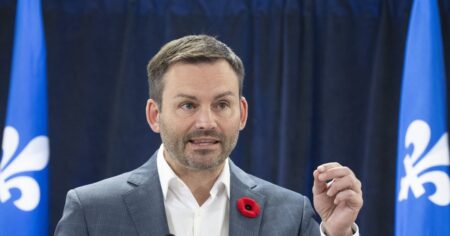




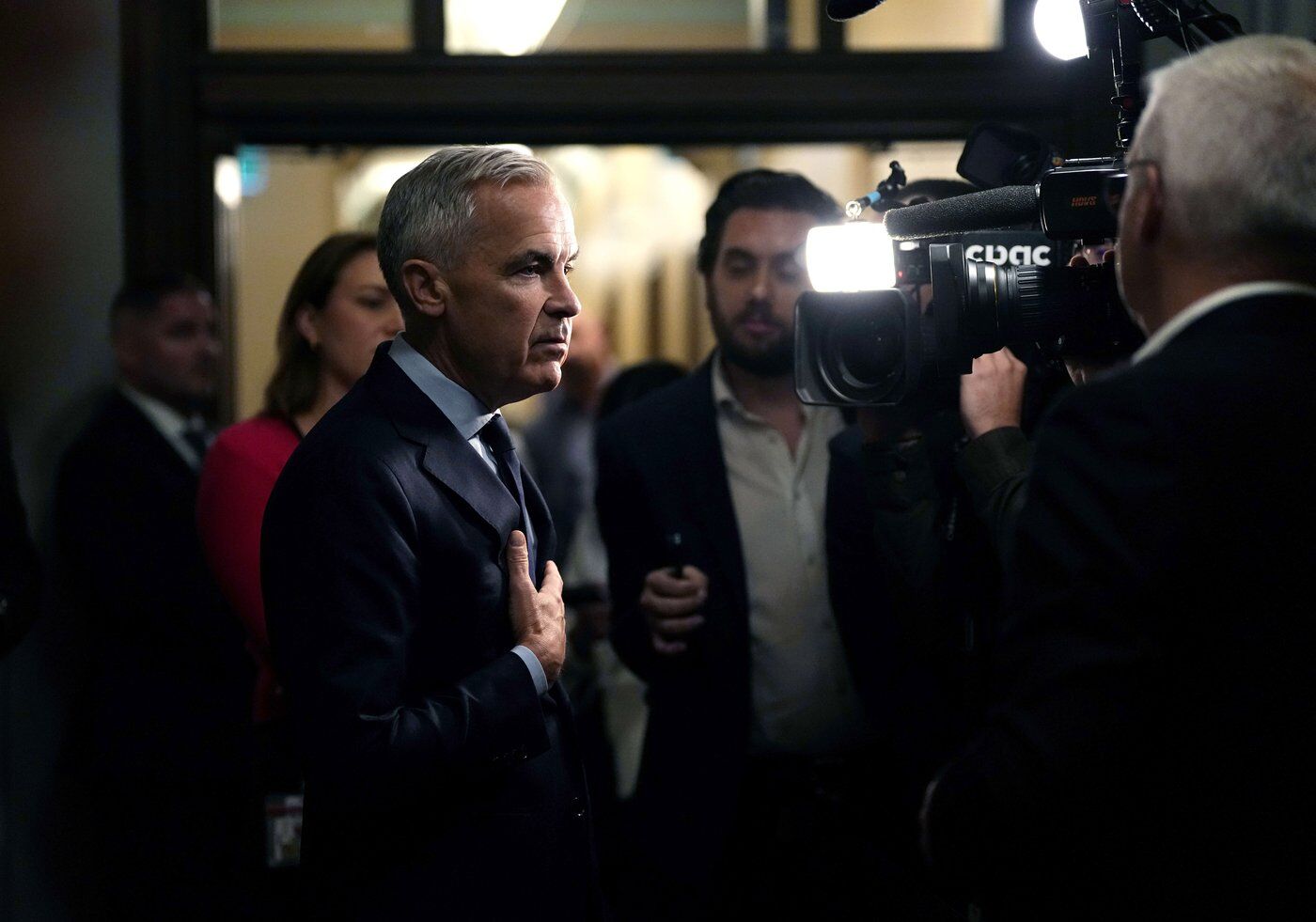
Prime Minister Mark Carney said Oct. 6 that Quebec should focus on the economy and not on a possible independence referendum, after he spoke with premier-designate Paul St-Pierre Plamondon following the Parti Québécois’s election win.
The Parti Québécois won 59 of the 127 seats in the National Assembly in Monday’s election, five short of the 64 needed for a majority, according to The Associated Press. The Coalition Avenir Québec was shut out and won no seats.
“This is not a time to wait for something a few years down the road. It’s the time to act,” Carney said, according to The Associated Press.
CTV News, citing The Canadian Press, reported that Carney described Canada as being at a “crucial time” in his conversation with the premier-designate.
Carney pointed to affordable housing, economic growth, infrastructure and support for workers affected by U.S. tariffs as the federal priorities he wants to pursue with Quebec, The Associated Press reported. The federal government has described its approach as “cooperative federalism”.
St-Pierre Plamondon has pledged to hold another sovereignty referendum but has said he would wait until U.S. President Donald Trump leaves office, according to The Associated Press. He has not given a date.
Industry Minister Mélanie Joly said Quebec is in the middle of a trade war that is costing jobs. “Right now we are in a trade war that is affecting a lot of jobs in Quebec,” she said.
Joël Lightbound, Carney’s Quebec lieutenant, said the vote should not be read as a mandate for separation. “A mandate for separation needs to go through a referendum, so yesterday was an election, not a referendum,” he said.
The numbers support some caution about reading the result as a push for independence. Daniel Béland, a political scientist at McGill University, said support for sovereignty sits at about 30 per cent, well below historical levels. He said the result reflected voter dissatisfaction with the outgoing government more than a surge in separatist sentiment, according to The Associated Press.
Because the Parti Québécois fell short of a majority, it will need support from opposition members to pass legislation. That gives the new government less room to move quickly on any constitutional agenda, and it means early dealings with Ottawa will likely centre on the issues Carney named.
The story is developing, and details of the call come from two news reports, not an official readout reviewed by Canada News Media.
Canada News Media reported the election result on Oct. 6. See our earlier coverage: Parti Québécois wins Quebec election, minority projected.
If you find reporting like this useful, consider supporting Canada News Media, an independent Canadian newsroom with no corporate parent.
Via The Associated Press and CTV News.
Follow Canada News Media
Get the day's top Canadian stories and our two daily 60-second news videos wherever you scroll.
X Threads Facebook Instagram LinkedIn TikTok YouTube Pinterest Reddit Substack Flipboard Newsletter RSS