
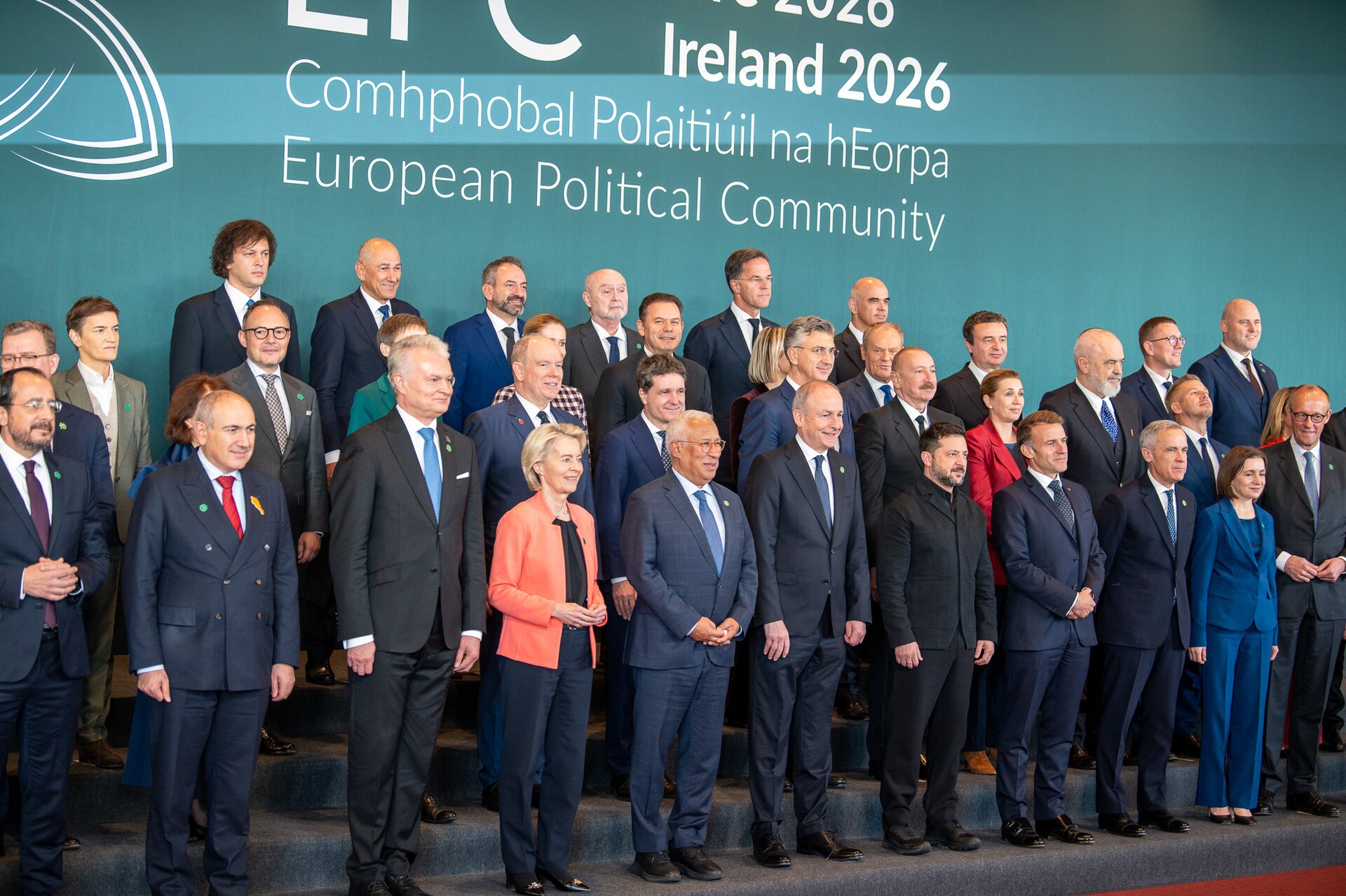
EU leaders meeting in Dublin on Nov. 13 demanded that all 27 member states help fill a projected €70-billion hole in Ukraine’s 2027 budget, as at least four governments signalled they want no part of it, the Irish Times reported.
The EU has said it will cover €45 billion of the gap, about two-thirds of the total. The United Kingdom, Norway, Canada and a handful of other Western allies are expected to supply the rest, the Irish Times reported. Kyiv’s estimate of the gap has not changed since we first reported it in October.
Swedish Prime Minister Ulf Kristersson said he would not accept countries opting out. “We cannot accept that some countries say that they simply would opt out from taking part,” he said, calling the idea “totally unacceptable.” He also said Sweden is “open to discuss all solutions to help Ukraine to survive this winter.”
German Chancellor Friedrich Merz has set the collective approach as a red line. In a letter to European Council President António Costa, he made the EU’s next seven-year budget conditional on all member states backing Ukraine funding, Novinite reported on Nov. 10, citing the Financial Times and Agence France-Presse. The letter said the “collective obligations of us all, without exception, will help to equitably close the gap.”
Bulgarian Prime Minister Rumen Radev has refused to take part. “There is no way for Bulgaria to be part of this €70 billion,” Radev said, according to Novinite. The Ukrainian outlet LIGA.net reported on Nov. 14 that he added Bulgaria would not block aid from other countries. Hungary, Slovakia and the Czech Republic stayed out of the €90-billion EU loan agreed last December, the Irish Times reported.
Irish Taoiseach Micheál Martin said borrowing together as a bloc looks like the “most effective” route for now, but added: “That doesn’t mean that’s the way it’s going to be forever.” Latvian Prime Minister Andris Kulbergs asked why the EU does not draw directly on frozen Russian assets, saying the money is “lying on the ground.”
The funding fight ran alongside a second argument about who speaks for Europe in the U.S.-brokered peace talks. Euronews reported that Ukrainian President Volodymyr Zelenskyy told leaders “next time, next meeting, Europe will be in the negotiating team,” and that U.S. envoy Jared Kushner said a deal cannot be concluded “without the Europeans being at the table.” Italian Prime Minister Giorgia Meloni wants a single EU representative with a clear mandate, and Luxembourg’s Luc Frieden named Costa as the natural choice. We reported the five-nation European team on Nov. 14.
For Canadians, the numbers matter in two ways. Ottawa has not publicly set a figure for its share of the 2027 gap in any of the reporting we reviewed, so the Irish Times reference to Canada is a signal of what allies expect, not a confirmed pledge. Canada is also tied to the same EU debates through trade: Prime Minister Mark Carney used the Dublin meetings to press leaders to ratify CETA, and Latvia, one of the voices pushing hardest on Russian assets, hosts the Canadian-led NATO battlegroup.
What happens next has a date. European Commission President Ursula von der Leyen said the Commission will present a paper on Ukraine’s 2027 financial needs, together with the 22nd Russia sanctions package, at a special European Council on Nov. 26 and 27, Euronews reported. Our earlier coverage of the proposed €45-billion loan payout and the sanctions package gives the background.
The funding figures and quotes cited here come from the named officials and outlets and could not be independently verified by Canada News Media.
If you find reporting like this useful, consider supporting Canada News Media, an independently owned Canadian newsroom.
Via the Irish Times, Euronews, Novinite and LIGA.net.
Follow Canada News Media
Get the day's top Canadian stories and our two daily 60-second news videos wherever you scroll.
X Threads Facebook Instagram LinkedIn TikTok YouTube Pinterest Reddit Substack Flipboard Newsletter RSS