





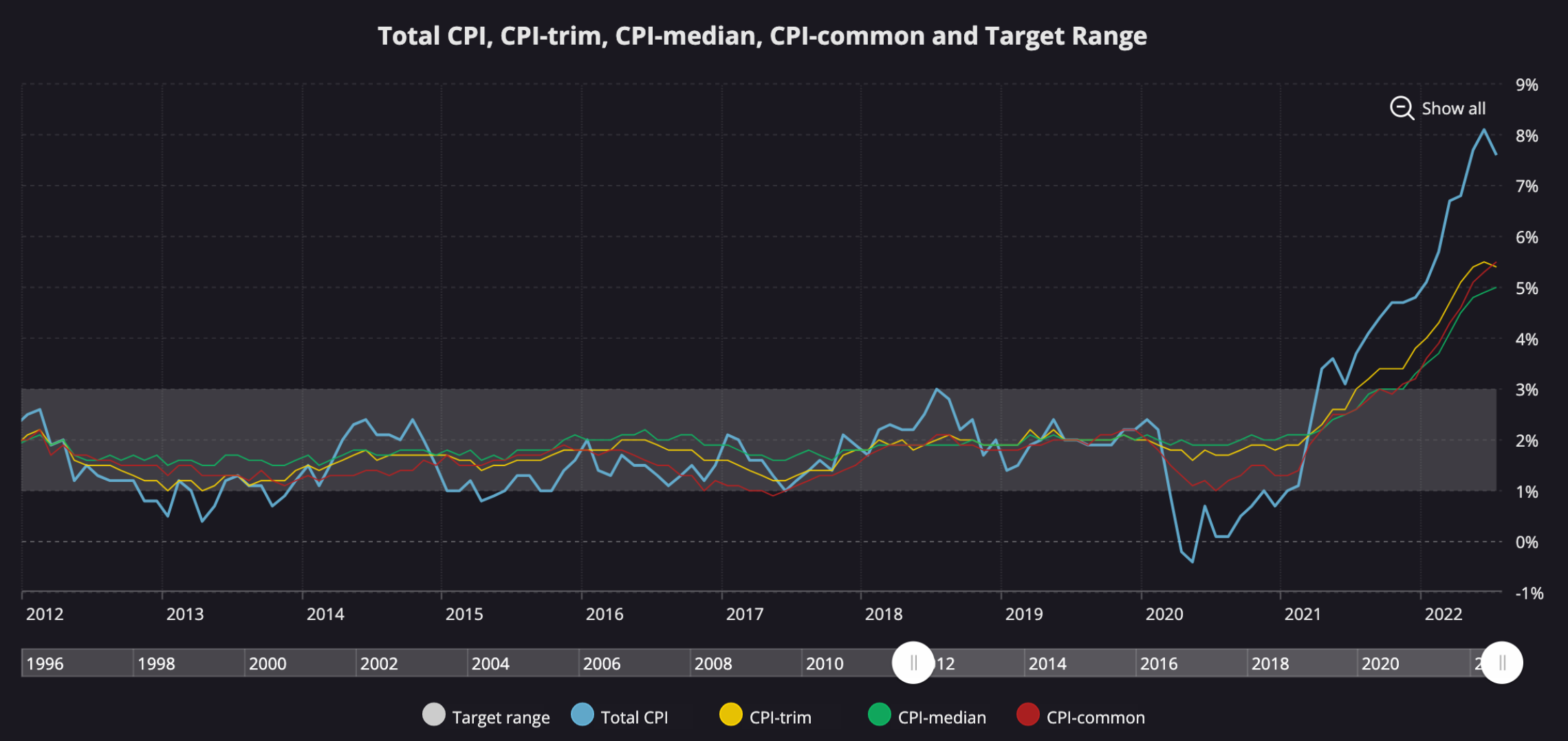
According to the latest Canadian consumer price index, inflation has fallen to 7.5% since June 2021, from a 39-year high of 8.1%. This also marks the first time the inflation rate has fallen in the last 12 months, which might be the break in the clouds consumers were hoping for. Gas, in particular, was a significant concern for most as bills hit over $1,000 per month, which is a record high and unsustainable for most.
However, in places like Ontario, the provincial government implemented a fuel tax cut which eased prices by 12.2%, another ray of sunshine for Canadians. But is this the same trend in other places around the world?
This article will look at the inflation decrease in Canada and what it might mean. So keep reading to learn more
What Does it Mean Compared With Other Countries?
It’s easy to look at this decreasing number and say that inflation is going down. But one thing to remember is that we are facing a multi-decade high similar to the situation back in the early 80s. Gas prices have started to decrease, but it will also take time for the decrease to translate to other sectors, such as household goods.
Because the Canadian economy and most other economies worldwide rely on truck transport, the cheaper cost of moving goods will start to be felt in the coming months. Interest rates might not fall immediately, but you can expect them to once the economy starts showing signs of revitalization. The country’s goods will also become internationally competitive again, improving exports and spurring GDP growth. And not just in Canada but in most parts of the world.
For instance, if we look at our direct neighbours, prices have started to stabilise, and employers are opening up to hiring new workers. The US is also looking to revitalise its domestic manufacturing industry by investing in more manufacturing back home moving forward. It recently announced that it would build a semiconductor manufacturing plant in Arizona, amongst other things.
Furthermore, people sending money back home have had to cope with high exchange rates and transaction fees. For instance, since the Euro dropped, Canadians living in Europe have felt the pinch, but with the falling inflation rate, they hope this won’t last long. In most cases, the process of sending money to Canada is much cheaper when you use an online money transfer provider. A process that more and more Canadians have started to trust and appreciate.
Due to Inflation, What are the Most Expensive Products in Canada?
As with many inflations, the price of gas, food and housing are usually the most affected, and this period is no different. Gas at petrol stations went up 32.3% compared to the same time last year. This affected most consumer goods as trucking companies had to adjust their running costs to reflect market conditions which then got transferred to you at the checkout counter.
And for the first time in 13 years, Canadians had to think about what they were putting in their shopping carts as groceries were up by a whopping 7.4%. Furthermore, during the same period, the price of housing went up by 6.6%, which is also a record high only ever witnessed in the 80s. In addition, moving homes was even more challenging as the price of appliances increased by 9.4%, making things even more complicated for the average Canadian.
Inflation is here to stay
High inflation has gripped most parts of Canada and, indeed, the world. But, as authorities and different sectors of the economies implement strategies to mitigate its effects, we think it might be working as we witness the first fall in the last 12 months. However, this is not to say that we are out of the woods yet; far from it. We should tighten our belts, watch our spending, and spur our leaders to do more to help ease the economic struggles for all.
Follow Canada News Media
Get the day's top Canadian stories and our two daily 60-second news videos wherever you scroll.
X Threads Facebook Instagram LinkedIn TikTok YouTube Pinterest Reddit Substack Flipboard Newsletter RSS