
Federal auditors who checked six suppliers that received $11.6 million in Nutrition North Canada food subsidies found the money was claimed and passed on as intended, but in every third-party store they sampled, the subsidy did not appear on shoppers’ receipts and the program’s signs were not on display, according to compliance reports posted by Crown-Indigenous Relations and Northern Affairs Canada this month.
Nutrition North Canada pays registered retailers and suppliers a subsidy on eligible food shipped to 124 isolated northern communities without year-round road, rail or marine access, in Yukon, the Northwest Territories, Nunavut, northern Quebec, Labrador and the northern parts of four other provinces. The department says the retail subsidy cost more than $160 million in 2025-26. Under the program’s rules, the full subsidy must be passed on to shoppers and shown on receipts.
The department posted six compliance assessment summaries for 2025-26, dated Nov. 2. They were written by an outside accounting firm, Samson & Associés CPA / Consultation Inc., and cover the three fiscal years from April 1, 2021, to March 31, 2024. The six suppliers and the subsidies they received over that period were Hamilton Wholesalers Ltd. ($4,090,586), Harris Meats and Groceries Inc. ($3,269,893), Stanton Group Ltd. ($1,505,413), Newfoundland Multi-Foods Ltd. ($944,598), Atlantic Grocery Distributors ($926,972) and Shaw Family Bakeshop ($880,699), for a total of $11,618,161.
All six reports reach the same overall conclusion: the funding was spent for its intended purposes and in compliance with the funding agreements, apart from errors the reports list in a section that is not published, and the auditors found no sales of subsidized products to ineligible businesses. In five of the six, the auditors said the supplier passed on the subsidy and that its value was not being eroded by profit margins. For the sixth, Shaw Family Bakeshop, the auditors gave a qualified opinion because the company could not provide its signed agreements with the third-party store it sold to, so that store could not be reviewed.
The visibility findings were consistent. Three suppliers, Atlantic Grocery Distributors, Hamilton Wholesalers and Newfoundland Multi-Foods, sold to third-party retailers, and in each case the auditors’ sample of that retailer found the subsidy was not reflected on customer receipts and NNC signage was not in the store. Stanton Group, which does not sell through third-party retailers, was found not to have met the program’s visibility requirement itself and was asked to add program information to its website, signs and posters in its store, and shelf labels on subsidized products.
Two reports went further, to prices. The auditors told Stanton Group to review its pricing strategy “to ensure that retail markups do not unintentionally diminish the consumer benefits” of the subsidy, and told Harris Meats and Groceries to consider lower markups on subsidized items. Stanton’s action plan, marked complete, says it will keep reviewing prices while weighing the costs of serving remote communities, including transportation, spoilage and labour. Harris’s response, marked ongoing, says it acknowledges the recommendation and will continue to review its pricing.
In all, the auditors made 18 recommendations. The department lists 15 as complete, one as ongoing (the Harris pricing review) and two as incomplete: Shaw Family Bakeshop did not respond to either of its recommendations, on reconciling invoices with claims and on keeping records for seven years as its agreement requires. The most common recommendation, made to all six suppliers, was to reconcile the products on sales invoices with the amounts claimed. Four were also told to check claimed shipping weights against waybills.
For shoppers in the North, the findings matter because the receipt is the only way to see how much of a price is subsidized. Residents who do not see the subsidy on a receipt can contact the program through its website.
The reports have limits. All six were desk audits done by electronic communication, and in each the auditors wrote that they were therefore unable to verify the accuracy of the weighting system the supplier used, which matters because the subsidy is paid by weight. The published summaries do not include the detailed error findings or dollar amounts, and they cover sales that ended in March 2024, more than two and a half years before publication. They do not compare shelf prices with or without the subsidy. The program’s most recent quarterly subsidy report on its reports page covers January to March 2023. None of the stores sampled is named.
How we checked: We read all six summaries linked from the department’s Compliance Reports for 2025-2026 page on Nov. 21, 2026, for Atlantic Grocery Distributors, Hamilton Wholesalers, Harris Meats and Groceries, Newfoundland Multi-Foods, Shaw Family Bakeshop and Stanton Group, added up the funding and recommendations ourselves and checked each total twice. Program figures are from Nutrition North Canada’s eligible communities page and the publication dates from its reports page. Company responses are quoted from the action plans in the reports.
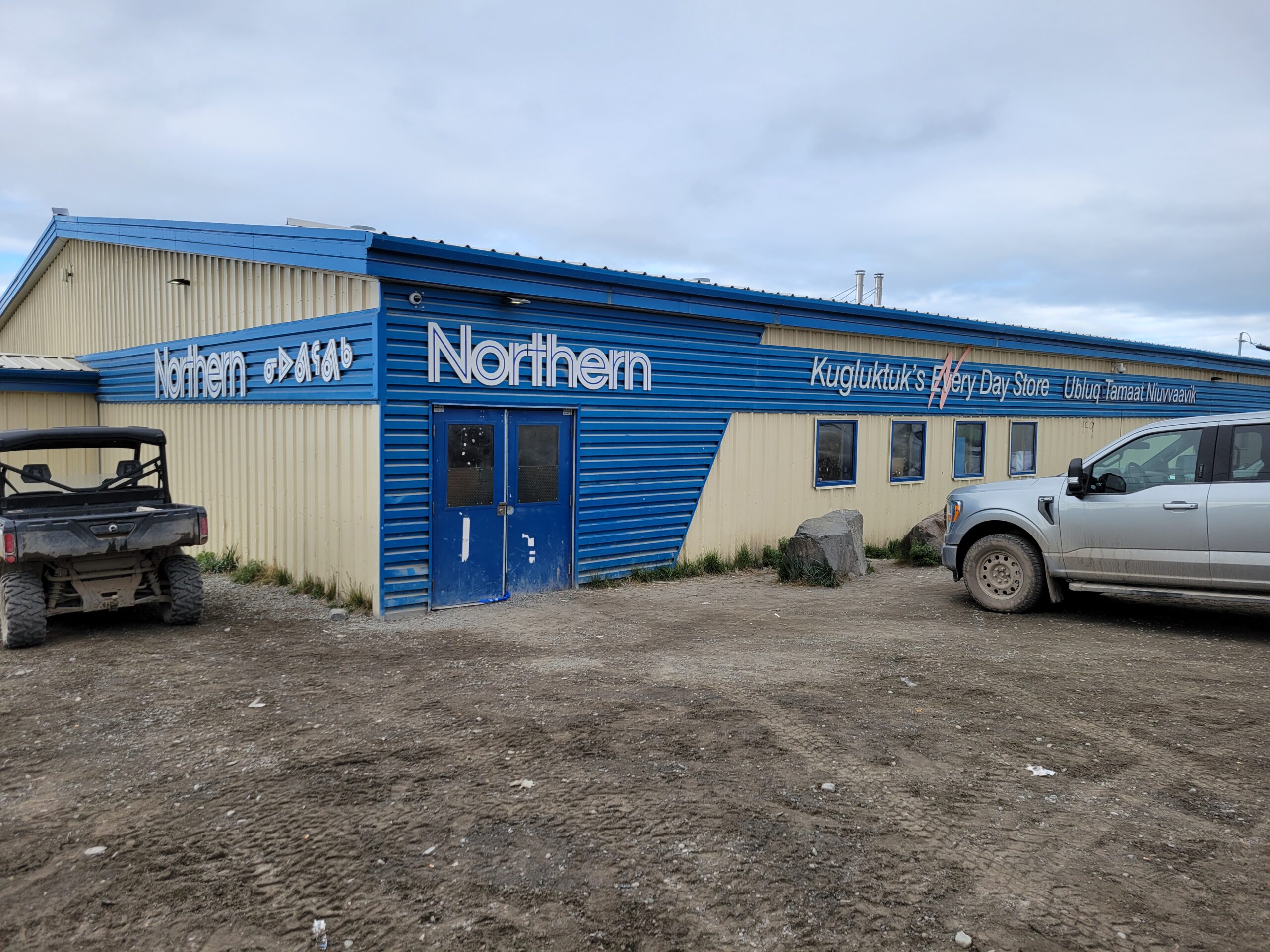
Photo: the Northern store in Kugluktuk, Nunavut, June 22, 2024. The store is not one of the suppliers or retailers in these reports. File photo: OhanaUnited via Wikimedia Commons, CC BY-SA 4.0.
Follow Canada News Media
Get the day's top Canadian stories and our two daily 60-second news videos wherever you scroll.
X Threads Facebook Instagram LinkedIn TikTok YouTube Pinterest Reddit Substack Flipboard Newsletter RSS