

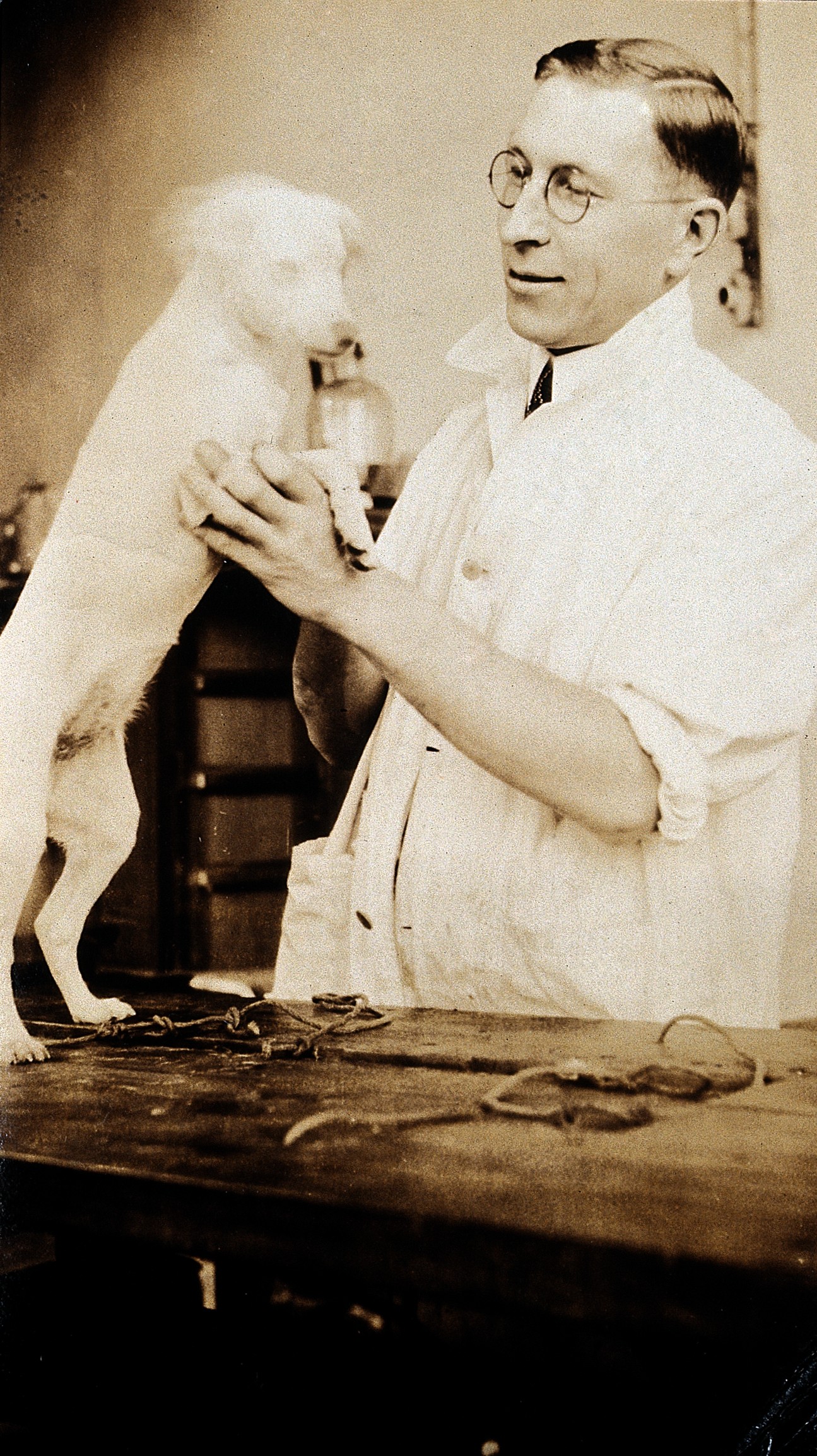
Frederick Banting, a young surgeon teaching at Western University in London, Ont., woke in the early hours of Oct. 31, 1920, and wrote down a 25-word note that became the starting point for the discovery of insulin.
The note was short and misspelled. “Diabetus,” Banting wrote, according to the University of Toronto’s Thomas Fisher Rare Book Library. “Ligate pancreatic ducts of dogs. Keep dogs alive till acini degenerate leaving Islets. Try to isolate the internal secretion of these to relieve glycosuria.”
Banting had gone to bed with a lecture on the pancreas due to students on Nov. 1. Before sleeping he read a newly arrived issue of the journal Surgery, Gynecology and Obstetrics, which led with an article by Moses Barron of the University of Minnesota on the islets of Langerhans and diabetes, the Fisher library’s account by historian Michael Bliss said.
Barron described a case in which a blocked pancreatic duct had caused most of the organ to waste away while the islet cells survived. Banting could not sleep. Western University’s heritage page and Global News both place him in his London home at about 2 a.m. when he got up and wrote the note, which survives and is dated Oct. 31, 1920.
The sources differ slightly on small points. Bliss wrote that Banting first jotted Oct. 30 and then corrected it to Oct. 31, while Western and Global News give Oct. 31 without comment. The wording of the note also varies a little from one transcription to the next, including “dog” or “dogs” and the spelling of “glycosuria.”
The idea was not a cure. It was a method. If the digestive cells of the pancreas could be made to degenerate by tying off the duct, Banting reasoned, the islets might be left intact and their internal secretion extracted without being destroyed by digestive enzymes. Barron’s article had made the case that the islets were the likely source of the missing secretion.
Banting took the plan to Toronto. According to Bliss, he met J.J.R. Macleod, the University of Toronto physiologist, on Nov. 8, 1920, and was told to wait until the following summer for laboratory space. Western says experiments began in Toronto on May 17, 1921, with medical student Charles Best as his assistant. Biochemist James Collip joined the effort, which Western dates to December 1921.
The first human use of the extract followed. Western says Leonard Thompson received it on Jan. 23, 1922. On Oct. 25, 1923, the Nobel Prize in physiology or medicine was awarded to Banting and Macleod, and Western says Banting shared his portion of the prize money with Best while Macleod shared his with Collip.
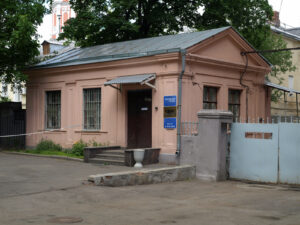
Western’s heritage page places the moment at 442 Adelaide Street in London, the house where Banting lived. He later returned from Toronto to close his London practice and sell it, the university said.
The legacy is a daily one for Canadians who live with diabetes. Insulin remains the central treatment for type 1 diabetes, and the question of who pays for it and for related drugs is still a live policy matter. Canada News Media has reported on what four jurisdictions cover for diabetes drugs under pharmacare and on a recall of Sanofi insulin pens.
Sources: the Thomas Fisher Rare Book Library’s essay on the birth of the idea, Western University’s heritage page on Banting, and Global News.
If you find reporting like this useful, consider supporting Canada News Media, an independent Canadian newsroom with no corporate parent.
Follow Canada News Media
Get the day's top Canadian stories and our two daily 60-second news videos wherever you scroll.
X Threads Facebook Instagram LinkedIn TikTok YouTube Pinterest Reddit Substack Flipboard Newsletter RSS