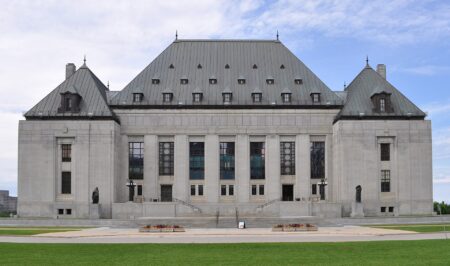


On Nov. 3, 1873, Prime Minister Sir John A. Macdonald rose in the House of Commons and defended himself against charges of corruption in a speech that lasted about five hours, according to The Canadian Press. Two days later, on Nov. 5, his government resigned.
The charges became known as the Pacific Scandal. According to Encyclopaedia Britannica, the affair centred on a contract for a transcontinental railway, which had been a condition of British Columbia’s entry into Confederation in 1871. The province had been promised a rail link within 10 years. The 1872 contract was awarded to a syndicate headed by Sir Hugh Allan, a Canadian shipowner and financier, who, Britannica says, had been a heavy contributor to the Conservative campaign in the 1872 election.
The accusations were made public in April 1873, per Britannica. The writer Dennis Gruending, in a post on the Great Canadian Speeches site, notes that Macdonald had chosen Allan’s Montreal group over Toronto rivals, and quotes a telegram in which Macdonald wrote: “I must have another ten thousand.” Parliament was shut down in the summer of 1873 as the controversy grew, according to the same account.
When the House met again in the fall, Macdonald faced his accusers. His speech is recorded in the House of Commons Debates for Nov. 3, 1873, on pages 119 to 141, as cited by Great Canadian Speeches. That account says he fortified himself with tumblers of gin during his remarks, although it does not give a precise duration. The five-hour figure comes from The Canadian Press.
Macdonald’s defence was part appeal and part counterattack. “I throw myself upon this House, I throw myself upon posterity,” he said, according to the excerpts published by Great Canadian Speeches. On the matter of money and Allan, he insisted that “at that time there had been not one single word said about money, and there never was one said, as far as I was concerned, between Sir Hugh Allan and me.”
He also turned on his opponents in the chamber. “We were simply subscribing as gentlemen, while they were stealing as burglars,” he said, as quoted in the same excerpts. Near the end he declared: “I say I am condemned. But I commit myself, the government commits itself, to the hands of this House.” Gruending writes that Macdonald never directly addressed his own request to Allan for more money.
The speech did not save his government. According to Great Canadian Speeches, Macdonald took to his sickbed the next day, and the government collapsed. Britannica states that the charges led to the resignation of the Macdonald government on Nov. 5 and to the cancellation of the railway contract. The Liberals, led by Alexander Mackenzie, took office. In the election of January 1874, Britannica says, the Conservatives were badly beaten.
The sources consulted for this article do not give a vote count on the House floor, and they do not agree on how to describe the speech beyond its length and tone. Gruending’s account says only that Macdonald spoke at length, while The Canadian Press puts the speech at five hours.
The episode did not end Macdonald’s career. He returned to power in 1878, but the Pacific Scandal remains one of the best-known examples of the link between political fundraising and public contracts in Canadian history. The questions it raised about campaign money and government favours have echoed through later elections, including the close 2-seat result covered in our look back at Trudeau’s narrow survival in the 1972 election.
Sources: The Canadian Press, Today in History for Nov. 3; Encyclopaedia Britannica, “Pacific Scandal”; Great Canadian Speeches, “John A. Macdonald, Pacific Scandal, November 1873”; House of Commons Debates, Nov. 3, 1873.
Follow Canada News Media
Get the day's top Canadian stories and our two daily 60-second news videos wherever you scroll.
X Threads Facebook Instagram LinkedIn TikTok YouTube Pinterest Reddit Substack Flipboard Newsletter RSS