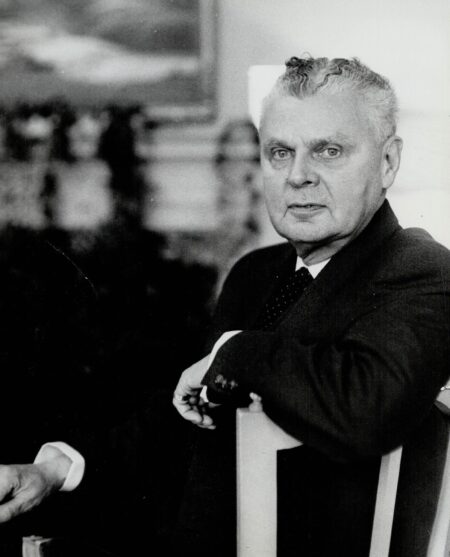



On Feb. 4, 1964, a first-term Liberal member from Etobicoke stood up in the Ontario legislature and pointed to something most of his colleagues did not know was still there. Leonard Braithwaite, elected the previous September as the first Black member of any provincial legislature in Canada, told the house that Ontario law still allowed school boards to set up separate schools for Black children, according to the Legislative Assembly of Ontario’s own account of his maiden speech.
The response was quick by the standards of Queen’s Park. Within about five weeks, Education Minister Bill Davis amended the Separate Schools Act to strip out every reference to segregated schools, as TVO’s Jamie Bradburn documented in a 2018 history drawing on the March 13, 1964, editions of the Globe and Mail and Windsor Star. The amending statute is recorded as the Separate Schools Amendment Act, 1964 (S.O. 1964, c. 108). The legislature’s podcast notes the clause had sat on the books for more than 114 years.
And yet the repeal did not close a single classroom. That gap, between a law disappearing and a school disappearing, is the part of this story that deserves more attention than it usually gets.
A clause written in 1850
The provision Braithwaite targeted dated to 1850, when the Common Schools Act for Upper Canada was amended to allow separate schools for Catholics, Protestants and Black families. The Canadian Encyclopedia notes the clause was framed as something communities could request, but white common school trustees used it to push Black children out of their schools, sometimes over the objections of Black parents. Historian Kristin McLaren, writing in Histoire sociale/Social History in 2004, titled her study of the period with a line from Black petitioners: “We had no desire to be set apart.”
Even Egerton Ryerson, the architect of Ontario’s school system, accepted the arrangement in places. Bradburn’s history quotes him conceding that in some districts “the prejudices and feelings of the people are stronger than law.”
Most of those schools faded by the First World War. Ontario Human Rights Commission research summarized by Charles C. Smith in 2004 lists Black separate schools continuing until 1891 in Chatham, 1893 in Sandwich and 1917 in Amherstburg. One lasted far longer.
School Section No. 11
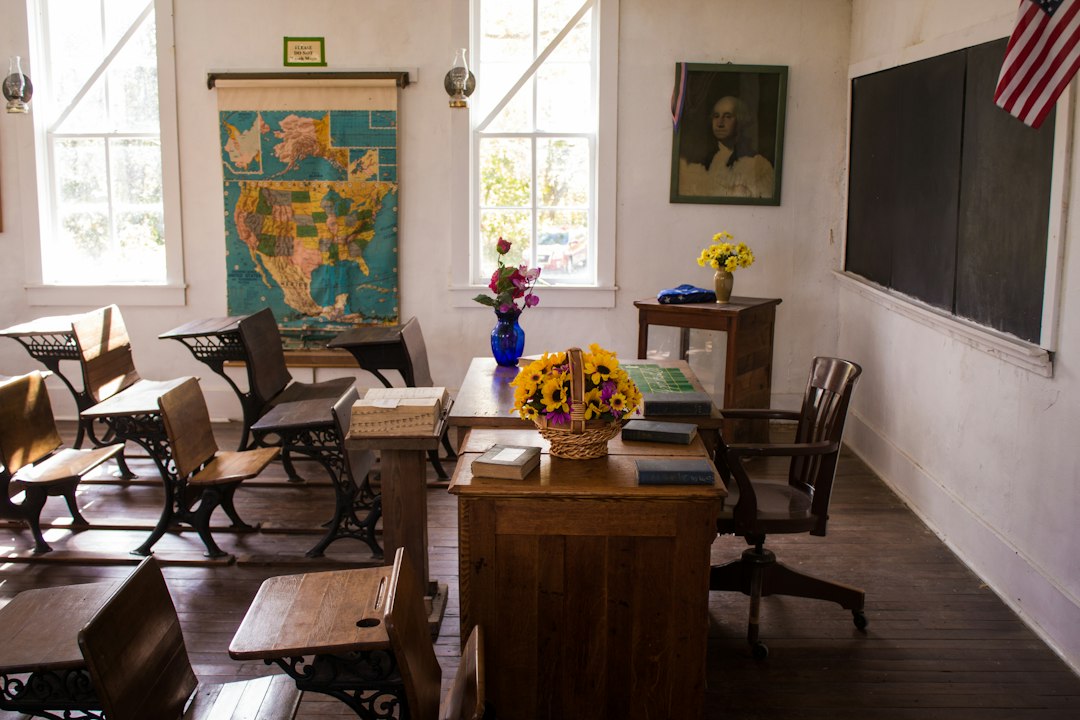
School Section No. 11 sat in Colchester South Township in Essex County, grown from the Matthews Settlement founded in the 1820s, according to TVO. The Ontario College of Teachers’ magazine Professionally Speaking, in a 2014 feature by Kevin Philipupillai, described a school serving only Black students from Grades 1 to 8, with no indoor plumbing, a coal furnace and 52 pupils when teacher Lois Larkin arrived in 1954. White students stopped attending after the 1930s and were sent to other schools instead, Bradburn wrote.
When the Globe and Mail visited in November 1964, months after the repeal, its reporter described dim, cluttered classrooms, chemical toilets that had to be flushed by hand with a pail of water, and a single pump in the yard as the only water source. Earlier that year the well had been found contaminated, according to TVO.
Meanwhile, the nearest major daily seemed unaware there was anything to fix. When Davis amended the act that March, the Windsor Star ran a short front-page item asserting that segregated schools in Essex County had all disappeared around the turn of the century, Bradburn found.
Parents, not statutes, closed it
What ended S.S. No. 11 was organizing. In November 1964, roughly 30 families threatened to pull their children from the soon-to-be-amalgamated Colchester South and Harrow boards unless the school closed by Jan. 1, 1965, TVO reported. The South Essex Citizens’ Advancement Association, led by George McCurdy Jr., gathered about 60 signatures and wrote to the trustees about “a pervading quiet resentment” over what he called de facto segregation. Professionally Speaking credits George and Alvin McCurdy of Amherstburg with building the association that lobbied for integration.
Davis visited the school on Nov. 12. Asked how conditions had been allowed to persist, he answered, “That’s the past. This is the present,” according to Bradburn’s account. A week later, after a five-hour meeting, trustees agreed to move the Grade 1 pupils in January and send every remaining student, along with principal Beulah Cuzzens, to a new consolidated school in Harrow that September. Both sides signed on to language describing racial segregation as an offence to human dignity. The school closed in 1965.
Accounts differ slightly on geography: some published summaries name Merlin, in neighbouring Kent County, as the site of Ontario’s last segregated schools to close in 1965. The fuller documentary record assembled by TVO and the Ontario College of Teachers points to S.S. No. 11 in Colchester South.
Why the gap matters
The sequence is the lesson. A Black legislator exposed the law. A minister repealed it within weeks. And the children it had harmed stayed in the same building for another school year, until their parents organized and newspapers in Toronto took notice. Historian Funké Aladejebi, quoted by TVO, has called the closing a small but powerful example of Black activism across Canada.
Ontario was not alone. Nova Scotia had permitted separate schools for Black students by statute since 1836, according to the Ontario Human Rights Commission research by Smith, and its last segregated Black school, at Lincolnville in Guysborough County, did not close until 1983, The Canadian Encyclopedia notes. In both provinces, the end of legal segregation and the end of segregated schooling were separate events, sometimes decades apart.
Braithwaite later called his role in ending the old race law perhaps his greatest accomplishment, the legislature’s history notes. He was right to be proud. But the families of Colchester South are a reminder that a repeal is a beginning, and that the work of finishing it often falls to the people the law was written against.
If you find reporting like this useful, consider supporting Canada News Media, an independent Canadian newsroom with no corporate parent.
Sources: Legislative Assembly of Ontario, “A Celebration in Honour of Black History Month” (ON Parliament podcast, ep. 13); Jamie Bradburn, “The story of Ontario’s last segregated Black school,” TVO Today, Feb. 26, 2018; Kevin Philipupillai, “Ontario’s Last Segregated School,” Professionally Speaking (Ontario College of Teachers), March 2014; The Canadian Encyclopedia, “Racial Segregation of Black Students in Canadian Schools”; Kristin McLaren, Histoire sociale/Social History, 2004; Separate Schools Amendment Act, 1964, S.O. 1964, c. 108; Charles C. Smith, Ontario Human Rights Commission, 2004.
Follow Canada News Media
Get the day's top Canadian stories and our two daily 60-second news videos wherever you scroll.
X Threads Facebook Instagram LinkedIn TikTok YouTube Pinterest Reddit Substack Flipboard Newsletter RSS