

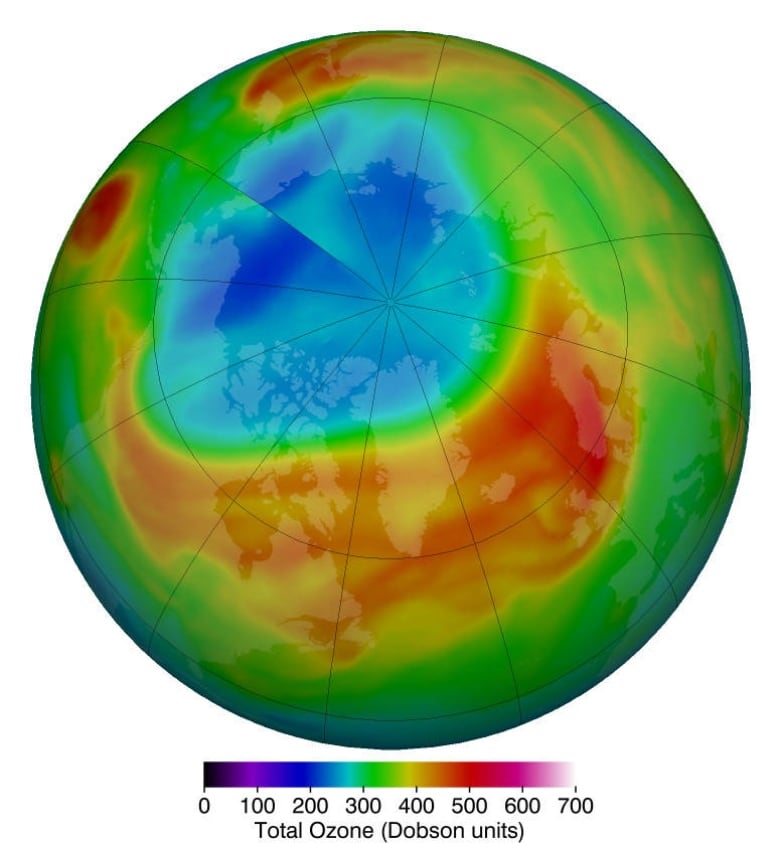

Ozone depletion over the Arctic hit a “record level” in March, the biggest since 2011, but the hole has now closed, the U.N. World Meteorological Organization (WMO) said on Friday.
The springtime phenomenon in the northern hemisphere was driven by ozone-depleting substances still in the atmosphere and a very cold winter in the stratosphere, WMO spokeswoman Clare Nullis told a UN briefing in Geneva.
“These two factors combined to give a very high level of depletion which was worse than we saw in 2011. It’s now back to normal again … the ozone hole has closed,” she said.
Nullis, asked whether less pollution during the pandemic had played a role, said: “It was completely unrelated to COVID.”

Follow Canada News Media
Get the day's top Canadian stories and our two daily 60-second news videos wherever you scroll.
X Threads Facebook Instagram LinkedIn TikTok YouTube Pinterest Reddit Substack Flipboard Newsletter RSS