

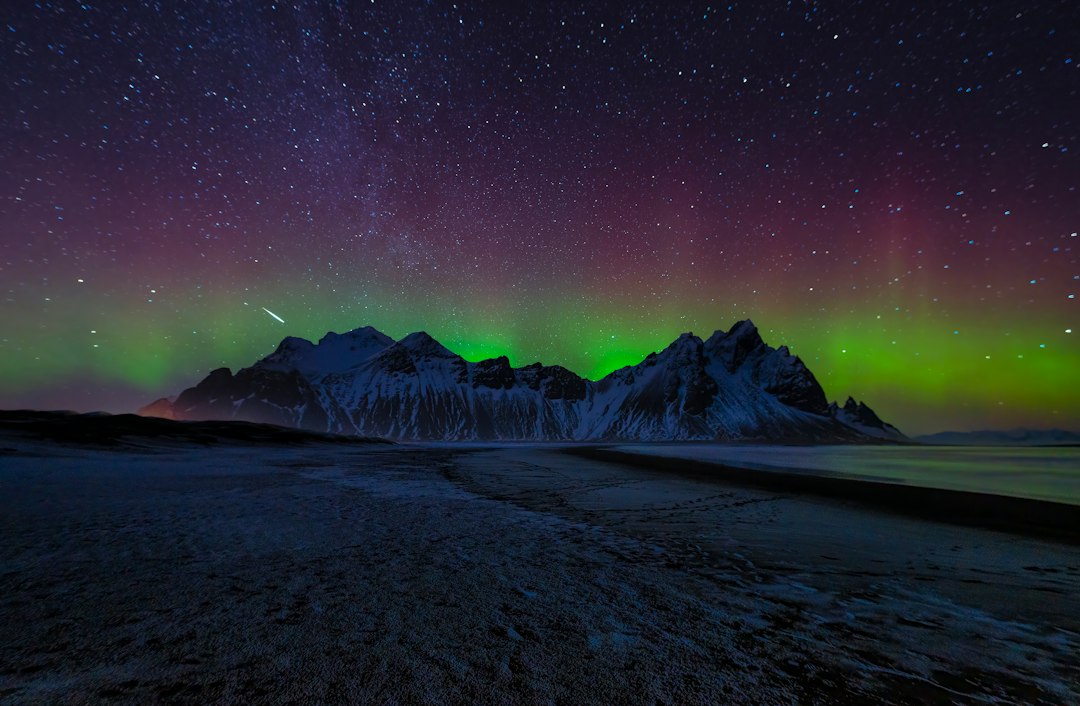
Searches for the northern lights are trending across Canada after a pair of solar eruptions triggered aurora forecasts covering most provinces and territories late last week.
The Weather Network said two coronal mass ejections, or CMEs, erupted from the sun in the early hours of Oct. 6, about four hours apart, after an M1.4-class solar flare. The first was heading mostly north of Earth, while the second was described by U.S. forecasters as a partial halo CME expanding toward the planet, the outlet reported.
The U.S. National Oceanic and Atmospheric Administration’s Space Weather Prediction Center issued a geomagnetic storm watch, according to The Weather Network. It forecast minor, or G1, storm levels beginning about 11 p.m. ET on Thursday, Oct. 8, and moderate, or G2, levels from about 5 a.m. ET on Friday, Oct. 9.
Sky at Night Magazine, citing the same agency, reported a G2-class storm that it described as “only a moderate storm.” The magazine said such storms can still affect power and communication systems and boost auroral activity.
Narcity reported on Oct. 8 that the aurora could be more intense across parts of British Columbia, Alberta, Saskatchewan, Manitoba, Ontario, Quebec, Labrador, Yukon, the Northwest Territories and Nunavut. It named Whitehorse, Yellowknife, Edmonton, Saskatoon, Regina, Winnipeg and Churchill, Man., among the places with the better odds.
Fainter displays were possible farther south, the outlet said, including Vancouver, Kelowna, Lethbridge, Thunder Bay, Sudbury and Saguenay. Narcity said southern Ontario and Quebec might see the lights near the northern horizon.
The Weather Network said the first phase of the storm favoured eastern Canada, with auroras possibly reaching central Quebec and the northern edge of the Great Lakes. The later, stronger phase was timed better for western Canada, where it said even a G1 storm can push auroras into the central Prairies.
Southern Saskatchewan and southern and central Alberta had the clearest skies in the forecast, while the best viewing in the east was along the north shores of Georgian Bay, Lake Huron and Lake Superior, as well as northwestern Ontario and eastern Manitoba, The Weather Network said.
The timing helped sky-watchers. The Weather Network noted a thin waning crescent moon ahead of the Oct. 10 new moon, which leaves skies darker. Sky at Night said the moon would be below the horizon during peak viewing hours, between about 10 p.m. and 2 a.m. local time.
Narcity said the lights usually appear a few hours after sunset and peak around midnight, and that light pollution can make faint displays harder to see. It also relayed Canadian Space Agency advice to go to a dark location and look all around the sky, since aurora can appear in any direction.
Sky at Night said the UK Met Office had flagged a possible glancing blow from another CME on Saturday, Oct. 10, which kept the chance of displays alive through the weekend. Canada News Media has not confirmed what that second event produced over Canada.
The Weather Network cited aurora chaser Dar Tanner of central Alberta, who posted photos of an Oct. 5 display to Threads, a sign that activity had already been building before the main storm window.
This story is developing. The forecasts above are predictions, not confirmed sightings, and Canada News Media did not read NOAA’s own bulletins directly. Actual storm strength and visibility varied with local cloud cover, and the sources do not give a Kp index.
If you find reporting like this useful, consider supporting Canada News Media, an independent Canadian newsroom with no corporate parent.
Via The Weather Network (original), Narcity (original) and Sky at Night Magazine (original).
Follow Canada News Media
Get the day's top Canadian stories and our two daily 60-second news videos wherever you scroll.