


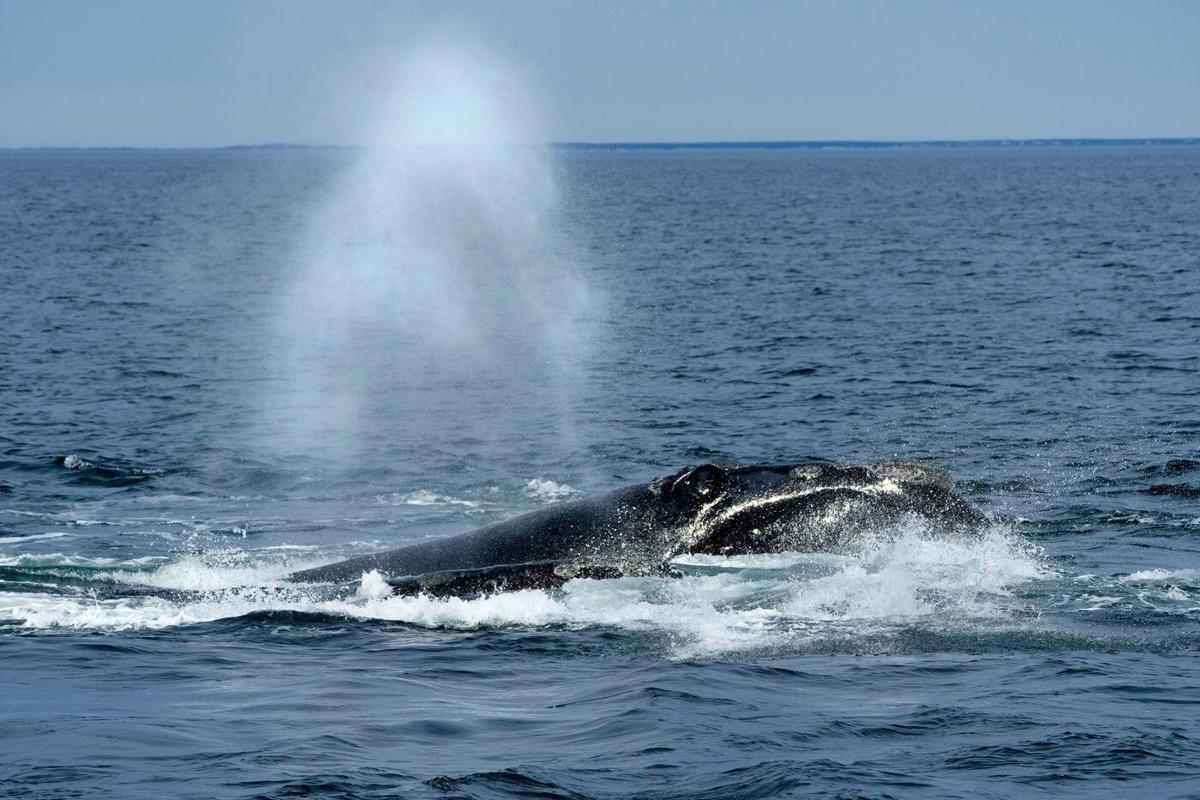
Preliminary genomic research suggests that up to 70 per cent of North Atlantic right whale fetuses are lost to inbreeding, scientists said Monday in Halifax, offering the clearest explanation yet for why the critically endangered species produces so few calves.
Tim Frasier, a professor at Saint Mary’s University, presented the findings at the North Atlantic Right Whale Consortium meeting. He said the estimate closely matches the population’s reproductive rate, which is about 70 per cent lower than it should be. The same meeting produced a preliminary count of 382 whales, down two per cent.
The most recent calving season produced 24 calves, one of the strongest on record, but Frasier said the number could have been about 100 if every adult female gave birth at the expected pace. Females should calve about every three years, he said, yet many wait far longer and some have never given birth. Other marine mammals typically reproduce at their maximum rates.
Frasier said the heavy loss of fetuses has purged some harmful genes, so calves that are born show more genetic diversity than expected, which could eventually reduce fetal losses. He also warned of an “extinction vortex,” in which inbreeding in a small population compounds over time. Poor nutrition and injuries caused by humans may also be limiting births, and researchers do not yet know how those factors combine.
Moira Brown, director of science at the Canadian Whale Institute, said she is optimistic. “It’s hopeful that all the efforts that we are (making) to reduce human impacts will show benefit in time,” she said. Heather Pettis, a senior scientist at the New England Aquarium, said the low birth rate is “not so debilitating that the population can’t recover.”
Frasier stressed that ship strikes and entanglement in fishing gear remain the leading causes of death. “We need to stop killing them in order to allow them to survive and get through this,” he said. Part of the population feeds in the Gulf of St. Lawrence each summer, where Canada enforces vessel speed limits and fishing closures. Canada News Media reported on Oct. 31 that an entangled right whale was spotted in the Gulf.
The population is believed to have peaked near 21,000 before whaling cut it to fewer than 100 by the 1920s. It grew to 483 by 2010, fell steeply from 2017, and has risen slowly since 2020.
Details come from the consortium meeting and reporting by The Canadian Press.
If you find reporting like this useful, consider supporting Canada News Media, an independently owned Canadian newsroom.
Follow Canada News Media
Get the day's top Canadian stories and our two daily 60-second news videos wherever you scroll.
X Threads Facebook Instagram LinkedIn TikTok YouTube Pinterest Reddit Substack Flipboard Newsletter RSS