The Yukon government ended its 2025-26 fiscal year with a $4.9-million surplus, far below the $82 million forecast a year earlier, according to Public Accounts tabled Oct. 28.
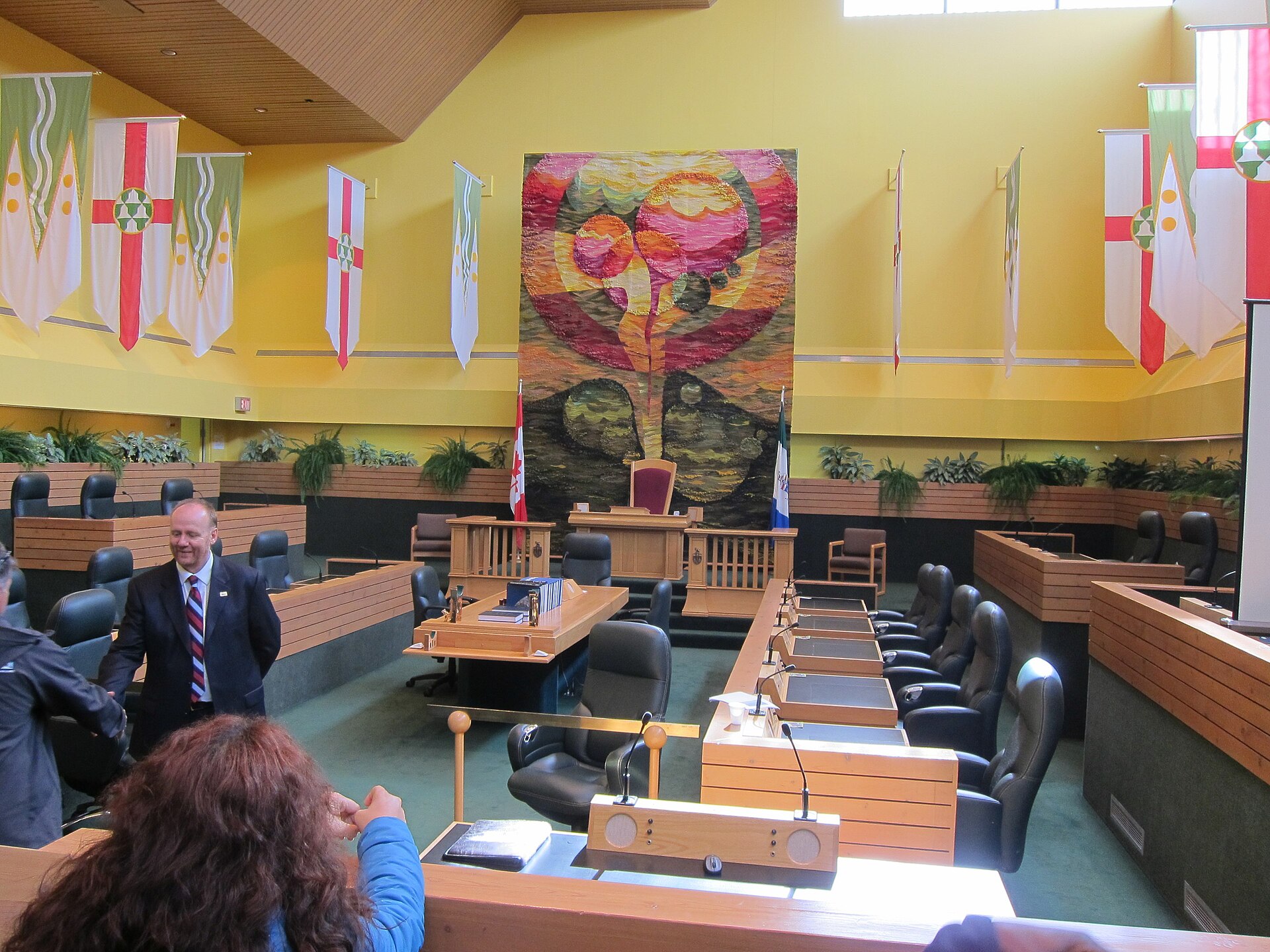
Premier and Finance Minister Currie Dixon tabled the statements in the Yukon Legislative Assembly. The territory’s fiscal year ended March 31, 2026.
The government’s news release said the $77.1-million gap from the Main Estimates forecast relates mainly to accounting adjustments tied to the Receiver sale process for the Eagle Gold Mine. The result was also $7.6 million below the $12.5 million forecast in the second supplementary estimates.
A valuation allowance lowers the recorded value of an asset when the government does not expect to recover its full value. In this case, the release said, it reflects the portion of the loan and accrued interest that the government estimates it will not recover at this time. The figures are point-in-time estimates and will change as the mine sale and court process advance, the government said.
Revenues came in $63.1 million above the Main Estimates, driven largely by higher-than-expected income tax revenue. The Yukon News reported that cabinet press secretary Tim Kucharuk confirmed the territory also received $10.3 million in historical Beaufort oil and gas royalties from Canada.
Spending rose faster. On a non-consolidated basis, expenses were $148.6 million higher than forecast in the Main Estimates. Total non-consolidated revenues were $2.232 billion and expenses were $2.236 billion, with $8.4 million in recoveries of prior years’ expenses making up the difference.
Non-consolidated net debt stood at $635.8 million, which the government said is about $60 million lower than the $695.7 million forecast at the start of the year. On a consolidated basis, which includes Yukon University, the hospital corporation, the housing corporation and other public entities, the surplus was $75.1 million and net debt was $297.9 million.
The Auditor General of Canada audited the consolidated statements and issued an unqualified opinion, the government said. It also noted that S&P Global Ratings gave the territory an “AA Stable” rating in July 2026 and Moody’s Ratings assigned an “Aa1” rating in September.
“While they reflect the continued pressure of rising expenses, they also show that our government has taken the first steps on our path to balance,” Dixon said in the release.
The numbers land as the territory manages other cost pressures. Canada News Media has reported that Yukon power bills could jump 53 per cent without Ottawa’s help, that the government and its public servants’ union reached a tentative deal, and that the living wage in Whitehorse has risen to $32.43 an hour.
Source: Government of Yukon news release 26-314, Government of Yukon tables 2025-26 Public Accounts, Oct. 28, 2026.
If you find reporting like this useful, consider supporting Canada News Media, an independent Canadian newsroom with no corporate parent.
Follow Canada News Media
Get the day's top Canadian stories and our two daily 60-second news videos wherever you scroll.
X Threads Facebook Instagram LinkedIn TikTok YouTube Pinterest Reddit Substack Flipboard Newsletter RSS